

Marco Rubio Leads Charge Against Europe’s Speech-Stifling Tech Law
By Hotspotorlando News
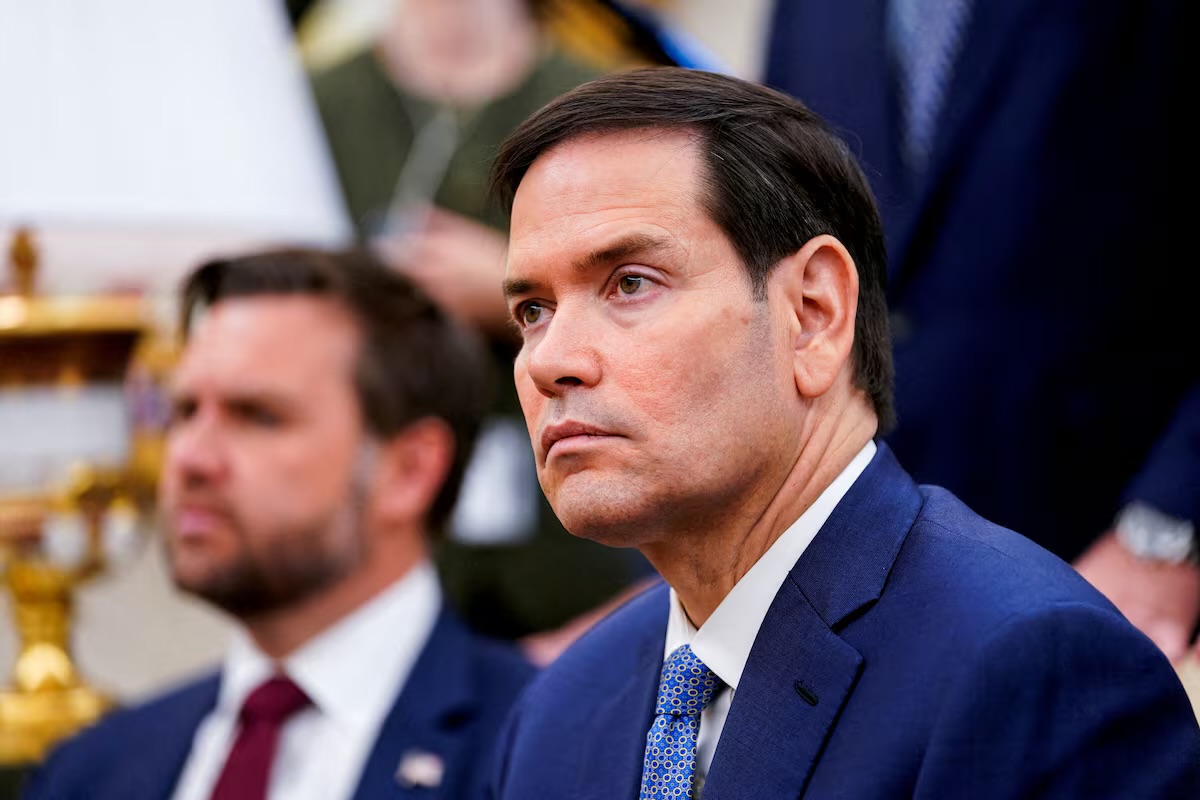
In a bold move to defend American values and protect U.S. tech giants, Secretary of State Marco Rubio has directed U.S. diplomats in Europe to launch an aggressive lobbying campaign against the European Union’s Digital Services Act (DSA). This landmark EU law, touted as a measure to make the online world “safer and fairer,” is nothing short of a thinly veiled assault on free speech and a punitive strike against American innovation. Rubio’s directive, rooted in the Trump administration’s unwavering commitment to the First Amendment, signals a refusal to let European bureaucrats dictate the terms of digital discourse or burden U.S. companies with overreaching regulations.
The DSA compels tech companies to crack down on what the EU deems “illegal content,” including hate speech, misinformation, and disinformation. But the law’s vague and expansive definitions leave the door wide open for abuse, threatening to silence voices that challenge the progressive orthodoxy so prevalent in European governance. From the conservative perspective, this is not about safety—it’s about control. The EU’s framework, including its Code of Conduct on Disinformation and reliance on so-called “trusted flaggers” to police content, risks turning platforms into extensions of government censorship. This is a direct affront to the American tradition of free expression, where open debate, even when contentious, is the bedrock of a free society.
Rubio’s State Department cable, issued on August 4, rightly calls out the DSA for imposing “undue” restrictions on speech and saddling U.S. tech firms with compliance costs that undermine their global competitiveness. The directive instructs diplomats to investigate claims of censorship, prioritizing cases that impact American citizens and companies. This is a necessary stand against a law that could force U.S. platforms to adopt Europe’s restrictive speech standards, effectively exporting their regulatory overreach across the Atlantic. Imagine a world where American companies like Meta or Google are coerced into silencing conservative voices under the guise of combating “disinformation”—a term so subjective it can mean anything the EU’s elite disapproves of.
The Trump administration’s pushback isn’t just about protecting corporate bottom lines; it’s about safeguarding the principles that make America exceptional. The First Amendment doesn’t bend to foreign regulators, and Rubio’s campaign is a clarion call to preserve that legacy. Critics of the DSA, including the chairman of the Federal Communications Commission, have already pointed out its incompatibility with America’s free speech tradition. Rubio himself has gone further, previously threatening visa bans for foreign officials who suppress American voices—a warning that underscores the administration’s resolve.
This lobbying blitz also exposes the broader cultural divide between the U.S. and Europe. While the EU cloaks its regulations in the language of fairness, conservatives see it for what it is: a power grab to control narratives and shield establishment figures from criticism. The DSA’s framework could easily be weaponized to target political and religious discourse, stifling the very debates that drive progress. Europe’s track record—such as its crackdowns on groups like Germany’s AfD party—only fuels concerns that the DSA is less about protecting users and more about protecting entrenched elites.
U.S. tech companies, from Meta to Google, have echoed these concerns, warning that the DSA’s heavy-handed rules could fragment the global internet and force them to navigate a maze of conflicting regulations. This isn’t just bad for business; it’s bad for innovation. America’s tech industry thrives because it operates in a system that values freedom over bureaucracy. By contrast, the EU’s approach risks smothering creativity under a blanket of compliance, potentially giving an edge to competitors in less-regulated markets like China.
Rubio’s directive is a strategic counteroffensive, urging diplomats to rally European governments, businesses, and civil society to amend or repeal the DSA. Specific recommendations include narrowing the definition of “illegal content” to protect political and religious speech, scrapping the Code of Conduct on Disinformation, and eliminating punitive fines that strong-arm companies into compliance. These are common-sense reforms that align with the principles of a free and open internet.
This fight is about more than a single law—it’s about defending America’s sovereignty and its vision of a free society. The EU may believe it can impose its values on the world, but conservatives know that freedom of speech is non-negotiable. Rubio’s leadership in this battle is a testament to the Trump administration’s commitment to putting America first, ensuring that our voices—unfiltered and unafraid—continue to shape the digital age. As diplomats take up this cause, they carry a message that resonates with every conservative: no foreign law will silence the American spirit.
source: Reuters