

Marcos do Val’s S Visa: A Stand Against Judicial Tyranny in Brazil
By Hotspotorlando News
In a dramatic escalation of Brazil’s political crisis, Senator Marcos do Val (Podemos-ES) has emerged as a lightning rod in the battle between individual liberty and judicial overreach. Facing severe sanctions from Brazilian Supreme Court Justice Alexandre de Moraes, do Val recently revealed he holds a U.S. S visa—a designation reserved for informants aiding American authorities in combating crime or terrorism. 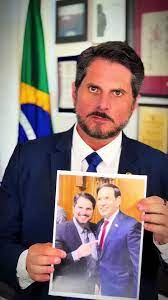

The S Visa: A Lifeline for a Targeted Senator
The S visa, a rare and tightly controlled U.S. immigration tool, is granted to individuals providing critical information to American law enforcement or security agencies. For do Val, this visa reportedly offers a shield against Moraes’s aggressive measures, which include a R$50 million asset freeze, passport seizure, and social media restrictions. These sanctions stem from investigations into do Val’s alleged role in intimidating federal police and obstructing probes tied to the January 2023 Brasília riots—an event Moraes claims was part of a broader coup attempt by former President Jair Bolsonaro and his allies.
Do Val’s possession of an S visa suggests he may be cooperating with U.S. authorities, potentially sharing insights into Brazil’s political turmoil or judicial abuses. For conservatives, this is a bold move to expose what they see as Moraes’s unchecked power. The senator’s ability to travel to the U.S. despite Moraes’s orders—using a diplomatic passport valid until 2027—underscores the limits of Brazil’s judicial reach when confronted with American protection. This act of defiance resonates with those who view Moraes as a “dictator” waging a “political witch hunt” against Bolsonaro and his supporters, a sentiment echoed by U.S. leaders like Secretary of State Marco Rubio and President Donald Trump.
Moraes’s Sanctions: A Threat to Brazilian Freedom?
Justice Alexandre de Moraes has become a polarizing figure in Brazil. To the left, he is a guardian of democracy, cracking down on disinformation and coup attempts following Bolsonaro’s 2022 election loss. To conservatives, he is the epitome of judicial overreach, wielding extraordinary power to silence dissent. Moraes’s actions against do Val—along with his broader campaign to censor social media platforms like X and Rumble—have drawn international scrutiny. His orders to block conservative accounts, impose fines on American companies, and even ban entire platforms in Brazil have sparked accusations of violating free speech, a cornerstone of conservative values.
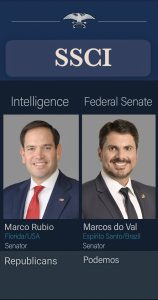

Do Val’s case amplifies this narrative. By securing an S visa, he has aligned himself with U.S. interests, potentially exposing Moraes’s tactics to international condemnation. Conservatives see this as a necessary pushback against a judiciary that seems to prioritize political vendettas over constitutional principles. The Brazilian Supreme Court’s decision to uphold Moraes’s sanctions, including forcing Bolsonaro to wear an ankle monitor, only fuels the perception of a biased system determined to crush opposition voices.
Brazil’s Sovereignty vs. U.S. Intervention
The controversy surrounding do Val’s S visa and U.S. actions against Moraes has sparked a heated debate about national sovereignty. Brazilian President Luiz Inácio Lula da Silva has condemned U.S. visa revocations and tariffs as “arbitrary” and “baseless,” arguing they violate Brazil’s judicial independence. Some Brazilians, as reflected in social media sentiment, label do Val a “traitor” for allegedly collaborating with a foreign power against his own country. This perspective views U.S. involvement as an affront to Brazil’s right to govern itself, especially in prosecuting figures like Bolsonaro for alleged crimes against democracy
Conservatives, however, argue that Brazil’s judiciary, under Moraes’s leadership, has forfeited its legitimacy by undermining free expression and targeting political opponents. From this viewpoint, do Val’s S visa is not a betrayal but a desperate act to preserve democratic values in a country where the judiciary acts as a “personal weapon” for political persecution, as Eduardo Bolsonaro has claimed. The U.S.’s willingness to grant do Val protection and sanction Moraes aligns with a conservative foreign policy that prioritizes individual liberty and resists authoritarianism, even across borders. Trump’s tariffs and Rubio’s visa bans signal a refusal to tolerate what they see as judicial tyranny, particularly when it affects American companies and citizens.
Economic and Political Fallout
The U.S.-Brazil feud, amplified by do Val’s actions, carries significant risks for both nations. Trump’s proposed tariffs threaten Brazil’s agribusiness sector, a critical economic driver, prompting even conservative Brazilian voices to criticize their scope. Analyst Rocha de Barros noted that these tariffs could “screw Bolsonaro’s base” by hitting rural economies hard. Lula’s vow to retaliate with economic measures, such as targeting U.S. companies or redirecting Brazil’s trade toward BRICS nations like China, underscores the potential for a broader diplomatic crisis.
For conservatives, the economic fallout is a necessary price to pay for defending free speech and challenging Moraes’s overreach. Do Val’s S visa, while controversial, positions him as a key figure in this fight, potentially providing U.S. authorities with insider knowledge to justify further action against Brazil’s judiciary. His presence in the U.S., alongside Eduardo Bolsonaro’s lobbying efforts, strengthens the conservative case that Brazil’s democracy is under threat—not from Bolsonaro, but from Moraes and his allies.
### A Call to Action
Marcos do Val’s S visa saga is more than a personal battle; it’s a flashpoint in the global struggle for free speech and democratic accountability. Conservatives should rally behind do Val and Bolsonaro, not because they are flawless, but because their fight exposes the dangers of unchecked judicial power. The U.S. must continue to leverage tools like the Magnitsky Act and visa restrictions to hold figures like Moraes accountable, especially when their actions infringe on American rights. At the same time, Brazil’s conservatives must work to restore judicial balance at home, ensuring that democracy means more than silencing dissent.
As do Val navigates his precarious position, his S visa stands as a symbol of resistance against a judiciary that many conservatives believe has lost its way. The road ahead is fraught with diplomatic and economic challenges, but for those who cherish liberty, it’s a fight worth waging.