





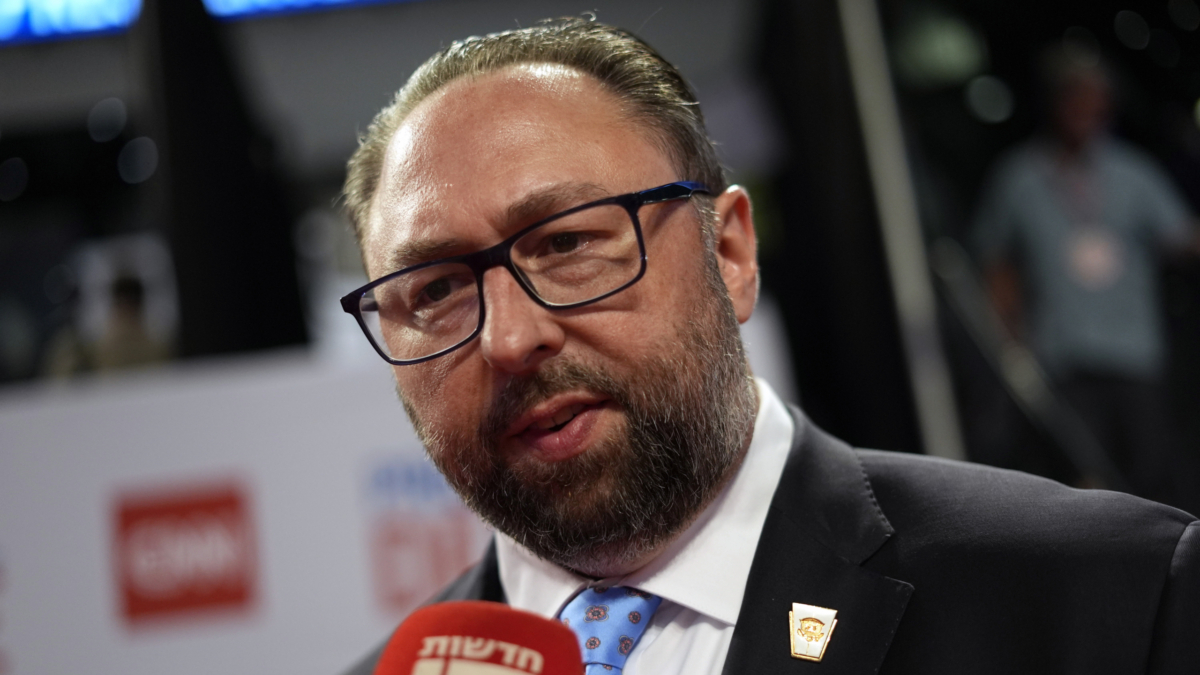
Miller Delivers a Perfect Slap to Biased Brazilian Media
By Hotspotnews
In a sharp and well-deserved response that has Brazilian conservatives cheering, Jason Miller, longtime Trump advisor and communications strategist, shut down a prominent Brazilian journalist with precision. When a correspondent from one of Brazil’s major networks publicly complained that the White House directed her to his personal cell phone regarding questions about Flávio Bolsonaro’s departure to the United States, Miller did not mince words.
“No, dummy. It’s because I know which Brazilian news outlets are real news and which ones are fake news. Fake news gets sent to voice mail.”
The reply was immediate, clear, and cut straight through the usual media theater. Brazilian commentator Allan Dos Santos captured the mood of many on the right with a simple, enthusiastic reaction: “QUE LAPADA.” That Portuguese expression—roughly translating to a hard slap or knockout blow—perfectly sums up how conservatives on both sides of the equator viewed the exchange.
Miller’s point is straightforward and long overdue. Not every outlet waving a press credential operates as a neutral reporter of facts. Some Brazilian media organizations have spent years functioning more as political actors than journalists, consistently amplifying narratives that favor the left while treating conservative figures and voters with open hostility. Directing inquiries from those outlets to voicemail is not evasion; it is a rational refusal to waste time on bad-faith questioning designed to generate controversy rather than seek truth.
This incident fits a larger pattern. Brazilian conservatives have repeatedly documented how large segments of the national press align closely with the current government’s interests, downplay or ignore concerns about electoral integrity, judicial overreach, and restrictions on speech, while aggressively pursuing stories that damage the right. Independent voices critical of that establishment often face censorship, legal pressure, or platform restrictions at home. Figures like Allan Dos Santos himself have experienced the consequences of speaking out against that system.
Miller’s willingness to call it what it is—fake news versus real news—resonates because it rejects the false equivalence that treats every media organization as equally legitimate. Conservatives have watched for years as international and domestic outlets lecture others about democracy and free press while overlooking or enabling the suppression of opposing views in Brazil. A former senior Trump advisor drawing a clear line is a refreshing acknowledgment of reality.
The enthusiastic response from Brazilian right-leaning commentators shows that many ordinary citizens and independent voices recognize the difference. They are tired of being told that questioning media bias is itself the problem. Miller’s blunt assessment affirms what they already know: not every phone call from a newsroom deserves an answer, and some outlets have forfeited the benefit of the doubt through consistent ideological advocacy.
In an era when information is weaponized, discernment is a virtue. Miller demonstrated it. Allan Dos Santos and countless others celebrated it. That is not hostility toward journalism. It is a defense of honest reporting against those who have abandoned it.


