





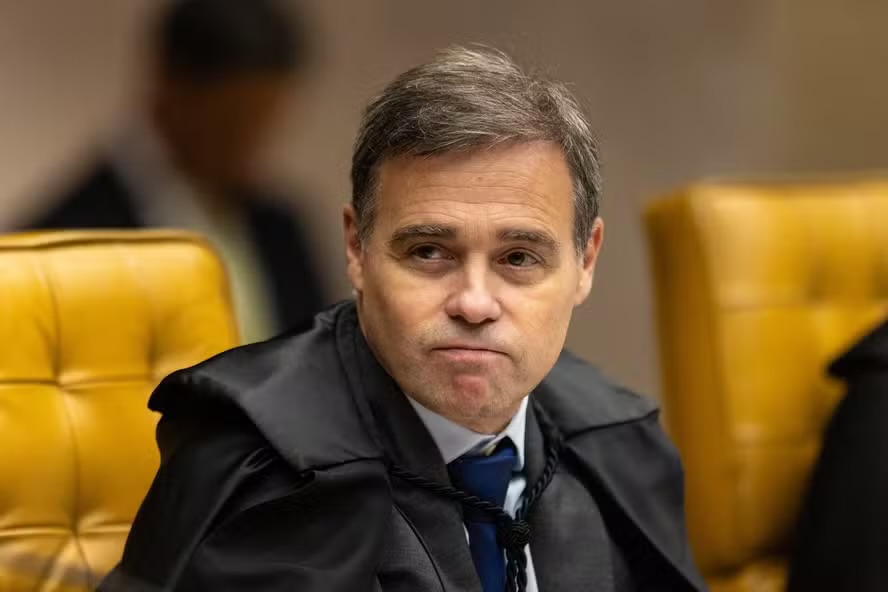
Mendonça Delivers Justice: Arrest in Banco Master Scandal Highlights Endemic Corruption in Brazil’s Elite Circles
By Hotspotnews
In a decisive stand for accountability, Supreme Federal Court Justice André Mendonça has taken firm action against corruption involving public resources and private interests. On April 16, 2026, Mendonça ordered the arrest of Paulo Henrique Costa, the former president of the state-owned Banco de Brasília (BRB). Costa faces serious accusations of accepting massive bribes—around R$146.5 million in luxury properties—from Daniel Vorcaro, the owner of the now-collapsed Banco Master. These alleged payments were reportedly made to secure Costa’s assistance in injecting fraudulent credit portfolios, potentially worth billions in fake or worthless loans, into the public bank.
Mendonça, acting as the lead rapporteur in the investigation after another justice stepped aside due to conflicts, based the decision on strong Federal Police evidence. This includes documented property transfers, communications, and Costa’s alleged role as Vorcaro’s insider at BRB to facilitate shady deals and a thwarted attempt to sell the failing bank to the public institution. The Central Bank had previously liquidated Banco Master in late 2025 after exposing widespread fraud that endangered the financial system.
On April 24, the STF’s Second Panel unanimously upheld Costa’s preventive arrest. Justices including Mendonça, Luiz Fux, Kássio Nunes Marques, and Gilmar Mendes voted to keep him behind bars, citing clear risks of evidence tampering and further crimes. Costa has reportedly changed lawyers and may be preparing a cooperation agreement, a common step that could uncover additional layers of wrongdoing.
This case reveals the heavy cost of crony capitalism on Brazilian taxpayers. Public banks like BRB exist to serve citizens, not to launder private fraud through luxury payoffs and rigged transactions. Mendonça’s leadership stands out as a commitment to evidence over protection networks—a refreshing contrast in a judiciary long accused of shielding powerful insiders. While the probe touches on broader connections involving influential figures, the focus remains on proven facts: massive alleged bribery, misuse of state resources, and efforts to prop up a failing institution at public expense.
True reform requires relentless pursuit of such cases, free from delays and political favoritism. As potential new revelations emerge through cooperation or further operations, this serves as a reminder that no one should be above the law. Brazilians deserve institutions that prioritize integrity, economic stability, and protection of public funds over elite entanglements. Mendonça’s move offers a step toward that accountability.


