



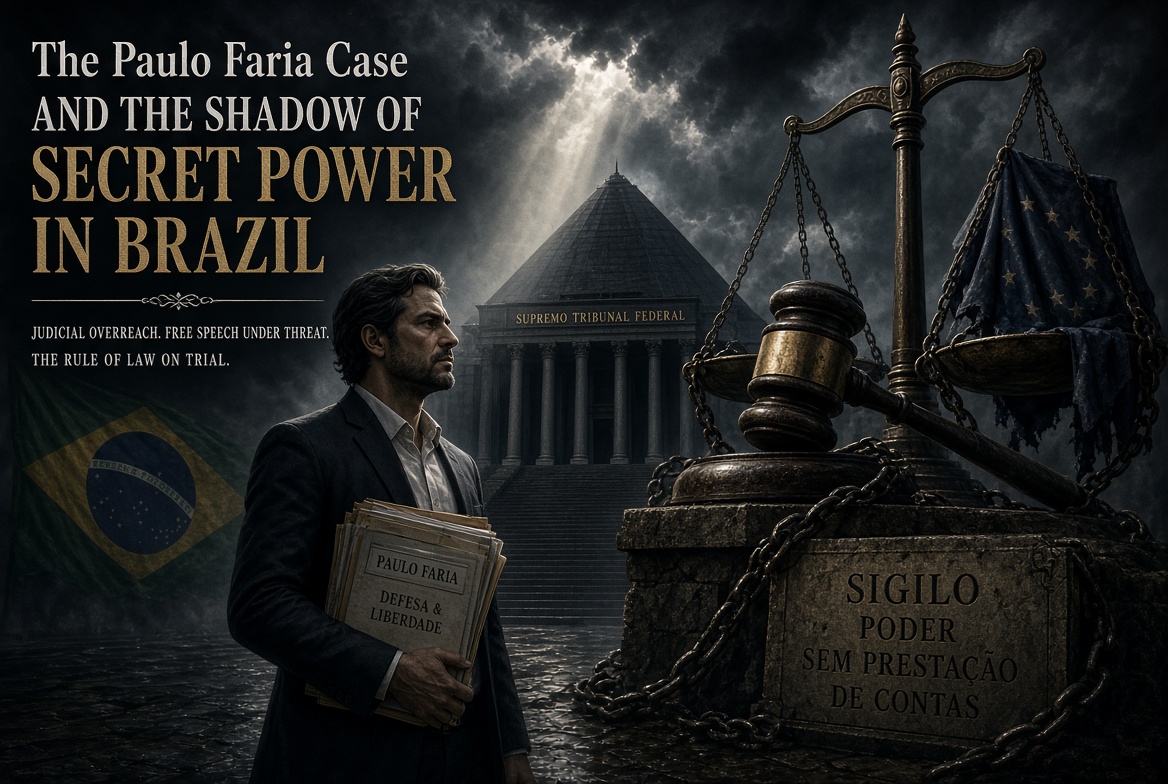
Judicial Overreach Exposed: The Paulo Faria Case and the Shadow of Secret Power in Brazil
By Hotspotnews
Paulo Faria has long stood as a vocal defender of clients targeted in high-profile investigations linked to the so-called Fake News Inquiry. Among them is Flávia Cordeiro Magalhães, a dual Brazilian-American citizen who has lived in the United States for more than two decades and works as a housekeeper. Magalhães was drawn into PET 11.548 for social media posts critical of Moraes and the Supreme Court. Measures against her included social media blocks, restrictions on her Brazilian passport, and a preventive arrest order issued in late 2023. Faria and Magalhães have maintained that Brazilian authorities sought to monitor her activities on American soil, raising serious questions about sovereignty, due process, and the proper limits of extraterritorial enforcement.

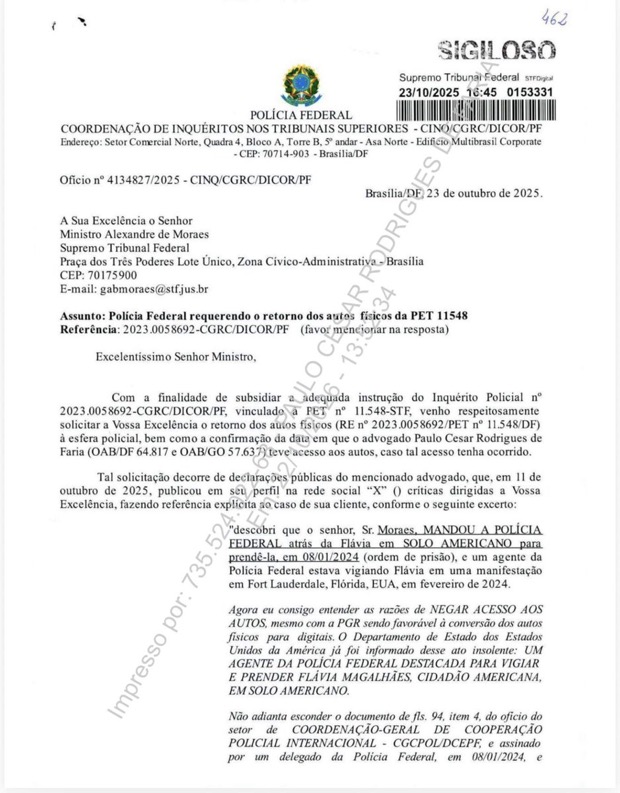

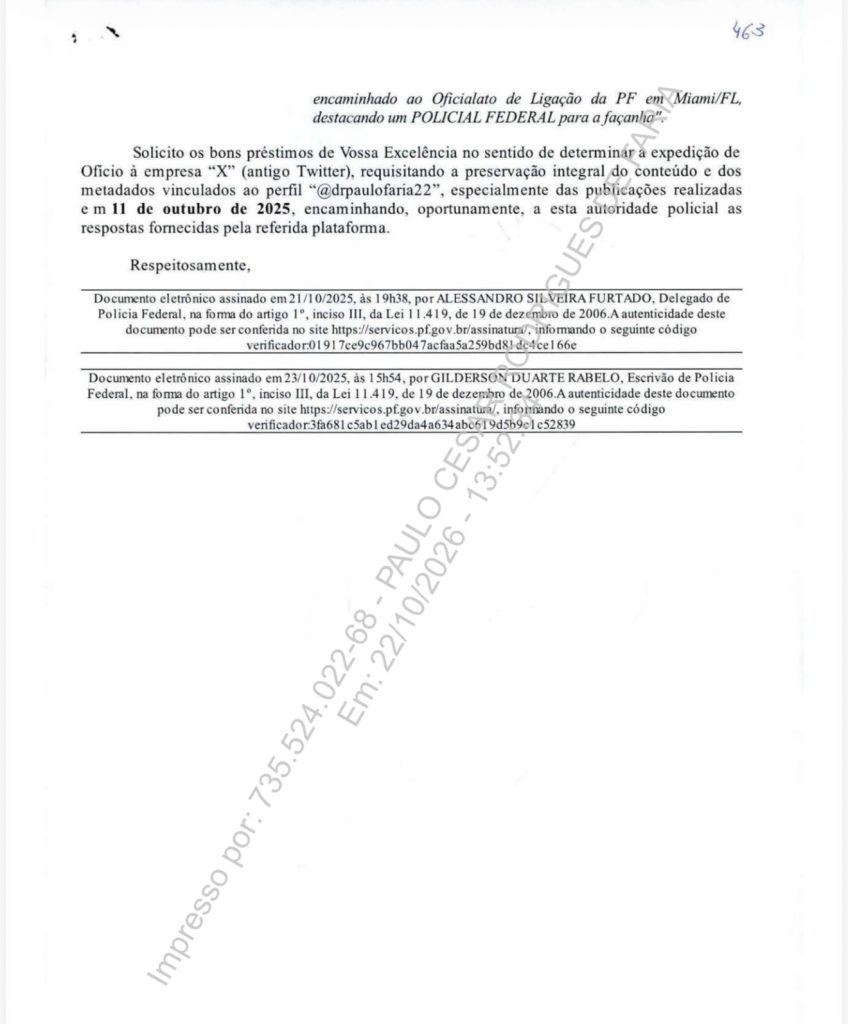
On October 11, 2025, Faria publicly criticized Moraes on the platform X, highlighting alleged obstacles to the defense and the involvement of Federal Police agents in the United States. Twelve days later, on October 23, 2025, the Federal Police issued Ofício nº 4134827/2025, addressed directly to Moraes. The letter requested information on when—if at all—Faria had accessed the physical case files in PET 11.548. It explicitly tied this request to Faria’s public criticisms and further asked that Moraes order the platform X to preserve the full content and metadata of Faria’s posts from that date. The document reproduced excerpts of the attorney’s statements and treated them as material relevant to the ongoing secret proceedings.
Faria released scanned pages of this ofício, arguing that his professional advocacy and public denunciations had been formally incorporated into a confidential police communication directed at the very minister he criticized. He has stated that this development, combined with other alleged acts of intimidation, prompted him to leave Brazil out of fear of reprisals. In his view, the sequence demonstrates how criticism of powerful judicial figures can trigger institutional pushback against the critic himself.
The broader context is significant. The Fake News Inquiry, originally under Moraes’ control for years, involved extensive use of secrecy, broad preventive measures, and investigations into online speech. Critics have long argued that such tools risk transforming the judiciary into an unchecked political actor capable of targeting opponents, journalists, and lawyers. Traditional conservative principles—limited government, separation of powers, robust free speech protections, and the independence of the legal profession—find these practices deeply problematic. When a lawyer’s public defense of a client becomes the basis for police inquiries into the lawyer’s own activities and social media data, the line between legitimate investigation and intimidation begins to blur.
Recent developments add an important layer. In late October 2026, Supreme Court President Edson Fachin archived PET 11.548 and revoked the preventive arrest order and related restrictions against Flávia Magalhães. The decision followed a Procuradoria-Geral da República opinion noting the fragility of the evidence after more than three years of investigation and the absence of links to organized disinformation schemes. This outcome lends weight to longstanding concerns that certain cases within the broader inquiry rested on thin foundations while imposing heavy costs on the individuals involved.
From a conservative perspective, the Faria episode illustrates the dangers of concentrating vast investigative and punitive powers in the hands of a few unelected officials operating under heavy secrecy. Democracies require accountability mechanisms that allow citizens and their lawyers to challenge authority without fear of retaliation. Dual citizens living abroad should not face the shadow of foreign arrest warrants or monitoring for speech protected under the laws of their country of residence. Lawyers must be free to represent unpopular clients vigorously and to criticize judicial conduct without becoming targets themselves.
The document does not, by itself, prove the existence of an active arrest warrant against Faria. What it does confirm is that his public criticisms were treated as significant enough to warrant formal police correspondence to the criticized minister and a request for preservation of his online activity. In an environment already marked by secrecy and expansive judicial measures, such actions fuel legitimate apprehension among those committed to classical liberal and conservative values of ordered liberty.
Brazil’s institutions face a choice. They can reaffirm the primacy of transparent due process, free expression, and the independence of the defense bar, or they can continue down a path where criticism of power invites institutional scrutiny. The case of Paulo Faria and Flávia Magalhães stands as a cautionary example of what happens when those safeguards weaken. Citizens who value limited government and individual rights have every reason to demand greater accountability and restraint from those who wield extraordinary authority.
Sources
Federal Police Ofício nº 4134827/2025 (released by Paulo Faria)
Reporting by Revista Oeste on the confidential document
STF decisions and archiving of PET 11.548 under President Edson Fachin
Procuradoria-Geral da República opinions cited in the archiving process
Public case history of PET 11.548 / Inquérito 4.781 and related measures
Statements and filings by attorney Paulo Faria regarding Flávia Magalhães and related matters
#FreeSpeech #RuleOfLaw #JudicialOverreach #DueProcess #BrazilPolitics #LawyersRights #AlexandreDeMoraes #STF #ConservativeValues #LimitedGovernment


