



Tucker Carlson Alleges U.S. Role in Brazil’s Political Shift: Claims of Interference, Censorship, and Rising Chinese Influence
By Hotspotnews
In a widely recirculated video clip shared on social media platforms in late 2026, commentator Tucker Carlson has renewed attention on longstanding claims about the 2022 Brazilian presidential election and its aftermath. Carlson asserts that the Biden administration, working with the CIA, played a role in helping install Luiz Inácio Lula da Silva’s government—a administration he describes as pro-China—after which Brazil experienced significant restrictions on opposition voices.

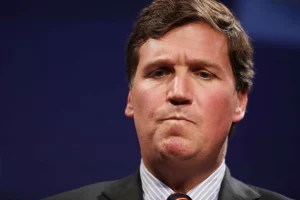
According to Carlson, shortly after Lula’s victory over then-incumbent Jair Bolsonaro, the country saw opposition media silenced, bank accounts frozen, journalists forced into exile, and political dissidents imprisoned. “Without freedom of expression there is no democracy,” Carlson has stated in the discussion, criticizing what he portrays as American hypocrisy: preaching free and fair elections abroad while allegedly intervening in Brazil’s process.
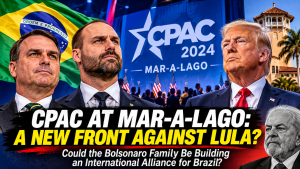
The remarks come from an episode of the Tucker Carlson Network featuring interviews with Eduardo Bolsonaro, son of the former president and a Brazilian lawmaker, and Paulo Figueiredo, a well-known Brazilian journalist who has lived in exile in the United States. In the conversation, Eduardo Bolsonaro detailed what he described as a campaign of judicial overreach led primarily by Supreme Court Justice Alexandre de Moraes. He cited the exile or silencing of journalists including Rodrigo Constantino, Alan dos Santos, and Figueiredo himself, along with the freezing of assets and restrictions that force viewers inside Brazil to use VPNs to access certain content.
Eduardo Bolsonaro also discussed the January 8, 2023 protests in Brasília—often compared by critics to the U.S. Capitol events of January 6, 2021—arguing that the demonstrations were used as justification for broad crackdowns on conservatives, including lengthy prison sentences for some participants. He noted that his father, Jair Bolsonaro, was ruled ineligible to run for office until 2030 following meetings with foreign ambassadors in which he raised concerns about Brazil’s electronic voting system. Efforts to require printed vote receipts for greater transparency were blocked, he claimed, despite earlier legislative support.
Figueiredo recounted how, near the end of Bolsonaro’s term and intensifying after January 8, court orders led to the shutdown of his social media accounts, the freezing of his assets, and the seizure of his Brazilian passport—actions taken, he said, without formal criminal charges being presented to him. He and others have described these measures as transforming Brazil into what Carlson called a “police state” in practical terms for political opponents.
Carlson and his guests further argued that the outcome benefited Chinese interests. Brazil, Latin America’s largest economy and a major producer of food, iron ore, and oil, shifted closer to Beijing under Lula, who has long maintained strong commercial ties with China. Guests contended that U.S. policy under Biden effectively supported a government less aligned with American strategic interests in the Western Hemisphere.
These claims are not new. Similar allegations surfaced during and immediately after the 2022 election, when Carlson and others pointed to visits by U.S. officials, including the CIA director, and public statements from the Biden administration urging acceptance of the results and emphasizing democratic institutions. Brazilian electoral authorities and international observers certified Lula’s narrow victory as legitimate. Critics of the interference narrative, including Brazilian fact-checkers and major media outlets at the time, argued that no concrete public evidence demonstrated CIA orchestration of the vote itself, characterizing the claims as unproven or exaggerated.
At the same time, independent reporting and human rights organizations have documented real tensions in Brazil over judicial power, particularly the use of broad court orders to compel social media platforms to remove content and the targeting of certain conservative voices. Justice de Moraes has been a central and polarizing figure in these debates. Supporters of the measures argue they are necessary to combat disinformation, threats to institutions, and the fallout from the January 8 events. Opponents see them as erosions of free speech and due process that go far beyond standard democratic norms.
The recirculation of Carlson’s discussion in 2026 occurs against the backdrop of Brazil’s ongoing political polarization and upcoming electoral cycles. It highlights persistent questions about foreign influence in Latin American politics, the balance between security and civil liberties, and the consistency of U.S. foreign policy rhetoric on democracy.
Whether viewed as a warning about authoritarian drift or as partisan exaggeration, the episode underscores deep divisions over what constitutes legitimate democratic practice in both Brazil and the United States. Primary accounts from the participants, official Brazilian court records, and contemporaneous reporting from 2022–2024 form the basis of the public record on these events.
Sources: Tucker Carlson Network interview featuring Eduardo Bolsonaro and Paulo Figueiredo (2024); statements and accounts by Eduardo Bolsonaro; public records and reporting on Brazilian Supreme Court actions under Justice Alexandre de Moraes; contemporaneous coverage of the 2022 Brazilian presidential election and January 8, 2023 events; analyses of Brazil-China trade and diplomatic relations.
#TuckerCarlson #Brazil #Lula #Bolsonaro #FreeSpeech #CIA #BidenAdmin #Censorship #LatinAmerica #Democracy


