



Pope Leo XIV’s Meeting with Alckmin: A Misstep in Brazil’s Leftist Agenda
By Hotspotorlando News
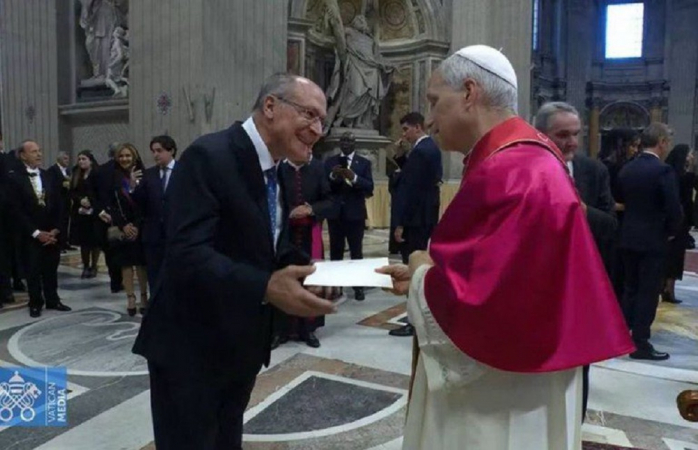
On May 18, 2025, just ten days after his election as the new leader of the Catholic Church, Pope Leo XIV welcomed Brazilian Vice-President Geraldo Alckmin to the Vatican following the inaugural mass of his pontificate. The meeting, framed as a diplomatic gesture, saw Alckmin deliver a letter from President Luiz Inácio Lula da Silva inviting the Holy Father to attend the United Nations Climate Change Conference (COP-30) in Belém, Brazil, in November 2025. While the Vatican’s engagement with global leaders is routine, this encounter raises concerns about the Catholic Church being drawn into the political machinations of Brazil’s leftist government, which has a troubling track record of prioritizing ideological agendas over practical governance.
Lula’s administration, now in its third term, has consistently pushed a progressive environmental narrative, often at the expense of Brazil’s economic stability and the well-being of its citizens. COP-30, touted as a landmark event for climate action, is shaping up to be another stage for Lula to grandstand on the global stage while deflecting attention from domestic failures—rising unemployment, strained public services, and a sluggish economy. The invitation to Pope Leo XIV, a pontiff expected to carry forward Pope Francis’s environmental advocacy, appears to be a calculated move to lend moral legitimacy to Lula’s climate agenda, which many conservatives view as a veneer for expanding government control and stifling free enterprise.
The optics of the meeting are particularly troubling. Alckmin, a career politician who has deftly navigated Brazil’s political spectrum, kissed the Pope’s hand—a gesture that, while traditional, risks signaling deference to a pontiff who may be pressured to align with Lula’s policies. The Brazilian government’s refusal to disclose the contents of Lula’s letter only fuels skepticism. Is this an innocent invitation, or a subtle attempt to co-opt the Vatican’s moral authority for political gain? The latter seems more likely, given Lula’s history of leveraging international platforms to bolster his image while sidestepping accountability at home.
Conservatives should also question the appropriateness of the Vatican engaging so quickly with a government that has shown disregard for religious values in other areas. Lula’s administration has championed policies—such as aggressive secularism and the expansion of abortion access—that clash with Catholic teachings. Yet, Alckmin’s visit, complete with a publicity stunt involving a Santos football club shirt gifted to Archbishop Paul Richard Gallagher, suggests a troubling willingness to gloss over these tensions in pursuit of a photo-op.
Pope Leo XIV, still in the early days of his papacy, must tread carefully. While environmental stewardship is a noble cause, the Church risks being manipulated into serving as a prop for Lula’s globalist ambitions. The pontiff would be wise to focus on his spiritual mission—guiding the faithful and upholding timeless moral truths—rather than wading into the murky waters of climate politics, where agendas often outweigh genuine solutions. Brazil’s conservative Catholics, already wary of Lula’s governance, will be watching closely to see whether their new Pope can resist the siren call of progressive causes cloaked in moral rhetoric.
As COP-30 approaches, the Vatican should prioritize discernment over diplomacy. Pope Leo XIV has an opportunity to set a tone of independence, ensuring the Church remains a beacon of faith, not a pawn in Brazil’s political chess game. For now, Alckmin’s visit serves as a reminder that even the holiest of institutions must guard against the encroachments of ideological opportunism.
photo source: Yelegram


