


STF Minister André Mendonça Sounds Alarm: Lula Government’s Recall of Federal Police Officers Risks Obstruction of Justice
By Hotspotnews
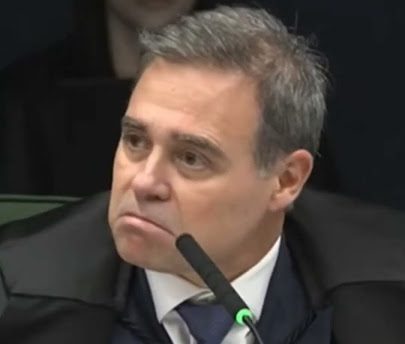
In a striking display of institutional resistance amid growing concerns over executive interference in Brazil’s justice system, Supreme Federal Court (STF) Minister André Mendonça has privately warned the Lula administration that any attempt to recall loaned Federal Police (PF) delegates assigned to his office or sensitive investigations under his oversight could amount to obstruction of justice. This revelation, circulating through reliable backstage sources, underscores a deepening rift between the judiciary’s duty to pursue accountability and what many view as a politicized effort by the executive branch to shield allies and disrupt inconvenient probes.
The flashpoint stems from a controversial order issued by the Ministry of Justice, directing the return of more than 100 Federal Police officers to their original units. While delegates assigned directly to the STF have reportedly been spared for the moment, the move has sent shockwaves through ongoing high-profile investigations. Minister Mendonça, a figure respected for his commitment to constitutional principles and often aligned with a more traditionalist view of the law, is said to have made clear his readiness to take formal action if his own gabinete or the cases he supervises are targeted. Among these are critical operations involving massive INSS (National Social Security Institute) fraud schemes and the so-called “Master” case—investigations that strike at the heart of public resource misuse and demand uninterrupted police expertise.
This is not mere bureaucratic reshuffling. Conservatives have long warned that the Lula government’s approach to law enforcement reflects a pattern of centralizing power and neutralizing threats to its political survival. By pulling experienced delegates from specialized tasks, the executive risks paralyzing lines of inquiry that could expose systemic corruption, clientelism, and waste—issues that disproportionately burden Brazilian taxpayers. Mendonça’s private alert serves as a necessary check, reminding the administration that tampering with active investigations is not a routine personnel decision but a potential crime against the administration of justice.
Sources close to the matter describe the tension as palpable. No public statement has been issued by Mendonça yet, nor has a formal inquiry been opened, but the minister’s firm signaling leaves little doubt: any direct interference with his office’s operations will be met with the full weight of judicial authority. This stance contrasts sharply with the perceived leniency often extended to allies of the current government in other spheres of the STF, where political alignments sometimes appear to influence the pace and direction of justice.
The broader context is troubling for those who value institutional integrity. The Federal Police, long hailed as one of Brazil’s most effective anti-corruption forces, has been instrumental in operations that cut across party lines but have disproportionately embarrassed leftist administrations in the past. Recalling officers en masse—especially from probes involving billions in potential fraud at INSS or complex “Master” case entanglements—smacks of damage control rather than administrative efficiency. Critics argue this fits a familiar playbook: weaken independent institutions quietly while publicly championing “democracy” and “inclusion.”
Mendonça’s background as a former Attorney General and his reputation for upholding legal rigor, even when it challenges prevailing political winds, lend significant gravity to his warning. His intervention highlights a fundamental truth often overlooked in Brasília’s echo chambers: the separation of powers exists precisely to prevent any one branch—particularly an executive with a history of scandals—from dictating the flow of justice. When police resources are reassigned in ways that conveniently stall sensitive cases, public trust erodes further in an already skeptical nation.
As Brazil grapples with economic pressures, social divisions, and lingering questions about governance transparency, episodes like this reinforce conservative calls for vigilance. The rule of law cannot be subordinated to political convenience. Minister Mendonça’s discreet but resolute message is a reminder that some red lines still exist—and crossing them invites not just conflict, but accountability under the Constitution itself.
The coming days will test whether the Lula government heeds this alert or doubles down on measures that prioritize loyalty over legality. For millions of Brazilians who demand an end to impunity and a return to serious governance, Mendonça’s position offers a glimmer of institutional backbone in turbulent times.


