


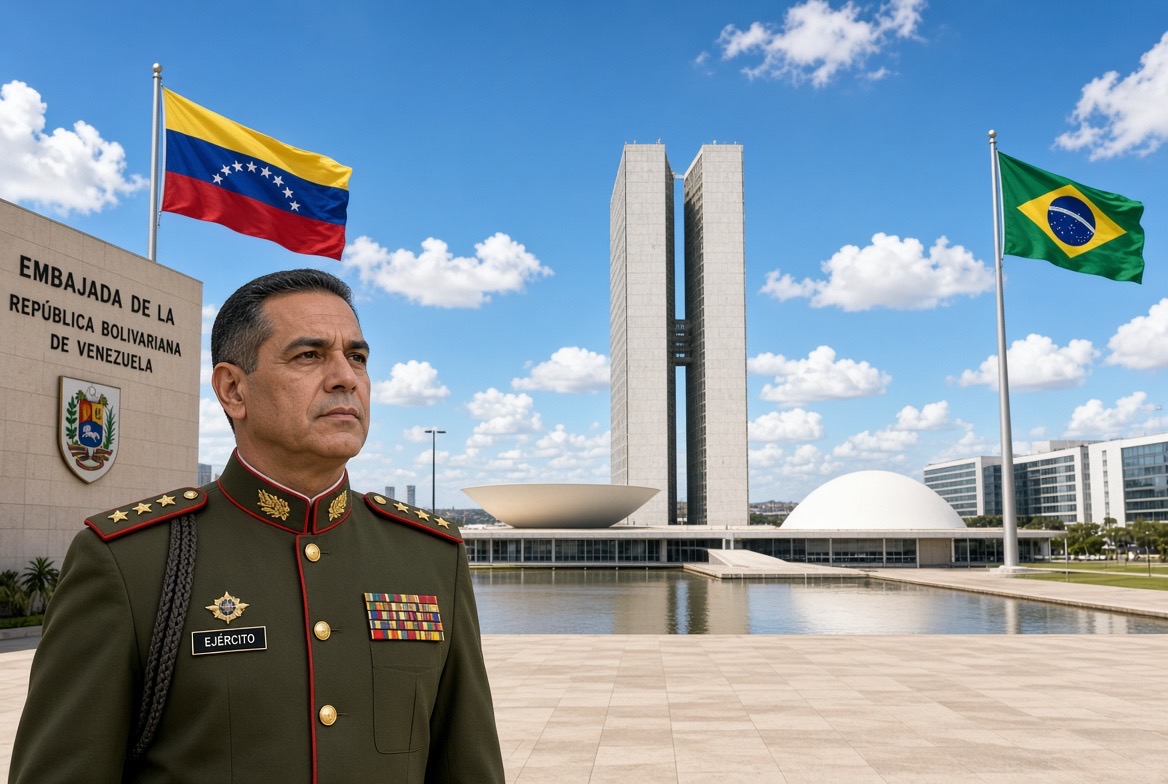
The Controversial Presence of Luis Gerardo Reyes Rivero in Brazil By Hotspotnews
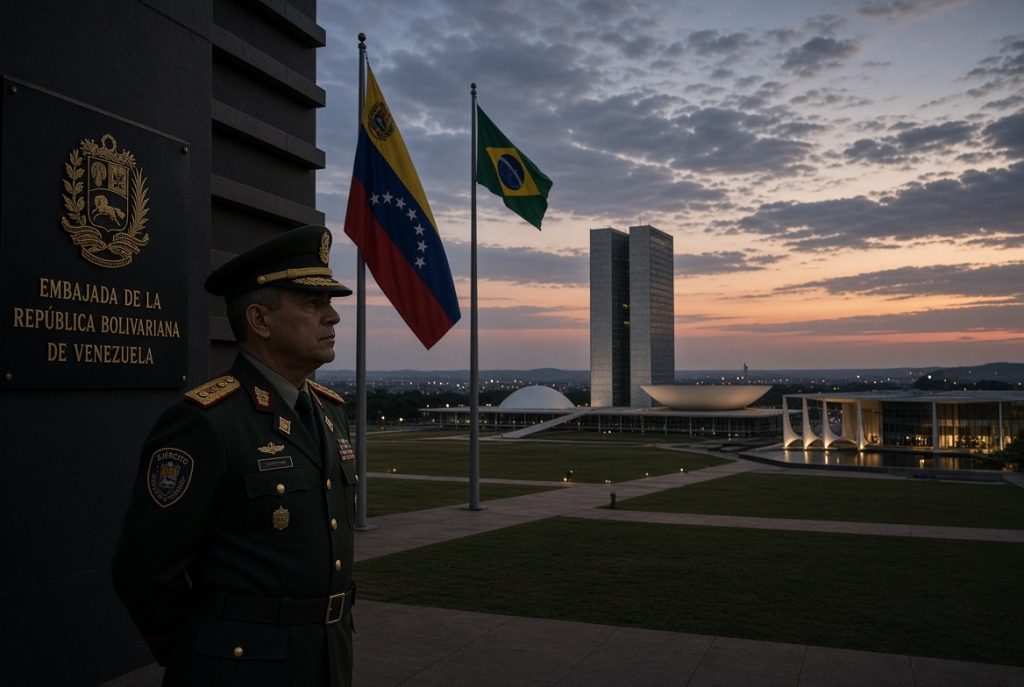

In 2026, the Brazilian government granted diplomatic clearance to Venezuelan General Luis Gerardo Reyes Rivero to serve as military attaché at the Venezuelan embassy in Brasília. The decision has drawn scrutiny because Reyes Rivero was sanctioned by the United States Treasury’s Office of Foreign Assets Control (OFAC) in November 2024 for his alleged role in the repression that followed Venezuela’s disputed July 2024 presidential election. He functioned as a senior enforcer of Nicolás Maduro’s security apparatus during that crackdown.
Reyes Rivero previously served as commander and division general of the Yaracuy Zona Operativa de Defesa Integral (ZODI), a regional joint command integrating army and Guardia Nacional Bolivariana (GNB) units. According to the U.S. designation, he was among a group of security officials who supported and executed Maduro’s orders to repress civil society after the 28 July 2024 vote, in which Maduro claimed victory despite opposition evidence (including collected tally sheets) that Edmundo González had won. The allegations specifically tied to his command included the use of firearms against protesters, arbitrary detentions, and reported abuses involving minors. The sanctions placed him on the Specially Designated Nationals list. These are unilateral American measures and do not automatically apply in other countries.
Under standard diplomatic procedure, a host government must issue a “beneplácito” (agrément) before a foreign military attaché can take up post. In this case, Brazil’s Ministry of Defense, led by José Múcio, reviewed the Venezuelan request and informed the Foreign Ministry (Itamaraty) that it found “no obstacle” to approval. Itamaraty, under Foreign Minister Mauro Vieira, then formally communicated the clearance to the Venezuelan embassy. The process became public only after a congressional inquiry; Vieira confirmed the details to the Chamber of Deputies’ Foreign Relations and National Defense Committee on 31 July 2026. Officials noted that searches of government archives found no clear prior precedent for accrediting a diplomat or attaché already subject to unilateral sanctions imposed by a third country. Approval itself occurred earlier, around April–May 2026.
Brazil’s stated position is consistent with longstanding foreign-policy practice: the country implements only sanctions adopted by the United Nations Security Council and does not automatically enforce unilateral designations issued by individual states. Brazilian authorities have described the U.S. measures as a matter between Washington and Caracas that does not, by itself, bar diplomatic personnel from serving in Brasília. The episode sits against a broader backdrop of Brazil-Venezuela relations under President Luiz Inácio Lula da Silva. Ties were cooled after the 2024 election dispute, yet diplomatic channels remained open; Brazil later recognized Delcy Rodríguez as interim leader following the January 2026 U.S. operation that removed Nicolás Maduro.
Critics, including opposition lawmakers and segments of the Brazilian press, argue that the clearance effectively overlooks serious human-rights allegations against a Maduro-era regional commander who oversaw repressive operations and signals a permissive stance toward figures associated with the regime’s security apparatus. Supporters of the decision frame it as a routine exercise of sovereign prerogative and a refusal to allow extraterritorial unilateral sanctions to dictate Brazilian diplomatic practice. As of early November 2026, the Chamber of Deputies has continued to seek further explanations from the Defense Ministry about the criteria applied in the review.
The presence of Reyes Rivero in Brasília as a Venezuelan military attaché is therefore less a matter of Brazilian employment than of diplomatic accreditation of a senior officer who served as a Maduro enforcer in the 2024 post-election repression. Whether the decision represents ordinary procedure or a consequential political choice remains contested, reflecting deeper disagreements over Brazil’s approach to Venezuela, unilateral sanctions, and the weight given to human-rights records in bilateral military-diplomatic relations.
Hashtags
#LuisGerardoReyesRivero #Venezuela #Brasil #Itamaraty #MinisterioDaDefesa #SancoesEUA #AdidoMilitar #PoliticaExterna #Lula #GuardiaNacionalBolivariana #Maduro
Sources
U.S. Department of the Treasury, Office of Foreign Assets Control, Specially Designated Nationals listing of Luis Gerardo Reyes Rivero, 27 November 2024 (citing his role as Yaracuy ZODI commander in executing post-election repression orders).
Itamaraty written response to the Chamber of Deputies Foreign Relations and National Defense Committee, confirmed by Foreign Minister Mauro Vieira, 31 July 2026.
Reporting by VEJA, Metrópoles, UOL, El País, Diário do Poder, and Revista Oeste on the Defense Ministry’s “no obstacle” determination and the subsequent accreditation (2026).
Brazilian official statements affirming that only UN Security Council sanctions are automatically implemented.


