


The brief Brazil-US encounter during G7 about old past conversations
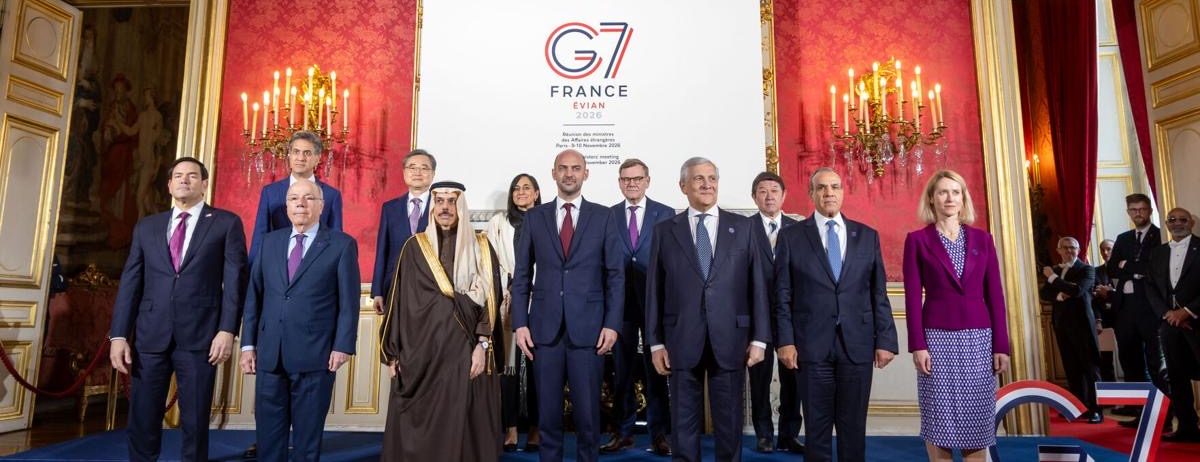

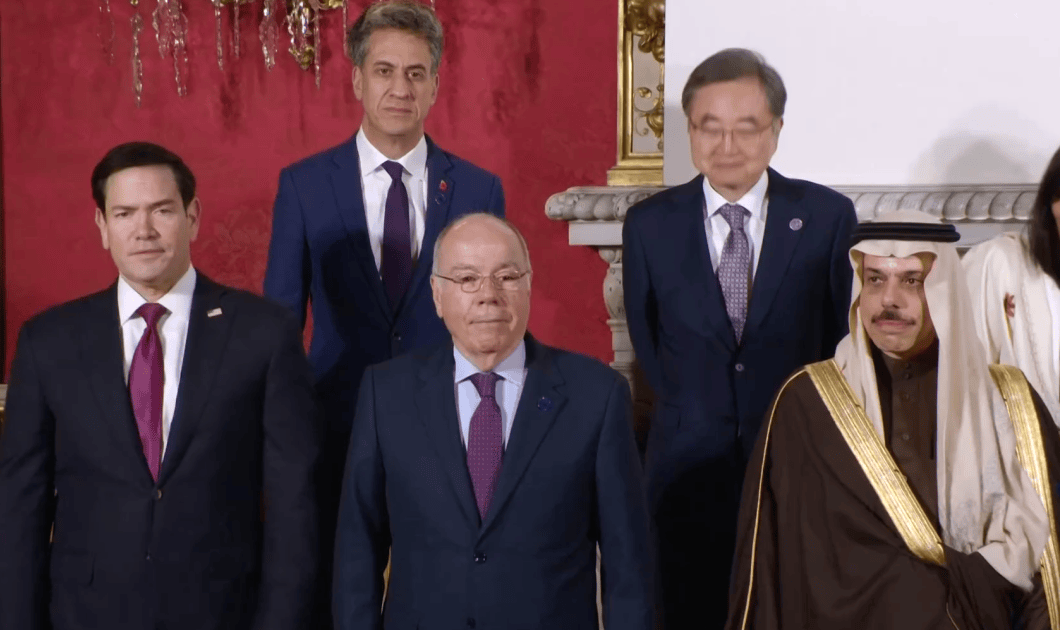
During the G7 foreign ministers meeting in Paris on November 9, 2026, U.S. Secretary of State Marco Rubio and Brazilian Foreign Minister Mauro Vieira shared a brief, informal encounter. The two posed together for the traditional family photograph of participants and exchanged a few words afterward, according to reporting from Brazilian outlets including Metrópoles. No formal bilateral meeting was scheduled or confirmed at the time.
Brazil participated as an invited guest of the French G7 presidency, not as a full member. The agenda focused on topics such as artificial intelligence governance, global stability, and international crises. Rubio’s public remarks, delivered on the sidelines, made clear that engagement with the Brazilian government under President Luiz Inácio Lula da Silva would continue. He noted that he and Vieira “get along great,” that they speak regularly when their paths cross, and that further conversation was likely while both were in Paris. At the same time, he identified a clear problem: the Brazilian government’s continued refusal to grant agrément — the formal diplomatic approval — for Daniel Perez, the Trump administration’s nominee for U.S. ambassador in Brasília.
Perez, Speaker of the Florida House and a Cuban-American Republican aligned with the America First approach, was nominated in June 2026 and confirmed by the U.S. Senate in August by a 51-47 vote. The United States has lacked a Senate-confirmed ambassador in Brasília since early 2025. Rubio described the resulting imbalance as unsustainable: Brazil maintains an ambassador in Washington while blocking the American counterpart from taking up post. He stated that the delay “does not set a good tone” for the relationship and that the issue “has to be fixed.” He indicated that resolving the ambassadorial vacancy would be an early priority, alongside outstanding trade matters.
The impasse did not arise in isolation. U.S. officials announced Perez’s nomination publicly before the conventional confidential request for agrément, a step Brazilian diplomats viewed as a breach of protocol. In August, the Trump administration revoked the multi-entry visa of Brazilian Ambassador Maria Luiza Viotti, presenting the action as a reciprocal response to the prolonged delay and to earlier Brazilian visa decisions. Additional friction followed the Brazilian presidential election, including U.S. handling of Flávio Bolsonaro’s post-election presence in the United States. Brazilian officials have indicated that agrément was unlikely before the election and have treated the visa status of their ambassador in Washington as a linked matter.
The Paris encounter itself was modest — a photograph and a short exchange after months of lower-level contacts, including a brief conversation on the margins of the G20 foreign ministers meeting in Atlanta in late October. It occurred against a backdrop of structural differences on trade, regional policy, and the proper role of U.S. diplomacy in the hemisphere. From a conservative perspective, the episode underscores a recurring pattern: a left-leaning Brazilian government that accepts U.S. engagement when convenient yet withholds routine diplomatic reciprocity when it serves domestic or ideological purposes. Maintaining an ambassador in Washington while denying the same status to the United States is not neutral diplomacy; it is a one-sided arrangement that Rubio correctly flagged as unsustainable.
Functional bilateral relations between the two largest democracies in the Western Hemisphere require basic reciprocity. Prolonged vacancies at the ambassador level hinder coordination on trade enforcement, transnational crime, critical minerals, and security. Rubio’s public posture — willingness to deal with the Lula government combined with an explicit demand that the agrément be granted — reflects a pragmatic prioritization of U.S. interests over symbolic harmony. Whether Brasília treats the brief Paris interaction as an opening to restore normal diplomatic representation, or continues to use the vacancy as leverage, will indicate how seriously it values a workable relationship with Washington.
Sources: Reporting and statements covered by Valor Econômico, Metrópoles, Gazeta do Povo, Estado de Minas, CNN Brasil, and contemporaneous accounts of Rubio’s remarks at the G7 foreign ministers meeting in Paris.
#USBrazilRelations #MarcoRubio #G7Paris #DiplomaticReciprocity #AmericaFirst #LulaGovernment #AmbassadorImpasse #WesternHemisphere #TradeAndSecurity #Itamaraty #StateDepartment #ReciprocityMatters #BrazilUS #ForeignPolicy #MAGADiplomacy #G7Meeting #MauroVieira #DanielPerez #Agrément #BilateralRelations


