




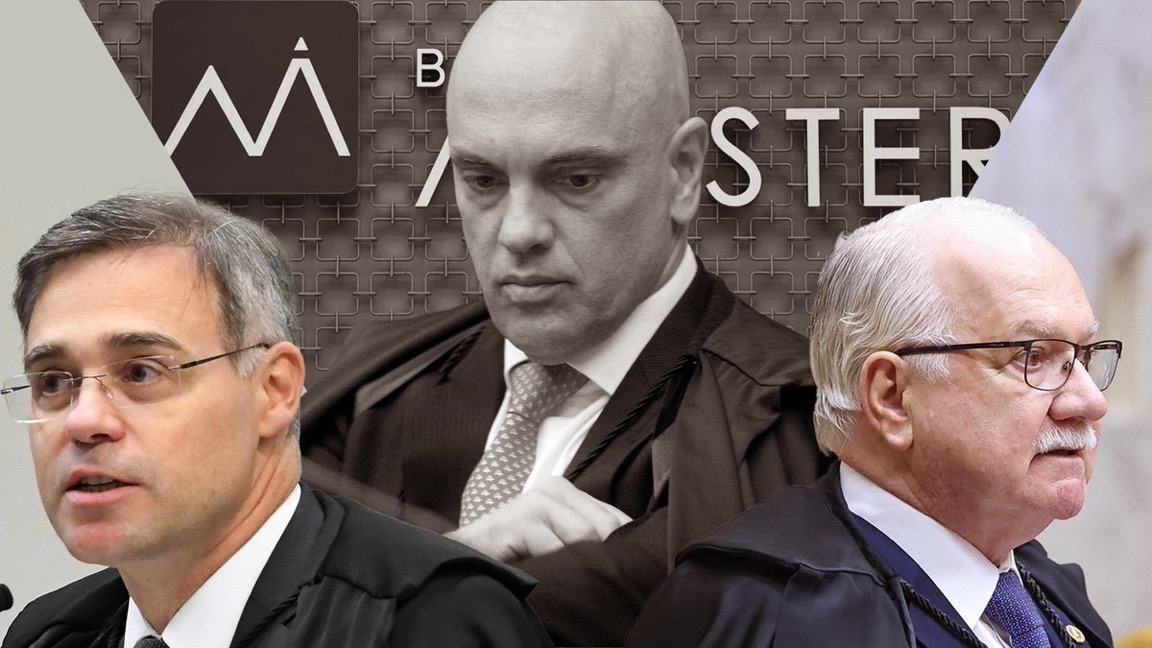
The Court Above the Law
By Hotspotnews
A conservative reading of this STF crisis is not that two justices simply dislike each other. It is that Brazil’s highest court has become a political battlefield in which power, procedure and evidence are all treated as weapons—and the public is expected to accept it as “institutional maturity.”
Start with the obvious double standard. For years a large part of the Court treated one minister as untouchable: a kind of super-judge who could concentrate inquiries, impose speech restrictions, and act as investigator, accuser and referee in the same breath. The moment another minister—appointed by a different political camp—used the Court’s own tools to put that figure under the same light, the reaction was not “the law applies to everyone.” It was panic, procedural improvisation, and a scramble to contain the damage. That is not equality before the law. That is caste.
The Vorcaro material is the test. A sitting justice appearing in messages from a banker under investigation—messages that, according to the police work now circulating inside the Court, include requests for help against investigations, talk of leaving the country, and links to a large contract involving a family law firm—is not a “narrative.” It is a fact pattern that would destroy an ordinary official.
Conservatives do not need to declare guilt in advance. They do need to insist that the same standard used against governors, deputies, businessmen and journalists be used here. If the answer is that a Supreme Court minister cannot even be investigated without the Court first inventing a special ritual to protect itself, then the Court has announced that it sits above the Republic.


The timing is not accidental. Weeks before a national election, the country’s constitutional court is consumed by whether one of its members can be examined at all. That is a gift to every cynic who already believes the judiciary is a faction. Conservatives who spent years warning that an unbound Court would eventually devour its own legitimacy were not being melodramatic. They were describing a foreseeable outcome: when judges become political actors, they lose the authority to lecture everyone else about institutions.


The Court can still recover a measure of dignity—but only if tomorrow’s session is about facts and jurisdiction, not about protecting a brand. If it becomes another exercise in shielding one of their own while the rest of the country is told to trust the process, the damage will not stay inside the marble. It will confirm what many Brazilians already see as a fact: that the last word in Brazilian public life is no longer the law, but which faction holds the robe.


