





The Court That Remembers Its Limits Only After the Votes Are Cast
By Hotspotnews
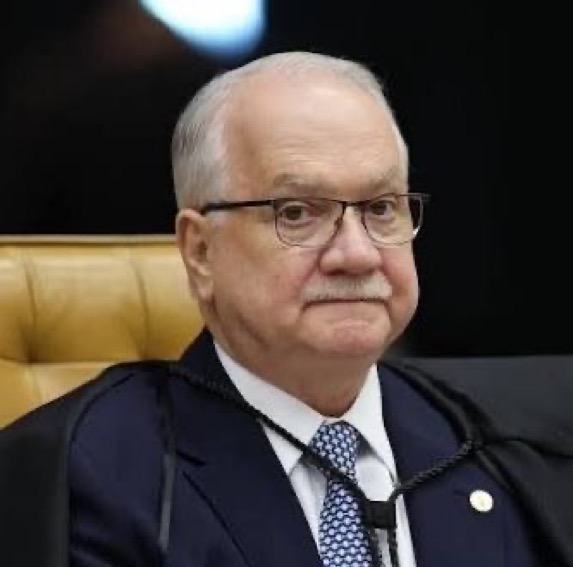
Fachin’s belated reminder that the Supreme Federal Court does not own the Constitution arrives one day after Brazilians voted in the first round of the 2026 presidential election. The timing itself is the story. For years the court has acted as though its role as guardian of the 1988 Constitution authorized it to set the boundaries of political speech, election rules, and executive power. On October 5, 2026, its president, Edson Fachin, stated in an event at the court that guarding the Constitution “is not possessing it nor becoming its master.” The distinction is elementary. It is also one the court has repeatedly declined to observe. It is late for that.
The STF’s constitutional function is to interpret and apply the text, not to supply the political outcomes it prefers. Brazilian conservatives have argued since at least the 2018–2022 cycle that successive majorities on the court expanded that function into supervision of the electoral process, content moderation orders against media and private citizens, and investigations that blurred the line between judicial and investigative power. Decisions touching the 2022 election, the January 8 inquiries, and platform speech rules were defended by the court as necessary defenses of democracy. Critics answered that the same court was defining both the threat and the remedy, then insulating its own procedures from ordinary legislative or electoral correction. Fachin’s phrasing concedes the conceptual point those critics have made: protection of the constitutional order is not a grant of residual sovereignty to eleven justices. Saying so only after the ballots are cast does not undo what was already done.
Nothing in the October 5 remarks reverses prior judgments or restores competences the court has already exercised. Fachin also reiterated that the tribunal stands above changes of government and that its decisions should be clear, independent, and collegial. Those are institutional platitudes. They do not address whether earlier expansions of jurisdiction were themselves clear applications of the constitutional text or whether they substituted judicial preference for the separation of powers set out in Articles 2, 49, and 102. A court that only rediscovers its limits after an election has already been held leaves the practical question unanswered: which past acts, if any, exceeded the boundaries it now says it must respect. It is late for that acknowledgment to function as a restraint.
Popular sovereignty is the other clause Fachin invoked. The Constitution vests legislative power in Congress and executive power in the president elected by the same voters who cast ballots on October 4. When a constitutional court treats contested political questions as matters it alone may settle, it reduces that sovereignty to a residual right to choose office-holders whose subsequent acts remain subject to continuous judicial revision. Conservatives have maintained that this is not neutrality; it is a structural preference for judicial finality over electoral finality. The fact that the reminder was issued immediately after the first round, rather than during the years the contested decisions were issued, supplies the grounds for skepticism rather than reassurance. The objection is not that the sentence is wrong. The objection is that it is late.
The statement can still be useful if it is treated as a constraint rather than a press release. Guarding the Constitution requires the court to identify the specific textual limit it claims to enforce and to accept that some disputes belong to the elected branches even when the court dislikes the likely result. If the October 5 language produces narrower opinions, fewer unilateral inquiries, and greater tolerance for legislative responses, it will have mattered. If it remains a formulation offered once the votes are cast, it will stand as further evidence that the court recognizes the objection without accepting the remedy. On the record so far, it is late for that.
#STF #Fachin #Constituição #SeparaçãoDePoderes #Eleições2026 #PoderJudiciário
Sources: Remarks by Edson Fachin, President of the Supremo Tribunal Federal, delivered 5 October 2026 and reported by Revista Oeste; Constitution of the Federative Republic of Brazil (1988), Articles 1, 2, 49, and 102; contemporaneous public criticism of STF electoral and speech rulings published by Gazeta do Povo and O Antagonista between 2022 and 2025.


