



The Judicial Persecution of Jair Bolsonaro: Alexandre de Moraes’ Desperate Endgame
By Hotspotnews
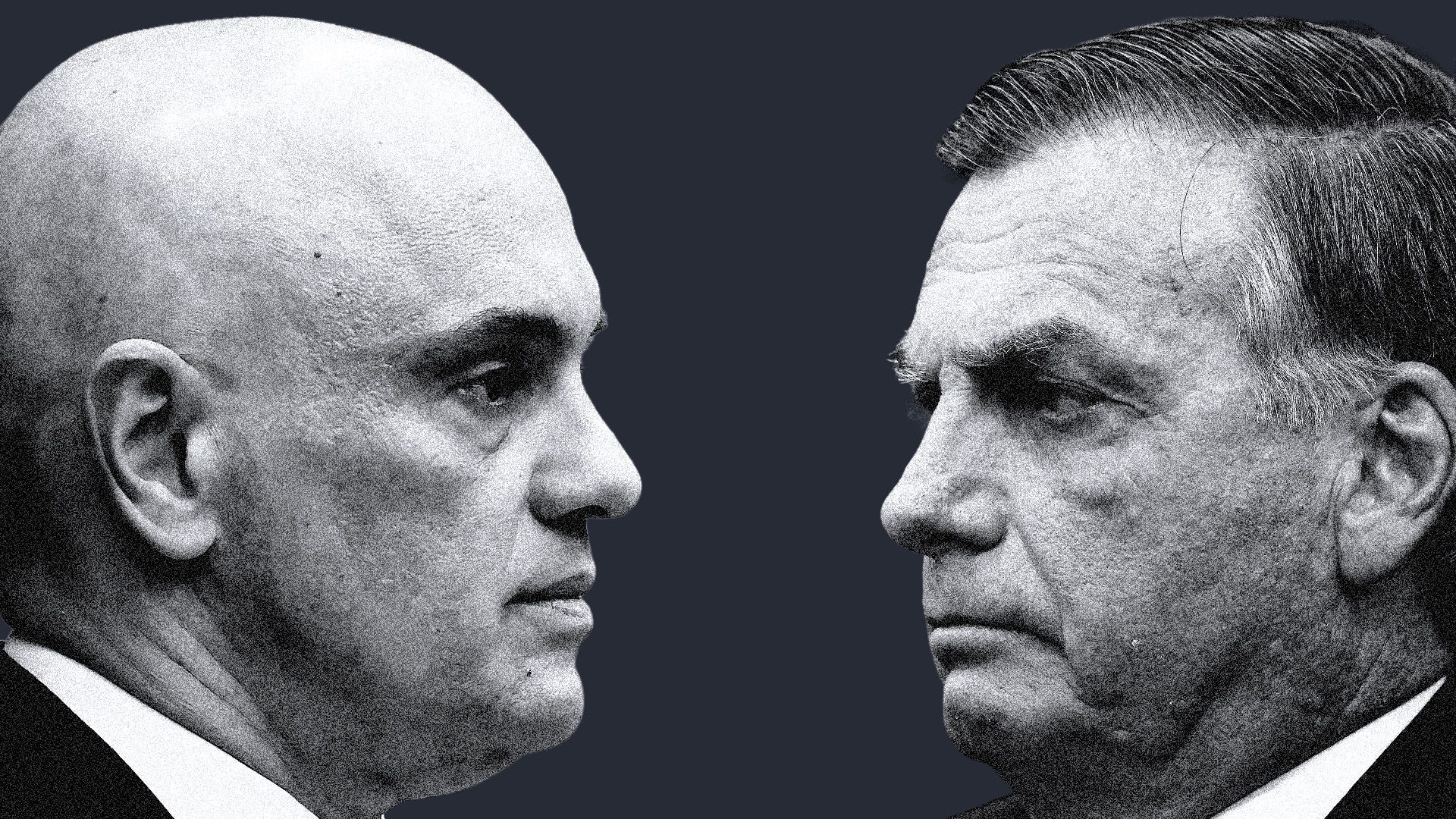
As the 90-day humanitarian house arrest granted to former President Jair Bolsonaro expires on June 25, 2026, Brazil confronts yet another stark display of judicial overreach. Supreme Federal Court (STF) Justice Alexandre de Moraes, the central figure in the long-running cases against Bolsonaro and his allies, now appears to be acting with increasing urgency and personal intensity. With the core “trama golpista” investigations largely concluded—convictions secured and the investigative phase largely exhausted—Moraes seems determined to extract one more pound of political flesh from the former president. In doing so, he risks signing his own confession: that the pursuit has always been more about neutralizing a political adversary than delivering impartial justice.
Bolsonaro, already convicted in proceedings many conservatives view as fundamentally flawed and politically motivated, was granted temporary house arrest in March 2026 on strictly humanitarian grounds. Suffering from bronchopneumonia and the lingering effects of multiple surgeries and the 2018 assassination attempt, the 71-year-old former leader received a limited reprieve. That concession now stands threatened by what critics rightly describe as a manufactured controversy: the seizure of a legally registered 9mm firearm associated with his security detail.
A Pretext Born of Desperation
Defense attorneys have clarified that the weapon was being transported for maintenance, rendered inoperable as a prudent measure given Bolsonaro’s health and medication, and that the former president had no operational involvement. Yet Moraes moved swiftly on June 24, demanding a rapid assessment from the Prosecutor General’s Office on whether this technical lapse constitutes a “serious fault.” He has openly floated the possibility of revoking house arrest and consigning Bolsonaro to a restrictive prison regime normally reserved for leaders of criminal organizations such as the PCC.
This escalation betrays a palpable sense of urgency. The broadest elements of the coup-plot narrative have run their course. Major convictions are in place. Co-defendants have been sentenced. The investigative momentum that once justified sweeping precautionary measures has slowed. In this climate, Moraes appears unwilling to allow the pressure to ease. Instead, he seizes upon a relatively minor security detail issue at the precise moment the humanitarian window closes. To many observers, this reads less like diligent enforcement and more like a personal and institutional effort to keep Bolsonaro neutralized, deter any potential political resurgence, and remind the nation that the judiciary—not the electorate—holds ultimate sway.
By inflicting fresh pain on Bolsonaro at this juncture—threatening to strip away even basic humanitarian relief long after the main investigative “victories” are secured—Moraes effectively signs a confession of sorts. The disproportionate focus on the man himself, rather than any new substantive evidence, reveals the underlying weakness of the broader campaign. When procedural technicalities become pretexts for harsher treatment precisely as momentum fades, it suggests the process was never primarily about uncovering truth or upholding the rule of law, but about ensuring one political figure remains sidelined indefinitely.
A Pattern of Selective and Personalized Justice
Moraes has functioned throughout as investigator, prosecutor, judge, and enforcer in these matters. Precautionary restrictions on speech, assembly, and communication have been applied with a severity seldom directed at political actors on the left facing comparable allegations. Technical or third-party infractions trigger disproportionate responses. The timing of this latest action—immediately before the expiration deadline and following a formal defense request for extension based on ongoing medical needs—only heightens suspicions of motive. When the major investigative victories are already secured, the focus narrows to the man himself. This is the hallmark of lawfare: the weaponization of legal processes not merely to punish past actions, but to prevent future ones.
International observers, including voices from the United States, have previously raised alarms over censorship, arbitrary restrictions, and the concentration of power in a single unelected justice. While those concerns have not altered the domestic trajectory, they underscore the growing perception that Brazil’s institutions are drifting from impartial guardianship of the Constitution toward active political management.
The Human and Symbolic Dimension
The personal toll is undeniable. Bolsonaro’s health remains fragile. House arrest, with its ankle monitor, visitor limits, and constant oversight, was already a burdensome compromise. Revoking it now, on grounds many view as tenuous, would represent a deliberate choice to prioritize institutional signaling over basic humanitarian considerations. Michelle Bolsonaro’s public reference to Moraes as “nosso irmão em Cristo” adds another layer to the drama—reflecting evangelical faith and hope for transformation amid what her supporters see as unrelenting adversity. Yet such grace does not obscure the asymmetry: one side offers prayer while the other wields the full apparatus of state coercion.
What This Means for Brazil
Should Moraes choose revocation or harsher terms in the coming hours or days, it will not be remembered as a victory for the rule of law. It will stand as further evidence of institutional capture, where the end of a formal investigation does not bring closure but instead intensifies the campaign against a dissenting political figure. Millions of Brazilians already feel that their democratic choices have been subordinated to the preferences of a judicial elite. This episode risks deepening that alienation.
Conservatives have consistently warned that concentrated, unaccountable power—especially when vested in a handful of Supreme Court justices—endangers liberty far more than any single politician. Brazil’s Constitution demands separation of powers, due process, and equality before the law. When discretionary authority allows one man to dictate the conditions of a former president’s existence long after the investigative “emergency” has passed—and to do so with apparent personal zeal—it erodes those constitutional safeguards.
The defense’s request for an extension, grounded in documented health concerns, deserves serious consideration on its merits. Yet the decision rests with Moraes. In choosing his course, he will reveal whether Brazilian justice remains tethered to evidence and proportionality—or whether it has become an instrument for managing political outcomes and settling institutional scores.
This is no longer solely about Jair Bolsonaro. It is a test of whether Brazil retains the republican character it claims, or whether it will permit a single justice’s apparent endgame desperation to define the limits of political opposition. True accountability must extend to the judiciary itself if the nation is to restore balance and public trust.


