
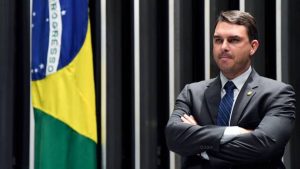



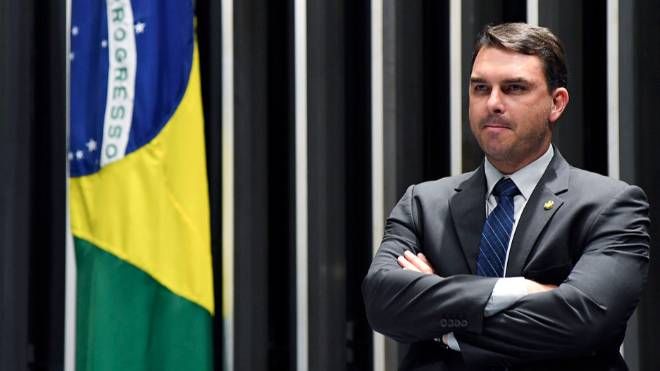
The Law Protects the Vote: Why Flávio Bolsonaro Will Take Office If Elected
By Hotspotnews
Brazil’s presidential runoff on October 25 places Senator Flávio Bolsonaro of the Liberal Party against incumbent President Luiz Inácio Lula da Silva. With the race tight and Flávio having led the first round, attention has turned to ongoing Federal Police inquiries involving the candidate, including one on alleged money laundering ties to lawyer Willer Tomaz that was assigned to Supreme Court Justice Alexandre de Moraes, and another related to the financing of the film Dark Horse.
These investigations are real and must follow normal legal channels. What is not real is the idea that authorities can simply launch a decisive operation against the leading candidate days before the vote, or that becoming a formal defendant would automatically bar him from assuming the presidency if voters choose him. Article 236 of the Electoral Code prohibits the arrest or detention of second-round candidates from October 10 until 48 hours after the polls close on October 25, except in cases of flagrante delito. This longstanding rule exists precisely to prevent last-minute judicial or police actions from distorting the electoral process. A high-profile operation resulting in Flávio’s detention before Sunday would violate that clear prohibition and risk being seen as an attempt to override the popular will.
Turning an inquiry into formal charges that make someone a réu is not a one-day event. It requires the Public Prosecutor’s Office to file a denúncia and the Supreme Court to accept it after proper procedure. Even critics of the judiciary acknowledge this timeline. Suggestions that Flávio could be rendered ineligible overnight ignore both the letter of the law and political reality: a president-elect carries the mandate of millions of voters. Applying older precedents about temporary succession (such as the 2016 ADPF 402 ruling on the line of succession) to block an elected candidate from taking office would be an unprecedented stretch with no settled basis in current case law.
If Flávio wins, the Constitution’s temporary immunity provisions for a sitting president regarding non-functional crimes further complicate any immediate attempt to prevent inauguration. Investigations can continue, but the orderly transfer of power after a free election remains the default under Brazilian law. Claims of an inevitable post-election “operation” if he loses, or automatic blockage if he wins, rest on speculation rather than statute. The Superior Electoral Court has already acted against certain social media posts linking the candidate to specific operations for lacking factual basis, underscoring that courts are actively policing campaign discourse on both sides.
Voters, not judges or investigators, decide the presidency. The legal framework currently in place protects the integrity of the runoff and the ability of the winner to assume office. Any effort to short-circuit that framework through timing or novel legal theories would undermine confidence in institutions far more than any single candidate’s background. Brazil’s democracy depends on elections being allowed to conclude without extraordinary interference.
#Eleicoes2026 #FlavioBolsonaro #Democracia #JusticaEleitoral #VotoPopular #STF
Sources:
Código Eleitoral, Article 236 (restrictions on arrest of candidates); Tribunal Superior Eleitoral (TSE) public statements on second-round protections effective October 10–27, 2026; Valor Econômico and G1 reporting on Federal Police inquiries involving Flávio Bolsonaro and Willer Tomaz, assigned to Justice Alexandre de Moraes; Brazilian Constitution, Article 86, §4º (presidential accountability rules); ADPF 402 (STF, 2016) regarding line of succession; TSE decisions ordering removal of posts linking the candidate to Operation Unha e Carne for lack of factual basis.


