




The Lula-Toffoli Rift Exposes the Rot at the Heart of Brazil’s Leftist Judiciary
By Hotspotnews
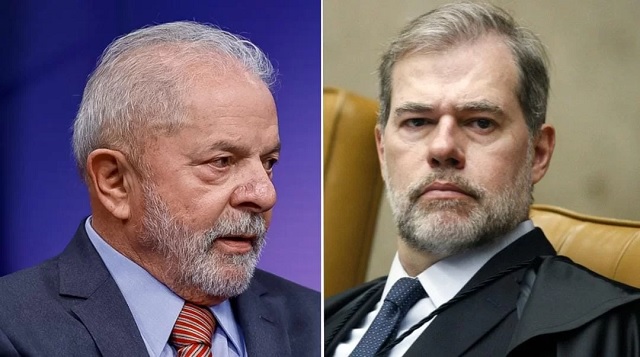
In what should surprise no one who has watched the Brazilian left consolidate power over the past two decades, President Luiz Inácio Lula da Silva is reportedly growing exasperated with one of his own handpicked Supreme Court justices: Dias Toffoli. The flashpoint? The sprawling Banco Master scandal—a multibillion-dollar fraud scheme that reeks of cronyism, political protection, and institutional capture.
Sources close to the Planalto palace indicate Lula has privately vented frustration over Toffoli’s handling of the case. During a discreet, off-the-books lunch that also included Finance Minister Fernando Haddad, the president reportedly delivered a pointed message: Toffoli has a chance to “rewrite his biography” by bringing the investigation to a swift, clean conclusion—or face consequences. Behind closed doors, Lula has gone further, suggesting the minister should consider stepping down from the court altogether or at least recusing himself from the Master probe.
This is not mere palace intrigue. It is a revealing crack in the façade of unity that the Workers’ Party (PT) and its judicial allies have labored to maintain. Toffoli, appointed to the Supreme Federal Court (STF) by Lula himself during his first term, has long functioned as a reliable guardian of the establishment left. Yet even loyalty has its limits when massive fraud threatens to splash mud across the government’s image.
The Banco Master affair involves allegations of a roughly R$ 40 billion operation built on irregularities, money laundering suspicions, and questionable financial engineering that somehow escaped serious scrutiny for years. As relator of the inquiry, Toffoli has drawn fire for a string of questionable decisions: imposing near-total secrecy (mocked in some circles as “sigilo master”), rejecting requests from the Central Bank for clarification on key procedural steps, and presiding over confrontations that have left regulators and investigators uneasy. Adding fuel to the fire are persistent reports of personal and family connections linking the justice to parties with ties to the case, including real-estate ventures and shared business history with figures close to the bank’s former controllers.
For conservatives who have long warned that the STF has morphed into an unelected super-legislature shielding allied interests, the current spectacle offers grim vindication. When even Lula—hardly a champion of judicial independence—begins questioning the impartiality and competence of his own appointee, the public should take note. The president fears the case could feed a powerful narrative of impunity, one that undermines his administration’s carefully cultivated image as a crusader against white-collar crime.
Yet the deeper scandal lies in the system itself. Toffoli’s tenure illustrates how judicial appointments in Brazil have too often rewarded political fidelity over merit or detachment. The same court that eagerly pursues ideological opponents now stumbles when forced to confront potential embarrassments tied to the ruling coalition. The reluctance to devolve the case to first-instance jurisdiction—viewed internally as a graceful exit for the minister—only underscores the instinct to retain control rather than pursue justice.
Conservatives have argued for years that true reform requires structural change: limiting the STF’s jurisdiction in non-constitutional matters, imposing term limits on justices, and restoring balance to an institution that has accumulated disproportionate power. The Banco Master mess, and the quiet implosion of trust between Lula and Toffoli, should serve as a wake-up call. When the left’s own machine begins to devour its favored sons, ordinary Brazilians suffer the consequences—lost savings, eroded confidence in institutions, and the nagging sense that justice remains reserved for the powerful.
The irony is thick. A government that preaches moral superiority now finds itself entangled in yet another episode that smells of protectionism and backroom dealing. If Lula truly wants accountability, he should lead by example: demand transparency, support recusal where conflicts exist, and allow the facts—however uncomfortable—to speak for themselves. Anything less simply confirms what many already suspect: in today’s Brazil, the rule of law too often bends to protect those who helped write the rules.
The conservative prescription remains unchanged: restore judicial humility, dismantle excessive secrecy, and return accountability to the people rather than to palace courtiers and their robed allies. Only then can Brazil begin to rebuild trust in its broken institutions. Until that day arrives, episodes like this one will continue to remind us why real change cannot come from within the same compromised circle that created the problem.


