




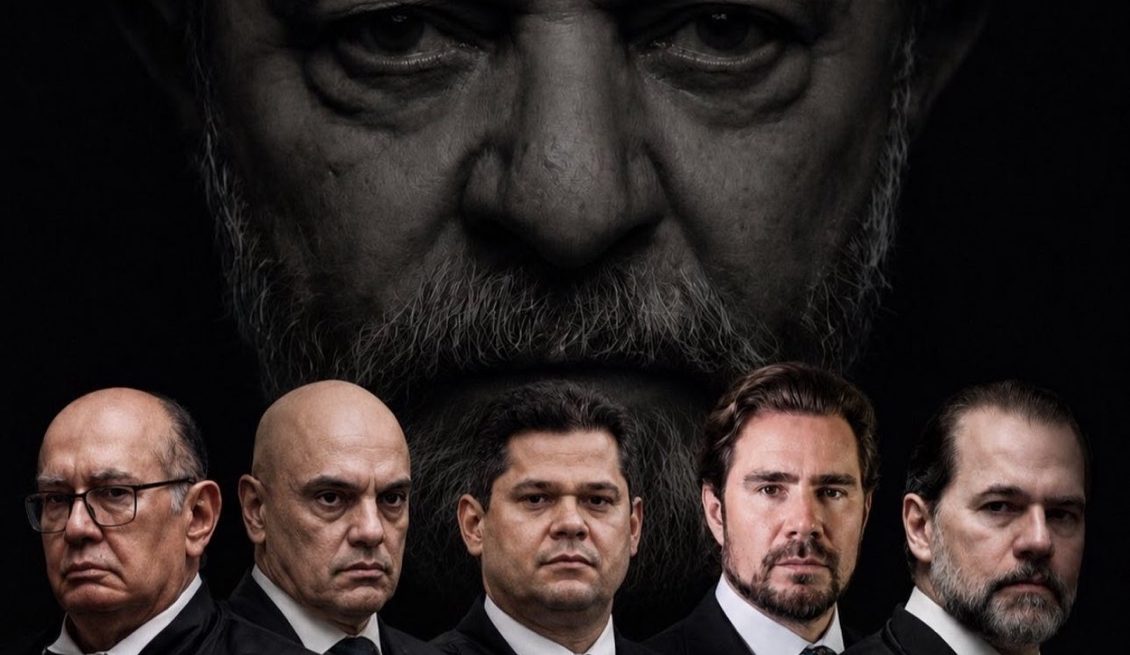
The Pension Theft and the Court That Looked Away
Research assisted by Grok. Figures drawn from the CPMI reports, CGU/INSS data, and press accounts of police and contract records. Publicly reported figures compiled with AI assistance. Not an official investigation.
By Hotspotnews
Brazil did not merely suffer a fraud against retirees. It revealed a ladder of corruption, from the clerk who inserted a fake membership to the minister who helped close the inquiry when the names got too close. The CPMI do INSS mapped the lower rungs. The Supreme Federal Court, by ending the commission and treating the scandal as a problem of leaks and deadlines rather than of power, showed how the top rung works.
What the records established
For years, associations and unions took money straight from INSS benefits. The Controladoria-Geral da União first estimated about R$ 6.3 billion in damage. The rapporteur of the mixed inquiry, Deputy Alfredo Gaspar, later compiled roughly R$ 10.5 billion in deductions across 47 entities from 2015 to 2025. The government majority preferred a lower figure, around R$ 3.3 billion, after refunds. Those numbers describe different cuts of the same wound. They do not cancel the wound.
The deductions exploded after 2022: from under R$ 800 million a year to more than R$ 1.3 billion in 2023 and R$ 2.7 billion in 2024. Auditors told the commission that almost every retiree sampled had not authorized the charge. Contag, Conafer, Sindnapi and Ambec sat at the top of the collection list. Operators such as Antônio Carlos Camilo Antunes, known as Careca do INSS, received hundreds of millions while front-men’s personal accounts stayed nearly empty. A web of some 41 shell firms moved about R$ 39 billion. That was not all pension money. It was the plumbing. The INSS skim plugged into it.
Beside the associations sat the consignado market: tens of millions of active loans and hundreds of billions in volume over a decade. Banco Master, founded by Daniel Vorcaro, entered that story as a lender under suspicion and as a bank later liquidated after a liquidity collapse. The inquiry asked for accountability of bank executives. It also found Vorcaro’s contacts reaching into Congress, regulators and the Court.
Then came the contract that turned a social-security scandal into a constitutional one. Banco Master hired the law firm of Viviane Barci de Moraes, wife of Justice Alexandre de Moraes. The instrument provided for R$ 3 million net a month for three years, about R$ 108 million net and roughly R$ 131 million gross. Tax and congressional records later showed about R$ 80 million actually paid in twenty-two installments. A second draft with a Vorcaro vehicle contemplated up to R$ 50 million and even aircraft quotas. The firm said only the first contract was signed. Police metadata later indicated the justice had edited versions of the main agreement. Moraes voted with the 8–2 majority that blocked an extension of the CPMI. After the commission died, video and flight questions around an aircraft tied to Vorcaro’s world collided with earlier denials.
The Gaspar report asked for 216 indictments, including Vorcaro and Fábio Luís Lula da Silva. Congress rejected the report. Copies went to the police and prosecutors. Millions of retirees were reimbursed with public money, about R$ 3 billion. The thieves were not finished. The file was.
Four levels of corruption
The first level is operational theft. Fake associations, mass insertion of names, unauthorized discounts, software access at Dataprev and INSS, consignado contracts signed by people who barely understood them. This is the crime the public can see on a benefit statement.
The second level is bureaucratic capture. Technical cooperation agreements opened the payroll. Directors renewed them. Complaints piled up and the machine kept running. A state that cannot tell a real member from a harvested list is not merely sloppy. It has been made useful to private collectors.
The third level is the political-financial market. Money left the associations and entered consultancies, fintechs, law offices, campaign-adjacent networks and banks. Careca’s receipts, Lulinha’s alleged benefits, Vorcaro’s book of contacts, and the Master legal fees belong here. This is where a pension deduction becomes influence.
The fourth level is judicial insulation. It is the most serious because it decides whether the first three levels ever face a court. When a justice’s household is paid by a bank under investigation, when a functional Supreme Court number appears in the banker’s traffic, when the same justice helps bury the commission seeking the passenger list and the user of the phone, the problem is no longer one crooked association. It is a caste that will not investigate itself.
Call the first level crime. Call the second negligence that became policy. Call the third the Brazilian market in proximity. Call the fourth the reason the market never closes.
Why the Court shielded its own
The official answers were legalistic. Commissions must have a fixed term. Leaks are criminal. Private conversations are sacred. The messages were not his. The contract was professional and never reached the Court’s docket. Recusal was unnecessary because he had not judged Master. Each sentence can be dressed as doctrine. Together they form a method.
First, the Court redefined the danger. The danger was not the billion-real extraction from old people. The danger was Parliament talking about ministers. Once the scandal was recast as an attack on the judiciary, ending the CPMI became self-defense.
Second, the Court used a power it denies to others. Inquiries against ordinary defendants stretch for years. An inquiry that grazed the Palace of Justice expired on a clock. The same men who invent emergencies for speech and politics discovered a sudden love of punctuality.
Third, friendship and interest were renamed institutional dignity. Vorcaro collected ministers the way a banker collects clients. Moraes’s family firm collected monthly millions. Colleagues who live in the same sealed world voted as a bloc. That is not mysterious. People rarely vote to expose the room in which they eat.
Fourth, punishment of the high caste would have broken the Court’s political business model. For years the STF has acted as tutor of Brazilian public life. A tutor cannot admit that his household sold advice to a failing bank while he sat on the fate of the inquiry. So the Court punished the inquiry.
Fifth, Congress supplied the alibi. After the extension died, the government majority rejected Gaspar’s report. The justices did not need to shred the evidence. They only needed to run out the clock and let allies do the rest.
None of this requires a cartoon in which every justice pockets a suitcase. Shielding friends is enough. In a captured republic, omission is the product.
What should be done
Start with the victims, not the robes. Every unauthorized deduction should be repaid without forcing retirees to waive future claims. The Treasury can stand in their place and collect from associations, banks and operators. If the state already spent R$ 3 billion making the poor whole, it should treat recovery as a criminal asset case, not a press release.
Break the payroll monopoly of private collectors. No association should debit a benefit without biometric, recorded, revocable consent. Dataprev insertions should leave an immutable log. A second unauthorized debit should be a felony against the operator and the public servant who enabled the file.
Open the consignado rail. Banks that stuffed contracts into pensions should face clawbacks, executive liability and a hard cap on rates charged to the old. Master’s collapse should be a warning, not a footnote.
Force recusal by bright-line rules. A justice whose spouse, child or firm received more than a trivial sum from a party, bank or lobby under investigation is barred from any vote that narrows that investigation. Editing the contract should have been enough. Voting to kill the commission after that was a confession of the conflict.
Create an investigation that the Court cannot strangle. A special counsel, chosen outside the Court’s chambers and funded for a fixed multi-year term, should inherit the CPMI files, the police reports, the Coaf analyses and the Master phones. Parliament can still hold hearings. It should not be the only room with a clock.
Publish the money. The R$ 39 billion circuit, the association rankings, the Master fee schedule, the aircraft ownership and the list of public officials in Vorcaro’s contacts should be in a public annex. Secrecy here is not privacy. It is inventory protection.
Punish leakage and concealment on the same scale. If a policeman leaked, try the policeman. If a minister denied a phone or a flight that records later support, try the denial as a political fact even when the criminal charge is harder. Democracies die when only the small liar is sworn in.
The lesson
Corruption in Brazil is not a single gang. It is a stack. The association steals the month. The ministry renews the key. The bank monetizes the list. The court calls the inquiry an outrage. Each level needs the one above it. That is why refunds without prosecutions fail, and why sermons about “defending institutions” sound like a lock clicking.
The STF did not “do nothing.” It did the one thing a captured court must do. It converted procedure into a shield and called the shield the Constitution. Until that habit is broken, every new commission will discover the same fortune in the same poor man’s pocket, and the same silence at the top of the stairs.
Sources: CPMI do INSS rapporteur report by Deputy Alfredo Gaspar; government majority separate vote; CGU and INSS deduction series presented to the commission; Senate stenographic notes; coverage and document dumps reported by Veja, Poder360, Metrópoles, Estadão, Folha de S.Paulo, O Globo, Gazeta do Povo, G1, R7, Valor Econômico and BBC Brasil; Federal Police material on Banco Master and contract metadata unsealed in 2026; AGU reimbursement and freeze figures.
#INSS #CPMI #STF #Corrupcao #Master #Moraes #Aposentados #Brasil #PrestacaoDeContas #EstadoDeDireito