




The Senate’s Secret Vote and the Fight to Stop Alcolumbre’s Continuity Project
By Hotspotnews
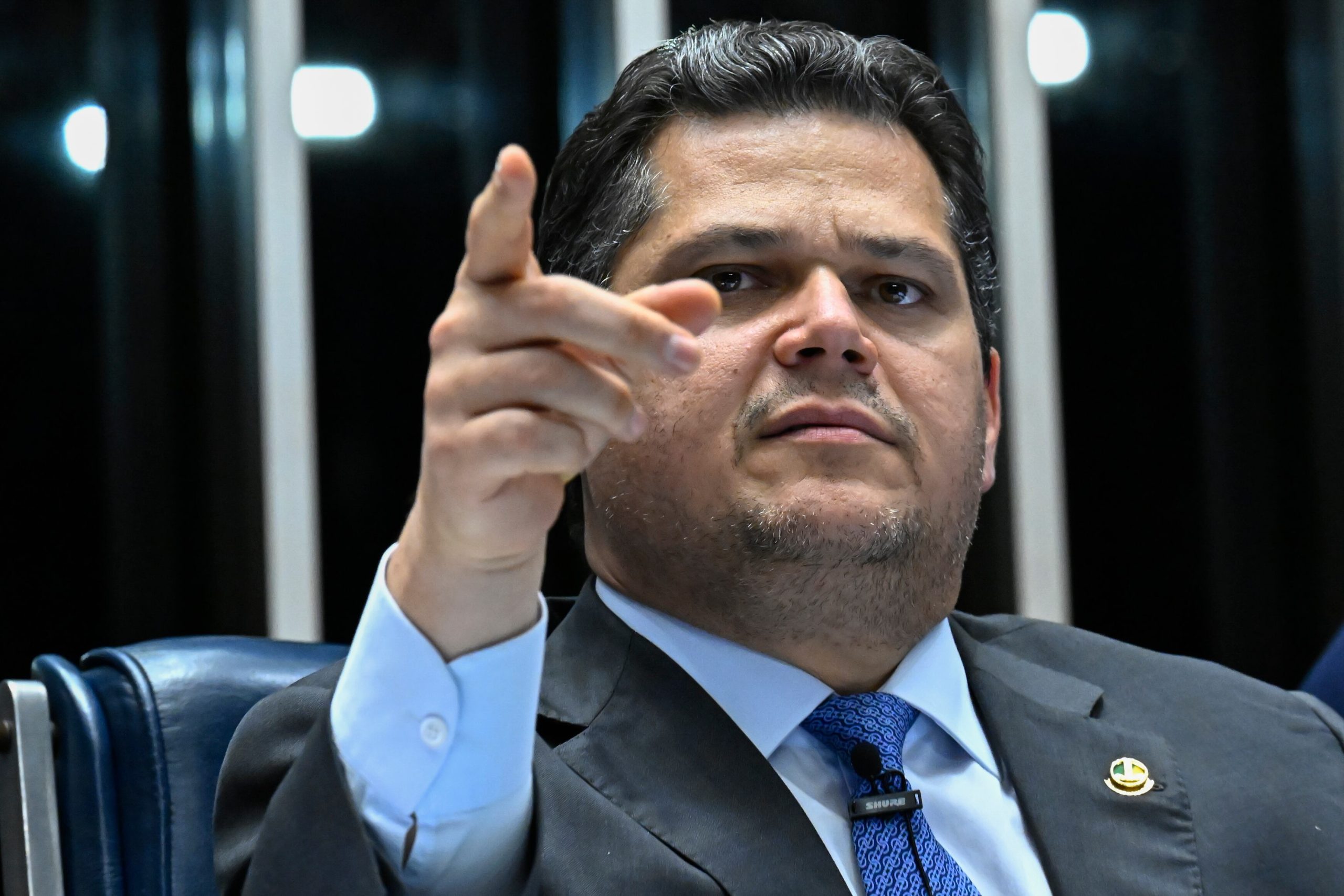
Brazil’s Federal Senate is once again preparing to choose its president under rules that favor opacity over accountability. Davi Alcolumbre, the current occupant of the presidency, is working to secure another term in February 2027. For large sectors of the conservative opposition, this is not a routine internal election. It is the decisive moment that will determine whether the Senate remains an effective check on the Supreme Federal Court or continues to function as a protective barrier for both the Court and the Lula government.
9Alcolumbre’s strategy rests on two pillars: the preservation of the secret ballot and the cultivation of support across the center and the left. The Senate’s internal regulations still require a secret vote for the election of its board. In practice, this means individual senators can support Alcolumbre without their constituents ever knowing. The right-wing campaign led by Rogério Marinho has made the end of this secrecy its central demand. The slogan “Somos todos Rogério Marinho” is not merely an expression of personal solidarity. It is a demand that every senator declare, in public, whether he will vote to keep the current arrangement in place or open the path to a different leadership.
The stakes are concrete. Control of the Senate presidency determines the legislative agenda, the pace at which requests for investigation or impeachment move forward, and the degree of resistance the House of the people can offer to the Judiciary. Under Alcolumbre, the Senate has repeatedly declined to advance impeachment proceedings against Supreme Court ministers, most notably Alexandre de Moraes. Critics argue that this reluctance has allowed the Court to expand its powers far beyond constitutional limits—issuing decisions that function as legislation, imposing sweeping restrictions on speech, and treating political opponents as permanent suspects. From this perspective, Alcolumbre’s continued leadership guarantees that these practices will face no serious institutional counterweight.
Alcolumbre has framed the pressure for open voting as an attack on “sovereignty.” In his public statements he presents himself as a defender of Brazilian institutions against external interference. Conservatives reject this framing. They see the real threat to sovereignty as the progressive concentration of power inside the Judiciary and the willingness of successive Senate presidents to accommodate it. When a single minister can order the blocking of social-media accounts, freeze assets, or dictate the terms of political investigations without meaningful legislative oversight, the separation of powers has already been compromised. Keeping Alcolumbre in place, they argue, simply ratifies that compromise.
The alignment with the Lula government is equally clear. After the 2022 election, Alcolumbre’s União Brasil party moved closer to the Planalto. He has received support from parties that form the government’s base and has shown little interest in the more aggressive oversight agenda demanded by the opposition. The secret ballot makes this arrangement easier to maintain. Senators who campaign as opponents of the government can still cast a quiet vote for continuity, knowing that their names will not appear on any public list. The open-vote campaign is an attempt to close that gap between campaign rhetoric and actual behavior.
The consequences of another Alcolumbre term would extend beyond any single impeachment request. The Senate would continue to function as a moderating chamber that moderates mainly against the right. Requests for parliamentary inquiries into judicial conduct, measures to restore legislative supremacy on issues of free speech and due process, and any serious discussion of amnesty for those convicted in connection with the events of January 8 would face the same obstacles they have faced so far. At the same time, the Court would retain the practical certainty that its most controversial decisions will not trigger a political response from the upper house.
Opponents of Alcolumbre do not claim that a change in the Senate presidency would instantly solve every institutional problem. They argue, more modestly, that it is a necessary condition for any serious attempt to restore balance. A president willing to schedule debates on judicial overreach, to allow the full Senate to vote on impeachment requests, and to treat the secret ballot as an anachronism rather than a privilege would alter the incentives inside the chamber. The current rules reward concealment. Changing those rules, or at least forcing senators to declare their positions in advance, raises the political cost of supporting the status quo.
The campaign for transparency is therefore both procedural and substantive. It is procedural because secret voting in a body that represents the states is difficult to justify when the choice concerns the body’s own leadership and its relationship to the other powers. It is substantive because the leadership in question has used its position to shield the Judiciary from accountability at a moment when large segments of public opinion believe that accountability is overdue. Alcolumbre’s defenders present the secret ballot as a protection against pressure. His critics present it as a protection against the voters.
As the February election approaches, the practical question is whether enough senators will accept the political risk of an open declaration. Marinho’s group is betting that public pressure, amplified by social media and by the memory of recent judicial decisions, will make silence more costly than candor. Alcolumbre is betting that the traditional habits of the Senate, the desire for institutional stability, and the quiet support of parties that prefer negotiation to confrontation will be enough to secure the necessary votes behind closed doors.
The outcome will shape the next several years of Brazilian politics. If Alcolumbre remains in office, the Senate is likely to continue its role as a buffer between the Supreme Court and any sustained attempt to limit the Court’s reach. If a different leadership emerges, the possibility of genuine institutional friction returns. Conservatives who support the open-vote effort do so because they believe that friction is preferable to the continued concentration of power in the hands of a Court that has shown little inclination to restrain itself. In their view, the real defense of sovereignty begins with the refusal to let any single power—judicial or executive—operate without effective checks from the legislature. The secret ballot, under the present circumstances, has become one of the mechanisms that make those checks harder to apply.


