


Progress and Implications of U.S. Sanctions Against Brazil as of August 18, 2025’ By Hotspotorlando News
Sometimes, the dangers are right in front of us but we fail to see it.
Progress of Sanctions
1. Initial Imposition of Sanctions (July 30, 2025)
– The U.S. Trump administration invoked the Magnitsky Act against Brazilian Supreme Federal Court (STF) Justice Alexandre de Moraes. This marked the first time such sanctions were applied to a member of Brazil’s highest court.
– The sanctions were part of a broader escalation of tensions, following earlier measures against Moraes and other court officials, including U.S. visa restrictions imposed on July 18, 2025.
– The U.S. Treasury described Moraes as “one of Brazil’s most powerful figures,” accusing him of actions that violate human rights, such as investigating, prosecuting, and repressing individuals whose speech would be protected under the U.S. Constitution.
2. Nature of Sanctions’
– The Magnitsky Act sanctions include freezing all U.S. assets held by Moraes and prohibiting U.S. citizens from doing business with him.
– Even without personal assets in the U.S., the sanctions could impact international banking institutions handling U.S. dollar transactions, potentially affecting Moraes’ salary paid via Banco do Brasil.
3. Brazilian Response
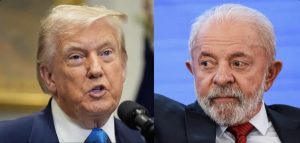
– President Luiz Inácio Lula da Silva and his administration denounced the sanctions as “arbitrary” and “baseless,” arguing that they violate fundamental principles of sovereignty and mutual respect.
– STF officials, including Moraes, declared that they would ignore the sanctions, emphasizing the independence of Brazil’s judiciary. This defiance was captured in the X post, where Moraes stated that the STF would not yield to threats.
4. Escalation and Additional Measures’
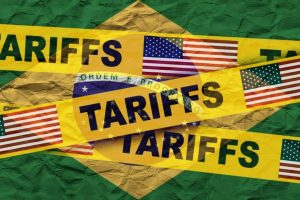
– Following the initial sanctions, President Trump signed an executive order on July 30, 2025, imposing a 50% tariff on Brazilian goods. This was framed as a response to the “witch hunt” against former President Jair Bolsonaro, further intensifying the conflict.
– The combination of financial sanctions and trade tariffs represents a multi-faceted approach by the U.S. to pressure Brazil’s government and judiciary.
5. Potential Secondary Sanctions
– The video linked in the X post details a hypothetical escalation scenario where the U.S. could impose secondary sanctions if Brazil does not comply. This includes:
– Sanctions on Brazilian Banks: If Brazilian banks consciously disregard the Magnitsky sanctions, they could be included in the U.S. Specially Designated Nationals (SDN) List, cutting them off from the global financial system.
– Technological Isolation: U.S. tech giants like Amazon, Microsoft, and Google could withdraw services from Brazilian banks and institutions, leading to a digital blackout.
– Seizure of Reserves: The U.S. could freeze Brazil’s international reserves held in U.S. banks, which constitute a significant portion of Brazil’s financial safety net.
– SWIFT Disconnection: Brazil could face exclusion from the SWIFT financial messaging system, severing its ability to conduct international transactions.
– Commodity Sanctions: U.S. sanctions could target Brazilian commodities, making them “toxic” in the global market, severely impacting Brazil’s export-driven economy.
6. Global and Historical Context
– References about past applications of similar sanctions against countries like Russia, Iran, Venezuela, and North Korea, highlighting the devastating economic and humanitarian consequences.
– In Russia (2022), sanctions led to a 50% devaluation of the ruble, hyperinflation, and a significant contraction of GDP within months.
– Iran’s resistance to sanctions resulted in a 90% currency devaluation and an 80% drop in imports between 2010 and 2018.
– Venezuela’s economy collapsed, with a 75% GDP drop over eight years, massive emigration, and hyperinflation.
– North Korea remains isolated, surviving only due to covert support from China.
Implications and Future Trajectory
– Immediate Impact: The initial sanctions and tariffs have already strained Brazil-U.S. relations, with Lula’s government rejecting the measures as an overreach of U.S. authority.
– Potential Escalation: If Brazil continues to defy the sanctions, the U.S. could activate secondary measures, leading to a cascading effect on Brazil’s economy, technology sector, and social services.
– Humanitarian Concerns: The video warns of severe humanitarian crises, including shortages of medical supplies, agricultural collapse due to lack of fertilizers, and energy crises due to import dependencies.
– Geopolitical Ramifications: The standoff could redefine Brazil’s position in global politics, potentially pushing it closer to other nations resistant to U.S. influence, like China, or isolating it further.
As of today, the progress of sanctions against Brazil, initiated by the Trump administration, represents a significant escalation in U.S.-Brazil relations. Starting with targeted financial and visa restrictions against Moraes, the measures have expanded to include trade tariffs and threaten broader economic reprisals. The Brazilian response, characterized by defiance and a reaffirmation of judicial independence, sets the stage for a potential confrontation that could have profound implications for Brazil’s economy, society, and international standing. The historical examples provided in the video suggest that such conflicts often end with severe consequences for the sanctioned nation, urging a reevaluation of Brazil’s current trajectory.


