

Trump Calls Out Brazil’s Failure Against PCC and CV as Gangs Turn the Country Into a Global Cocaine Hub
By Hotspotnews
Washington just dropped the hammer.
While other governments in the hemisphere are actually fighting cartels, Brazil’s government failed to confront PCC and Comando Vermelho — the terrorist gangs that turned the country into a global cocaine hub. The White House says it plain: these organizations are a growing threat to peace and security worldwide, and Brasilia must take aggressive action before they spread even further.
In the annual presidential determination on major drug transit and illicit drug producing countries submitted to Congress this week, the Trump administration delivered a pointed rebuke that other governments in the hemisphere cannot ignore.
While many nations in the Western Hemisphere are taking courageous action to cut drug flows and dismantle cartels, the Government of Brazil has failed to confront the designated foreign terrorist organizations Primeiro Comando da Capital (PCC) and Comando Vermelho (CV). Those groups, the determination states, have transformed Brazil into a hub for global cocaine flows. The document adds that these Brazilian terrorist organizations represent a growing threat to peace and security around the world, and that Brazil’s government urgently must take aggressive measures to confront and defeat them before they spread and grow.
The language is unusually direct. Brazil was not placed on the formal list of 23 major transit or producing countries for fiscal year 2027, nor was it among the four nations — Afghanistan, Bolivia, Burma, and Colombia — singled out for having “failed demonstrably” to meet international counternarcotics obligations. Instead, the White House reserved a specific paragraph for Brasilia. That choice signals a political and security judgment rather than a routine bureaucratic listing.
The background is straightforward. In May 2026 the United States designated PCC and CV as Specially Designated Global Terrorists and then as Foreign Terrorist Organizations, with the FTO status taking effect in early June. Secretary of State Marco Rubio described them as two of the most violent criminal organizations in Brazil, commanding thousands of members and carrying out brutal attacks against police, officials, and civilians. Their networks, he said, already extend across the region and into the United States.
Those designations were not invented for the moment. PCC, born in São Paulo prisons, and CV, rooted in Rio de Janeiro, have long dominated large parts of Brazil’s prison system, retail drug markets, and increasingly sophisticated money-laundering operations. They control fuel stations, logistics corridors, and financial channels that move billions. Their expansion into neighboring countries and their role in moving cocaine toward Europe and other markets made them a hemispheric problem, not merely a Brazilian one.
The determination contrasts Brazil’s record with governments that have shown resolve. It specifically applauds Argentina, Ecuador, and El Salvador for leadership and success against narcoterrorism. That comparison is not accidental. Countries that treat powerful gangs as existential threats rather than social phenomena have produced measurable results. Brazil’s current approach, in Washington’s assessment, has not.
Will this accelerate more sanctions or Magnitsky?
Not automatically — and not in the way Magnitsky usually works.
The September 16 determination is a report to Congress, not a sanctions order. Brazil was left off the formal lists. The paragraph about PCC and CV is a public rebuke and a demand for action, not a new legal trigger by itself.
What is already in force is stronger than Magnitsky for the gangs themselves. PCC and CV are Foreign Terrorist Organizations and Specially Designated Global Terrorists. That already blocks assets under U.S. jurisdiction, bans U.S. persons from dealing with them, criminalizes material support, and opens secondary-sanctions risk for foreign banks that knowingly move money for them. OFAC has already added more PCC-linked people and companies after that designation, including a July 2026 action against a money-laundering network.
So the more likely next step is more of that: designations of facilitators, front companies, fuel stations, fintechs, and logistics nodes tied to PCC and CV — not a blanket sanction on Brazil.
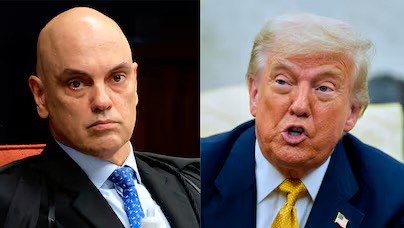
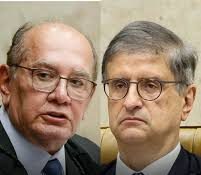
Magnitsky is a different tool. It targets individuals for serious human rights abuse or corruption. In Brazil it was used in 2025 against Justice Alexandre de Moraes, then lifted in December 2025. Recent reporting says Washington has discussed putting those measures back on STF figures, but that debate is about the courts and related cases, not this drug determination. Diplomats have also been cautious because a high-profile Magnitsky hit close to Brazil’s election could backfire politically.
Bottom line: this statement raises pressure and can speed more targeted OFAC and FTO actions against the gangs and their money men. It does not, by itself, launch country sanctions or Magnitsky on Lula or cabinet officials. Those would be separate political decisions.
A conservative reading of the document is simple: sovereignty is not a shield for inaction when criminal organizations operate as de facto states inside a country and project violence and narcotics across borders. The United States has spent years designating Mexican, Venezuelan, and Central American groups as terrorists precisely because treating them as ordinary criminals proved inadequate. Applying the same standard to PCC and CV is consistent, not capricious.
The practical stakes are high. These organizations generate enormous cash that funds further territorial control, corruption, and recruitment. They attack the state’s monopoly on force. When a country the size of Brazil becomes a recognized hub for global cocaine movement, the costs land on families in Europe, in the United States, and across Latin America. Pretending otherwise does not make the problem smaller.
The determination does not announce new sanctions or military action against Brazil. It is a public scorecard. It tells Congress, partner governments, and Brazilian authorities that Washington no longer accepts the status quo. It also tells other nations in the region that results matter more than rhetoric.
Whether Brasilia responds with the aggressive measures the document demands will be visible in arrests of mid- and high-level operators, disruption of financial networks, restoration of state control in contested neighborhoods and prisons, and measurable drops in the gangs’ ability to move product. Words in a presidential memorandum will not accomplish that. Policy will.
America’s interest here is not ideological score-settling. It is the same interest that has driven counternarcotics policy for decades: keeping poison off streets, denying terrorists and criminals the revenue that lets them challenge legitimate governments, and supporting partners willing to do the hard work. Brazil remains a major economy and a potential partner. That potential is diminished, not enhanced, by allowing PCC and CV to treat large parts of the country as their own.
The message from Washington this week is that the era of looking the other way is over.
Sources: U.S. Department of State, Presidential Determination on Major Drug Transit or Major Illicit Drug Producing Countries for Fiscal Year 2027 (submitted to Congress September 15–16, 2026); contemporaneous reporting by Folha de S.Paulo, O Globo, Gazeta do Povo, Associated Press, Reuters, and OFAC-related legal analyses on the May–June 2026 terrorist designations and later PCC network actions.
#Trump #Brazil #PCC #ComandoVermelho #NarcoTerror #CocaineHub #LawAndOrder #WesternHemisphere #NationalSecurity #AmericaFirst #Sanctions #Magnitsky #OFAC #FTO