


Trump Was Right: Brazil’s Falling Real Proves the Cost of Left-Wing Governance
By Hotspotnews
The recent slide in Brazil’s currency against the U.S. dollar is not a mystery, nor is it primarily the product of some abstract “global” force. It is the predictable result of policy choices that prioritize political expediency over fiscal discipline—and it is exactly the kind of outcome Donald Trump has long warned against.
In late 2019, when the Brazilian real weakened sharply, Trump did not treat it as a neutral market event. He called it what it was: a massive devaluation that disadvantaged American farmers and manufacturers. He restored steel and aluminum tariffs on Brazil, arguing that countries should not be allowed to undercut U.S. producers simply by letting their currencies fall. The message was straightforward. America would not subsidize other nations’ policy failures through an artificially strong dollar.
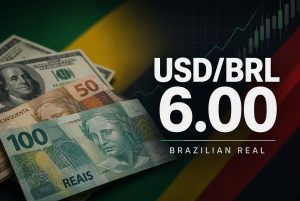
That principle remains relevant today. Brazil’s currency has again lost substantial ground, coinciding with the re-election of Luiz Inácio Lula da Silva and the familiar pattern of rising public spending, uncertain fiscal rules, and markets pricing in higher long-term risk. Investors do not need lectures on “inequality” or “social inclusion” to understand the signal: when a government signals that it will spend more than it can sustainably finance, capital looks for the exit. The real falls. The dollar rises. Brazilian workers and consumers pay the price in higher import costs and eroded purchasing power.
Trump’s broader approach to the dollar has always been consistent with this view. He has repeatedly favored a competitive U.S. currency that helps American exporters rather than a permanently overvalued one that benefits only foreign competitors and Wall Street. At the same time, he has refused to accept currency weakness in other countries as an excuse for unfair trade advantages. The 2019 Brazil episode was not an outlier; it fit the same logic he applied to China and others. Devaluation that effectively acts as a subsidy for foreign producers is not free trade. It is mercantilism by another name.
Critics on the left often dismiss these concerns as “protectionism” or “isolationism.” In practice, the alternative has been clear: repeated episodes in which Latin American currencies weaken under left-leaning governments, local industries gain temporary price advantages, and American producers face the consequences. Brazil under Lula has followed a well-worn path—expansive fiscal promises followed by market skepticism. The resulting currency pressure is not an external attack; it is the market’s assessment of policy credibility.
Trump’s record also shows he distinguished between governments. He worked productively with Jair Bolsonaro, a president who pursued market-oriented reforms and closer alignment with the United States. The contrast with the current trajectory is difficult to ignore. When fiscal discipline erodes and political priorities shift leftward, capital flight and currency depreciation tend to follow. Pretending otherwise requires ignoring both recent Brazilian data and decades of regional experience.
A strong dollar is not an end in itself. It reflects relative confidence in institutions, growth prospects, and policy predictability. When that confidence shifts, currencies move. Brazil’s latest episode simply reconfirms a basic lesson Trump has emphasized for years: countries that manage their finances responsibly keep stronger currencies and better terms with the United States. Those that do not should not expect American producers to absorb the difference.
The dollar’s rise against the real is less a story about American strength than about Brazilian choices. Trump has never been shy about saying so. The numbers keep making the same point.


