




Trump’s Stand Against Brazilian Crime Syndicates Puts American Security First
By Hotspotnews
In a move that prioritizes results over diplomatic niceties, the Trump administration has taken decisive action against two of Brazil’s most powerful criminal organizations—Comando Vermelho (CV) and Primeiro Comando da Capital (PCC). By designating them as foreign terrorist organizations earlier this year and recently authorizing cyber operations that can target their networks, President Trump has made clear that the United States will not wait indefinitely for cooperation from governments that appear reluctant to confront these groups head-on.
These organizations are not ordinary street gangs. They control vast territories, traffic drugs and weapons across borders, launder money, and orchestrate violence that destabilizes entire regions. Their reach extends beyond Brazil into neighboring countries and, through illicit financial and logistical networks, touches American interests. Treating them solely as domestic criminal problems has proven insufficient. Labeling them as terrorist organizations unlocks stronger tools—sanctions, asset freezes, and disruptive operations—that go beyond traditional law enforcement cooperation.
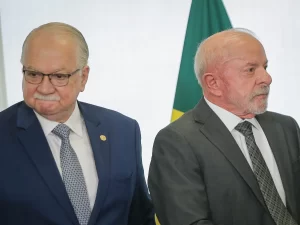
The Brazilian government under President Lula has resisted this designation, preferring frameworks of mutual cooperation while arguing the groups do not fit the legal definition of terrorists under Brazilian law. That position is understandable from a sovereignty standpoint, yet it raises legitimate questions about urgency. When criminal factions dominate neighborhoods, control rivers and smuggling routes, and inflict daily terror on ordinary citizens, hesitation carries a cost. The United States has a right—and a responsibility—to protect its citizens and disrupt threats that cross its borders, whether or not every foreign capital fully agrees with the method.
The August 12 memorandum authorizing private-sector involvement in cyber operations under federal supervision is a practical next step. It allows the disruption of the digital infrastructure that modern criminal enterprises rely on for communication, financing, and logistics. These are not military invasions or violations of sovereignty; they are targeted measures against non-state actors that have already been formally designated as threats. Preferring cooperation remains the stated preference, but the tools now exist to act when cooperation falls short.
Critics will inevitably frame this as interference in Brazilian politics or an attempt to influence elections. Such claims overlook a simpler reality: organized crime is a transnational problem that does not respect election calendars or ideological preferences. Public security ranks high among the concerns of ordinary Brazilians, just as it does for Americans. A government that treats powerful criminal factions with kid gloves invites the very instability it claims to oppose.
Trump’s approach reflects a broader conservative principle: governments exist to protect their people, not to manage decline or prioritize process over outcomes. Soft policies that prioritize dialogue with criminal organizations while downplaying their violence have repeatedly failed across Latin America. Designating CV and PCC as terrorists and enabling cyber disruption does not solve every problem overnight, but it marks a break from the pattern of accommodation.
The United States cannot solve Brazil’s internal security challenges. It can, however, refuse to allow those challenges to spill over unchecked. By acting with or without full cooperation, the Trump administration is asserting that American security interests will not be held hostage to another country’s political calculations. That is not aggression. It is responsible governance.


