



Trump’s Trap? Stephen Miller Clip Highlights Democratic Opposition to Citizenship Proof as Midterm Debates Heat Up
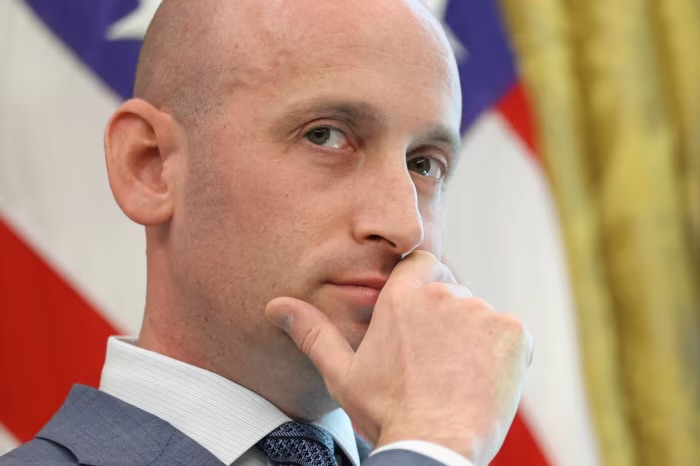
A resurfaced March 2026 clip from Fox News’ Hannity has circulated widely this week, framed by commentator Dr. Dawn Michael as evidence that President Trump set a political trap on election integrity that Democrats walked into. The segment features White House Deputy Chief of Staff and Homeland Security Advisor Stephen Miller pressing Democratic resistance to the SAVE America Act, which requires documentary proof of U.S. citizenship to register for federal elections and photo identification to vote. Chyrons in the broadcast noted Democratic senators acknowledging that non-citizens sometimes register and vote, even as they opposed the legislation.
WATCH THE CLIP
The Safeguard American Voter Eligibility Act, or SAVE America Act, advanced through the House in February 2026 by a 218-213 vote as an amendment to related Senate legislation. It would amend the National Voter Registration Act of 1993 to demand documents such as a valid U.S. passport, a REAL ID indicating citizenship, a military ID paired with a service record showing U.S. birthplace, or a government-issued photo ID combined with a certified birth certificate, naturalization papers, or similar records. The measure also calls for photo ID at the polls for in-person and mail voting and processes to remove confirmed non-citizens from rolls. It stalled in the Senate, where Republicans hold 53 seats and the filibuster requires 60 votes for advancement.
On Hannity, Miller described the issue as an “85-15” or near-supermajority public preference, citing broad support for proof of citizenship and voter ID across demographics. He argued that elected Democrats fight the requirements “with every ounce of strength they have” for one reason: “they want to cheat.” Miller pointed to blue-state refusals to share voter rolls with the Department of Homeland Security for cross-checks against immigration records and efforts to block removal of non-citizens, deceased individuals, or duplicate registrations. He tied the stakes to large-scale illegal immigration under the prior administration.
During Senate debate around the same period, Majority Leader Chuck Schumer stated that “the evidence is that almost no illegal aliens vote,” while Georgia Senator Raphael Warnock noted that the state’s Republican secretary of state found 20 non-citizens registered among 8.2 million voters, with only nine having attempted to vote. Supporters of the bill treated these remarks as admissions that the problem exists, however limited, and questioned why any occurrence should be tolerated when one illegal vote cancels a citizen’s. Opponents countered that non-citizen voting is rare, that current law already prohibits it, and that the documentary requirements could burden eligible citizens who lack ready access to passports or birth certificates—estimates from surveys have placed that number in the tens of millions for some forms of proof.
Public polling has consistently shown majority support for photo voter ID, with figures often exceeding 70-80 percent overall and substantial Democratic backing in some surveys. Support for citizenship documentation is strong in many battleground states as well, though partisan gaps appear on implementation details. Audits and data matches, including through the SAVE program, have identified small numbers of non-citizens on rolls relative to total registrations; critics of stricter rules emphasize the low rates and cases of false flags, while advocates stress that any ineligible participation undermines confidence and that verification tools exist.
The clip’s recirculation comes amid post-2026 midterm discussion, where Democratic gains in some areas have fueled renewed Republican arguments about turnout, registration practices, and the absence of nationwide citizenship and ID standards. Michael and others present the Democratic stance as self-revealing: opposition to measures with broad popular support, paired with acknowledgments that non-citizens appear on rolls, is interpreted as evidence of reliance on looser rules. Defenders of the status quo maintain that fraud is statistically negligible, that the proposed rules risk disenfranchising legitimate voters (including some married women whose names have changed), and that states already conduct list maintenance.
As of early November 2026, the SAVE America Act has not become law. The debate continues over whether requiring documents at registration and identification at the polls strengthens or restricts the franchise, with both sides citing data, polls, and specific state examples. The viral framing treats the March exchange as a clarifying moment that has only grown more relevant after the midterms.
Sources: Fox News Hannity segment (March 2026); congressional vote records and bill text for the SAVE America Act; Senate floor remarks by Sens. Schumer and Warnock; statements by Stephen Miller; FactCheck.org analysis; Bipartisan Policy Center overview; Rutgers-Eagleton and Heritage Action polling; state audit examples including Georgia and Utah; U.S. Election Assistance Commission registration data.
#ElectionIntegrity #SAVEAmericaAct #VoterID #ProofOfCitizenship #StephenMiller #ElectionSecurity #OnlyCitizensVote #Midterms2026 #Hannity #VoterRolls #ElectionConfidence #CitizenshipVerification #StopTheFraud #AmericanElections #TrumpTrap #DemocraticOpposition #SecureElections #VoterVerification #FederalElections #ElectionReform


