


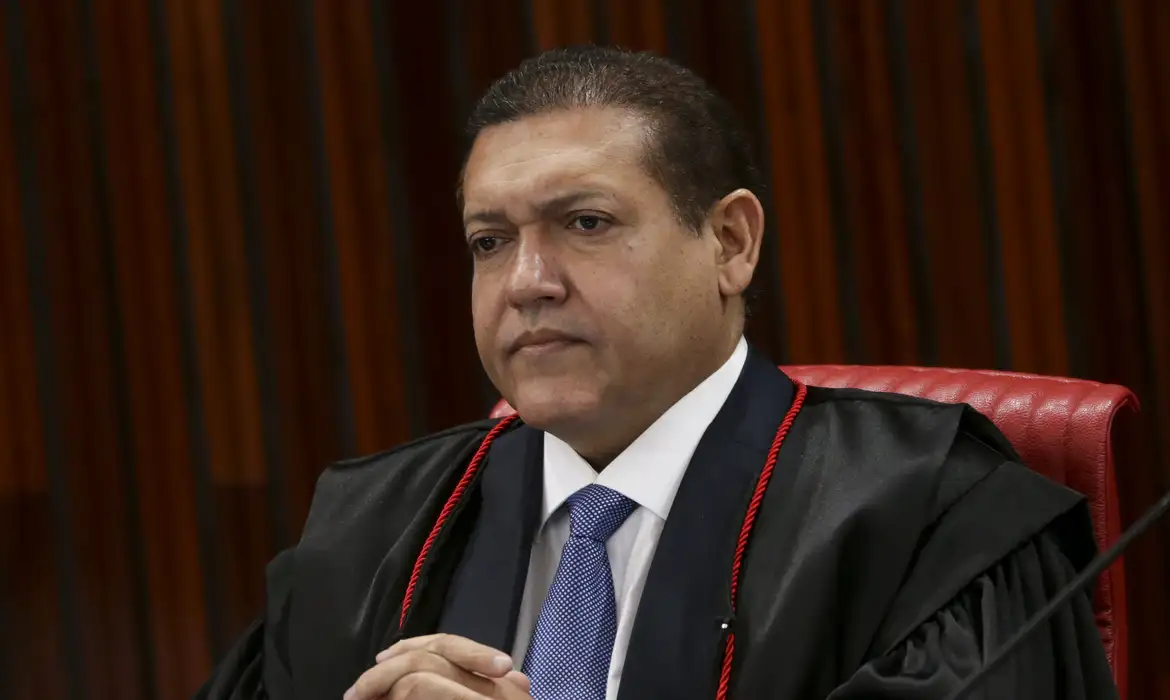
TSE President Kassio Nunes Delivers Blow to Biased Polling, Defending Brazil’s Electoral Integrity Ahead of 2026
By Hotspotnews
In a decisive move that has electrified conservative circles across Brazil, Supreme Electoral Court (TSE) President Kassio Nunes Marques has suspended the dissemination of a controversial AtlasIntel poll, exposing what many view as yet another attempt by leftist forces to manipulate public opinion and tilt the scales before the critical 2026 presidential elections.
The ruling targets a poll riddled with methodological flaws, most notably an audio segment that explicitly linked Senator Flávio Bolsonaro to the Banco Master scandal in a leading manner. Such tactics—embedding suggestive narratives early in the survey—violate basic principles of neutrality, priming respondents and manufacturing outcomes rather than measuring genuine sentiment. Nunes Marques rightly recognized this as an unacceptable compromise to the poll’s integrity, ordering an immediate halt to its spread. This isn’t censorship; it’s a necessary safeguard against the kind of deceptive “research” that has eroded trust in Brazilian institutions for years.
For too long, certain polling firms have operated with impunity, churning out numbers that conveniently favor establishment leftist candidates while downplaying conservative strength. The 2022 election cycle was marred by similar accusations of skewed data and institutional bias, tactics that many Bolsonaro supporters believe suppressed voter enthusiasm and distorted the playing field. This latest episode from AtlasIntel fits a familiar pattern: weaponize surveys not as neutral tools, but as instruments of psychological warfare to demoralize the right and energize the left.
Kassio Nunes Marques, a jurist with a reputation for independence and fidelity to the law, has drawn a firm line. His decision signals that the TSE under his leadership will not rubber-stamp every dubious poll that crosses its desk. In an era where globalist elites and domestic opponents relentlessly attack populist movements, this stands as a refreshing assertion of fairness. Conservatives have long argued that true democracy demands transparent processes, not engineered narratives disguised as science.
The reaction from patriotic Brazilians has been overwhelmingly positive. What the mainstream media dismisses as “overreach” is, in reality, a defense of the electorate against sophisticated manipulation. Flávio Bolsonaro and the broader conservative movement have endured years of lawfare and media onslaughts precisely because they represent a threat to the old corrupt order—an order that thrives on controlled information flows.
As Brazil gears up for 2026, this ruling offers hope that institutions can still serve the people rather than special interests. President Jair Bolsonaro’s enduring popularity, rooted in his record of economic reforms, anti-corruption efforts, and unwavering defense of traditional values, cannot be erased by rigged questions or selective data. Voters deserve accurate information, not propaganda polls designed to create self-fulfilling prophecies.
Nunes Marques’ intervention is a victory for electoral honesty. It reminds us that safeguarding the vote means confronting bias wherever it hides—especially in the seemingly objective realm of public opinion research. Brazil’s conservatives are watching closely, and millions stand ready to ensure that 2026 delivers a mandate untainted by the shadows of manipulation. The fight for a sovereign, prosperous Brazil continues—and moments like this prove it’s far from over.


