




Unions Funding a Campaign Is Not Free Speech. It Is a Banned Source.
By Hotspotnews
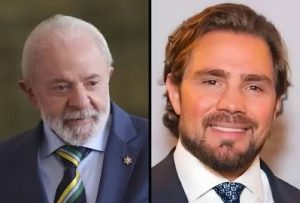
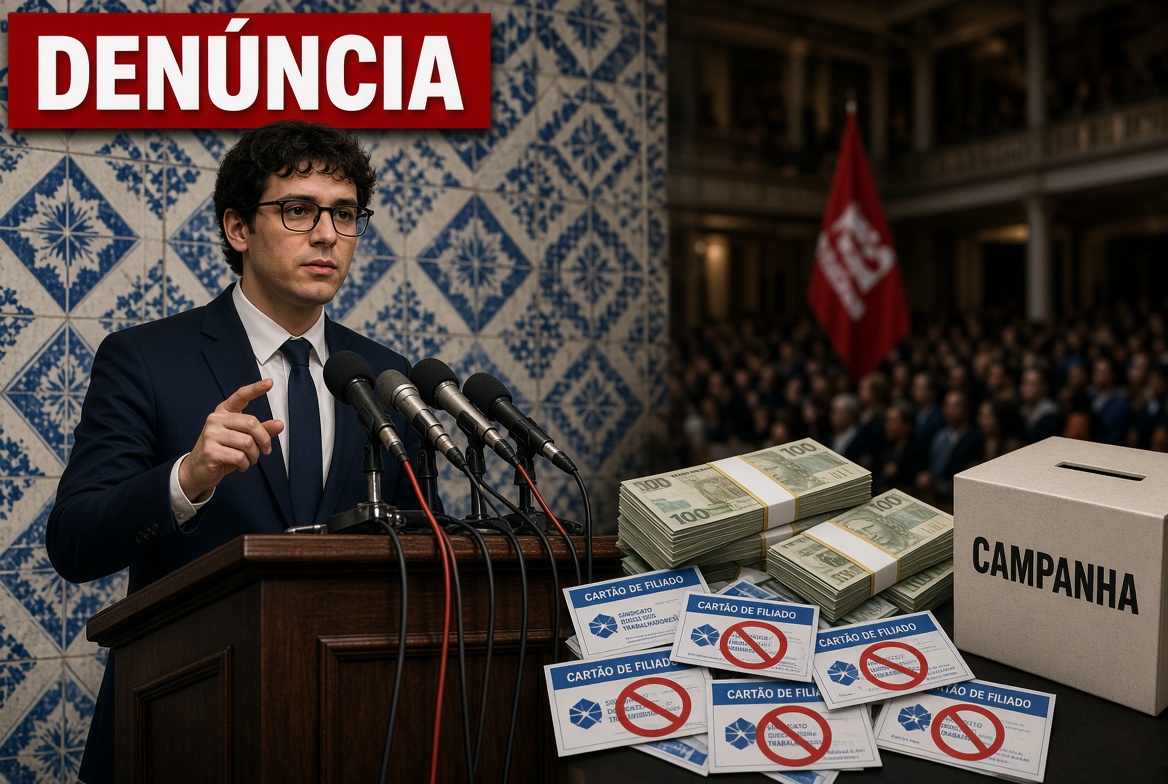
A federal deputy-elect has taken to a press conference and then to the police with a charge that should not be waved away as ordinary campaign noise. Guilherme Kilter, of the Novo party in Paraná, says that at an event inside the Federal University of Paraná a figure tied to a university teachers’ association stated that a national union was sending money to support mobilization for Luiz Inácio Lula da Silva’s reelection in different parts of the country. Kilter has asked the Electoral Public Ministry and the Federal Police to look at possible undeclared campaign money, and his party has signaled a representation before the Superior Electoral Court alleging abuse of economic power.
That is an allegation, not a conviction. It is also the kind of allegation Brazilian law was written to take seriously.
Article 24, section VI, of the Elections Law (Law 9.504 of 1997) forbids parties, candidates, and coalitions from receiving, directly or indirectly, money or anything estimable in money from unions or class entities. The ban is not a technicality. Unions collect dues under a legal regime that is not the same as a voluntary private donation. Their money is not the personal check of a citizen who may give up to 10 percent of last year’s declared income. When that pool is steered into a presidential campaign—through committees, campus events, materials, transport, or paid organizers—the campaign is being financed by a source the statute calls prohibited. Using the union’s own structure, communications, or assets for electoral propaganda is the same prohibition in another form.
If the statement Kilter recorded is accurate, the conduct fits the classic pattern of a forbidden source rather than a spontaneous rally. Brazilian unions and labor centrals have long treated electoral seasons as extensions of their political line. The difference in 2026 is that corporate donations were already struck down and the remaining legal channels are public funds plus identified individual gifts. A union transfer, open or disguised, sits outside both.
Possible actions are straightforward and already partly in motion. The Electoral Public Ministry can open a preliminary inquiry and demand bank records, transfer orders, and the identities of whoever authorized the money. The Federal Police can examine whether the funds were omitted from campaign accounts, which is the practical definition of caixa 2. The Superior Electoral Court can receive a representation for abuse of economic power and, if the evidence holds, order production of the union’s books and the campaign’s. Parallel complaints can go to the labor prosecutor if dues were diverted from their statutory purpose. None of this requires a new statute. It requires the institutions that already exist to treat a union the same way they would treat any other banned donor.
Consequences scale with proof and amount. Rejection of campaign accounts is the baseline. Fines can reach multiples of the irregular sum. If the volume is large enough to have influenced the contest, the Court has tools that include cassation of a diploma and a period of ineligibility. Directors who signed the transfers can face electoral and, where fraud is shown, criminal exposure. The campaign that accepted the money cannot claim ignorance once the source is a union; the duty to refuse a prohibited donation sits on the recipient. Even short of a final ruling, an active investigation freezes the political claim that the mobilization was merely “workers organizing themselves.”
The deeper cost is institutional. A rule that binds every other candidate becomes optional for the incumbent’s allies, and the electoral court is asked, in public, how far it will let the practice run. That question is not rhetoric. It is the test of whether the ban on union money is still law or only a line in the statute book. Conservatives do not need to invent a conspiracy to insist on the obvious: if the money moved, the accounts must show it, and if the accounts do not show it, the omission is the offense. Investigation is not persecution. It is the minimum the statute already requires.
Sources
- Law 9.504/1997, article 24, section VI: bars parties, candidates, and coalitions from receiving money or anything estimable in money, directly or indirectly, from unions or class entities.
- TSE selected case law on campaign accounts and forbidden sources: donations from a union or class entity are treated as a prohibited source.
- ANDES-SN National Legal Office note on the 2026 elections: unions may not transfer funds to candidates, parties, or coalitions, and may not use union assets or channels for electoral propaganda.
- Guilherme Kilter (Novo), statements of 8 October 2026: request to the Electoral Public Ministry and the Federal Police to investigate alleged union resources used for Lula campaign mobilization, with a planned representation at the TSE for abuse of economic power.
- Reporting on that filing, 8–9 October 2026, including Bnews and Aliados Brasil.
- Post by Nanibarbosa (@RosaneBonoro), 8 October 2026, tagging the TSE and circulating the Kilter video.
#Eleicoes2026 #FonteVedada #Caixa2 #TSE #JusticaEleitoral #Sindicatos #CampanhaEleitoral #AbusoDePoderEconomico #Lei9504 #TransparenciaEleitoral


