



The IMF’s Stark Warning: Brazil’s Economic Decline Under Leftist Governance and the Need for Sound Economic Policies
The International Monetary Fund (IMF) has recently released a report that paints a grim picture of Brazil’s economic trajectory, confirming what many conservative observers have long feared: the country’s steady decline under the weight of leftist policies. This report is not just a collection of statistics; it is a damning indictment of the governance that has plagued Brazil for decades, particularly under the stewardship of the Workers’ Party (PT).
The IMF’s findings are unequivocal. Brazil, once a burgeoning economic powerhouse with the potential to rival global leaders, is now on a precipitous path toward becoming one of the world’s poorest nations. The report highlights a staggering drop in Brazil’s GDP per capita ranking, from the 48th position in 1980 to a dismal 87th by 2025. This decline is not a mere fluctuation; it is a systemic failure driven by policies that prioritize dependency over prosperity.
At the heart of this economic malaise is the PT’s long-standing objective: to destroy prosperity and create government dependency. The party’s rhetoric of ending poverty has been nothing short of a smokescreen for a strategy that has exponentially increased it. The data is clear. During the PT’s tenure, Brazil has seen record levels of public spending, yet this has not translated into economic growth or improved living standards. Instead, it has led to inefficiencies, corruption, and a ballooning public debt.
The IMF report underscores the consequences of this approach. Low investment, excessive public spending, and ineffective policies have stagnated the economy. The service and agricultural sectors, once drivers of growth, are now struggling under the burden of fiscal irresponsibility. The recent indirect tax reform, while a step in the right direction, comes too late to reverse decades of damage.
Moreover, the report reveals a troubling trend of corruption that has siphoned off resources meant for the public good. Scandals such as the INSS, Passadena, and Lava Jato operations are not isolated incidents but symptoms of a deeper malaise within the PT’s governance model. These “black holes” have drained the lifeblood of the economy, leaving taxpayers to foot the bill for a government that prioritizes political survival over national prosperity.
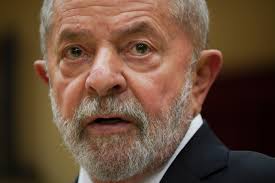
The current administration’s response has been equally concerning. Under Lula’s third term, taxes have been raised 25 times, a move justified by the narrative that more taxation is the solution to poverty. This is a dangerous fallacy. History shows that increasing taxes without corresponding improvements in governance only exacerbates inequality and stifles economic activity. The IMF’s data supports this, indicating that Brazil’s public spending is not only unsustainable but also disproportionately benefits the wealthy while neglecting the poor.
The IMF’s economic policies offer a stark contrast to the PT’s approach. The Fund advocates for fiscal discipline, structural reforms, and a focus on sustainable growth. Key recommendations include reducing public debt, enhancing the efficiency of public spending, and implementing reforms that foster private sector investment. The IMF’s 2025 Article IV Consultation with Brazil emphasized the importance of a sound financial system, adequate foreign exchange reserves, and a flexible exchange rate to support resilience against global uncertainties. It also highlighted the need for inclusive and sustainable growth, supported by measures such as the landmark VAT reform and personal income tax reforms aimed at enhancing equity.
Conservatives have long argued that the path to economic recovery lies in adopting these IMF-recommended policies. The report is a clarion call for such reforms, urging Brazil to move away from the failed policies of the past. It stresses the importance of structural reforms and the implementation of the Ecological Transformation Plan to boost medium-term growth prospects. The IMF’s data suggests that without these changes, Brazil’s growth outlook remains tilted to the downside, with risks exacerbated by global policy uncertainty.
The question now is whether Brazil’s leaders will heed this warning and embrace the IMF’s economic policies. The PT’s track record suggests otherwise, but the stakes have never been higher. The IMF’s report is not just a critique; it is a roadmap for recovery, one that demands a departure from the failed policies of the past and a commitment to fiscal responsibility and economic freedom. For the sake of Brazil’s future, it is imperative that the nation chooses a path of sound economic policies over the allure of short-term political gains. The alternative is a continued slide into poverty, a fate that no nation, least of all one with Brazil’s potential, should accept.