




Viral Claim That Justice Alexandre de Moraes “Confessed” Electoral Fraud Misreads His Denial of Alleged Messages
By Hotspotnews
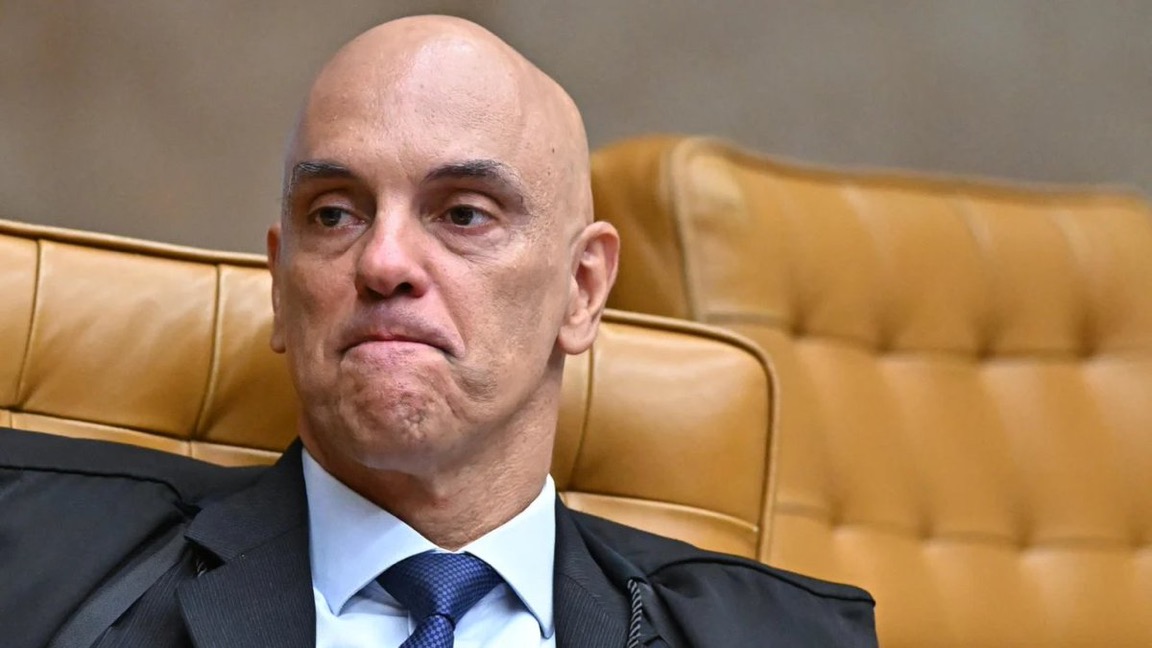
A widely shared video commentary by journalist Alexandre Garcia has circulated with headlines claiming that Supreme Federal Court (STF) Justice Alexandre de Moraes admitted to electoral fraud and raised the possibility of annulling Brazilian election results. The underlying material does not support that interpretation. The discussion centers on Moraes’ official written response to reports of alleged private communications with former banker Daniel Vorcaro, not on any admission of wrongdoing in past or future elections.
Background on the Allegations
Daniel Vorcaro, founder of Banco Master, was arrested in November 2025 amid investigations into the bank’s collapse and related financial matters. Federal Police material recovered from his devices later became public, including references to contacts attributed to Moraes. Reports indicated dozens of interactions in the months before Vorcaro’s arrest, encompassing messages, images, and notifications. Moraes has consistently denied exchanging messages with Vorcaro about the bank, police operations, or any other official matter.
In a detailed filing and accompanying notes submitted in September 2026, Moraes rejected the authenticity of the attributed dialogues. He described them as a “farsa montada” (staged farce) and “diálogos fantasiosos” (fantasy dialogues). He stated that no messages or notes from him exist in the seized material and that interpretations of notes-app entries as real conversations lacked foundation. Moraes further argued that the timing and framing of the reports reflected a “motivação político-eleitoral” (political-electoral motivation) aimed at revenge by allies of individuals previously convicted by the STF in connection with events surrounding the 2022 election and January 8, 2023.
Garcia’s Commentary and the Viral Framing
7b0cd18ee20d2a072aed47dd0346dc895f69fea2
Alexandre Garcia’s video, circulated under sensational titles, focuses on the phrase Moraes used regarding the “political-electoral motivation” of what he called “criminal lies.” Garcia and accompanying social-media posts treat this language as a revealing slip or implicit acknowledgment of electoral interference. The video places the statement in the broader context of ongoing disputes over the STF’s role in electoral oversight, investigations involving political figures, and public trust in institutions. High engagement on posts sharing the clip reflects existing polarization rather than new evidentiary developments.
The original X post that amplified the video asked whether “everything will be annulled,” implying potential cancellation of election results. No such process has been initiated or indicated by courts, electoral authorities, or Moraes himself. Brazilian election law provides specific, limited grounds and procedures for contesting results; generalized political accusations do not trigger automatic annulment.
Broader Context and Reactions
Moraes has long been a polarizing figure due to his decisions on social-media content, investigations into alleged coup-related activities, and prior service as president of the Superior Electoral Court (TSE). Supporters view his actions as necessary defenses of democratic institutions against disinformation and institutional threats. Critics argue that certain rulings and statements have blurred lines between judicial and political roles, eroding perceptions of impartiality. The Vorcaro-related filings fit into this pattern: Moraes frames the reports as politically motivated attacks, while opponents treat his wording as confirmation of bias.
Mainstream reporting from outlets covering the filings, including Estadão and Poder360, has emphasized Moraes’ categorical denials and his characterization of the evidence as fabricated or misconstrued. These accounts do not describe any confession of electoral fraud. Parallel claims circulating online—such as earlier misrepresentations of Moraes’ remarks in unrelated TSE sessions—have similarly been examined and found to rest on selective or decontextualized excerpts.
Implications
The episode illustrates how judicial statements made in the course of defending against accusations can be reframed in polarized media environments. Moraes’ explicit denial and attribution of political motives remain the documented content of his filings. Claims of a confession or impending annulment of elections do not align with the text he produced or with any formal institutional response. Ongoing scrutiny of the Banco Master investigations, STF procedures, and electoral rules continues independently of the viral interpretation.
Public debate over the independence and accountability of the STF, the handling of evidence in high-profile cases, and the boundaries of electoral justice is likely to persist through the current political cycle. Accurate reading of primary statements, rather than sensational summaries, remains essential for evaluating such controversies.
Sources
- Reporting by Estadão on Moraes’ September 2026 petition and public notes denying the Vorcaro messages.
- Coverage by Poder360 summarizing Moraes’ official communications characterizing the attributed dialogues as fantasy and politically motivated.
- Public statements and filings by Alexandre de Moraes as referenced in contemporaneous Brazilian news accounts.
- Video commentary by Alexandre Garcia as distributed on social platforms in early November 2026.
#AlexandreDeMoraes #STF #AlexandreGarcia #Brasil #Política #Vorcaro #Eleições #JustiçaEleitoral #Democracia #Instituições


