



Washington Already Wrote Lula Off. The Memo Makes That Official.
By Hotspotnews
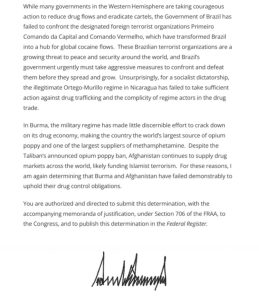
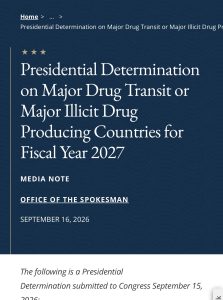
The White House did not need a new war, a new treaty, or a new sanctions bill to tell Brazil where it stands. It used the annual drug determination sent to Congress — a dry statutory filing most voters never read — and put the Brazilian government in one paragraph:
“While many governments in the Western Hemisphere are taking courageous action to reduce drug flows and eradicate cartels, the Government of Brazil has failed to confront the designated foreign terrorist organizations Primeiro Comando da Capital and Comando Vermelho, which have transformed Brazil into a hub for global cocaine flows. These Brazilian terrorist organizations are a growing threat to peace and security around the world, and Brazil’s government urgently must take aggressive measures to confront and defeat them before they spread and grow.”
That language is not a rumor and not a campaign flyer. It is signed presidential text. It is also not what panicked headlines claimed. Brazil was not dropped onto the formal list of major transit and producing countries. It was not placed among the governments found to have “failed demonstrably” under the statute. Afghanistan, Bolivia, Burma, and Colombia got that stamp. Brazil got something colder: a public dressing-down with no legal hammer attached.


A relationship that is already frozen
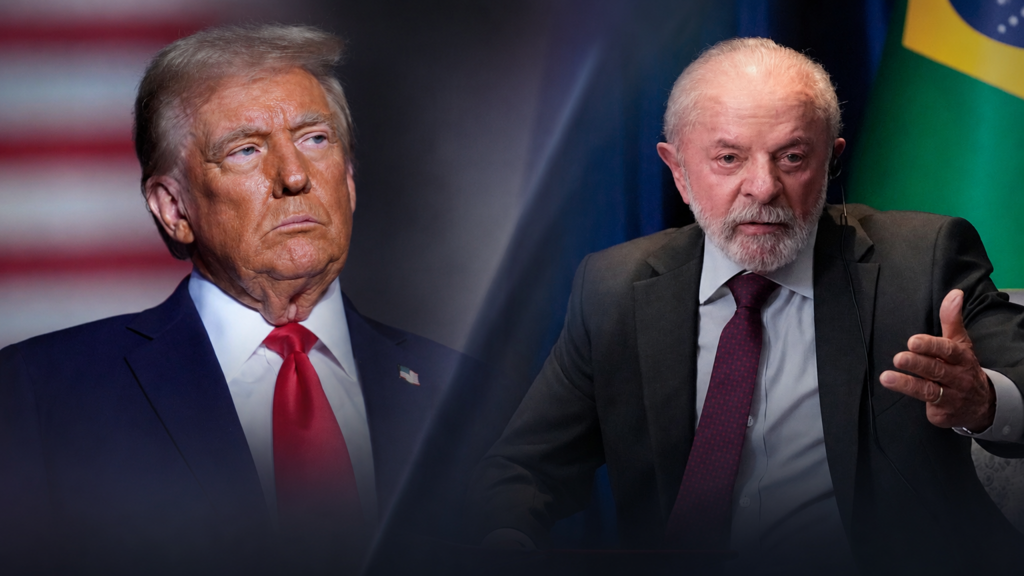
Donald Trump is not looking for a late-term conversion in Brasília. He is not going to spend scarce political capital on an administration he treats as finished. Brazilian voting is weeks away. The incentive to cut Lula a deal that looks like a win for the Planalto is close to zero. The incentive to write a paragraph that opposition candidates can read on television is obvious.
Frozen does not mean silent. Frozen means the political channel is dead while the enforcement channel stays open. Police attachés can still swap names. Banks can still freeze accounts. Prosecutors in Florida can still take pleas. What will not happen is a smiling joint statement, a walk-back of the terrorist listing, or a bargain that trades American legal tools for Brazilian pride.
Lula’s government answered the memo the way a weak government answers bad news. It stressed that Brazil is not on the twenty-three-country list. It called the criticism “lateral.” It cited a new anti-faction law, federal operations, and a cooperation paper delivered in Washington in May. It said it is still waiting for an American reply. That last sentence is a confession. If the proposal had been serious, there would already be extraditions, designations, and shared targeting lists — not a press note about a document gathering dust.
The May paper asked the United States to work on money laundering, intelligence, and arms trafficking on Brazilian terms. The September determination is the answer. Not interested. Not on those terms. Not with this government.
Leverage Lula does not have
Brasília keeps talking as if sovereignty were a veto over American law. It is not. The United States already designated PCC and Comando Vermelho as Specially Designated Global Terrorists and Foreign Terrorist Organizations. That decision is in force. It does not require Lula’s permission. It does not collapse because Brazilian ministers call it an affront.
Lula’s supposed leverage was always theatrical. He can refuse the label. He can complain that the timing is electoral. He can insist that Brazilian gangs are a domestic police problem. None of that stops Treasury from naming financiers. None of that stops Justice from charging material support. None of that stops correspondent banks from dumping customers who look like faction plumbing.
What Brazil can actually withhold is cooperation on the ground: prison isolation of command, port inspections that hurt the right containers, and the surrender of people Washington can actually use. That is real leverage. Lula has not spent it. He tried to spend a different currency — moral outrage and a request that America hand over the fugitives Brasília cares about.
That is why the relationship is frozen. One side wants a security result. The other side wants a political result dressed up as security.
What Washington wants, and what it does not
Washington does not need Marcola or Fernandinho Beira-Mar on a plane. It cannot have them. Brazil’s Constitution bars extradition of native-born citizens, and both men are already locked in the Brazilian system. Demanding their transfer is a talking point for people who have not read the law.
The American target list is narrower and more dangerous to the factions.
It wants the money men. In July, Treasury designated Victor Henrique de Oliveira Shimada and Stella Stefanie Nunes Henrique de Oliveira, along with companies used to move proceeds. The case behind those names ran through Florida and at least eight American cities. Defendants in the Southern District of Florida pleaded guilty to washing tens of millions for PCC. An earlier designation hit Diego Macedo Gonçalves do Carmo over a far larger alleged laundry. That is the profile: brokers, relatives who run the office, fronts in São Paulo, Lisbon, and Miami, crypto rails that turn cocaine into clean balances.
It wants the United States cells. American officials have described faction presence across roughly a dozen states. Those people can be arrested, charged, deported, or flipped without asking the Planalto for a press conference.
It wants logistics, not mythology. Port operators, freight forwarders, fuel and trade triangulators, and arms suppliers who feed Brazilian factions. The recent movement of an Argentine weapons trafficker toward Brazilian justice is the kind of body that actually matters. Accountants matter more than folklore bosses serving three-hundred-year sentences.
It wants a government in Brasília that will stop treating the terrorist designation as an insult and start treating PCC and CV as the transnational enterprises they are. Aggressive measures, in Washington’s vocabulary, means isolating command in prison so the phones go dead, crushing the financial layer, and accepting that dollar clearing comes with American rules.
What Washington does not want is Lula’s swap.
After the designation, Brazilian officials said they would intensify requests for fugitives living in the United States — January 8 convicts and men the government calls organized-crime figures abroad. That pile has included political names the current government hunts for reasons that have nothing to do with cocaine through Santos. Lula has also publicly demanded that Trump deliver a Miami-based businessman he describes as a magnate of organized crime. That is a Brazilian grievance list. It is not the American target deck.
If Brasília’s price for “cooperation” is the surrender of opposition exiles and a quieting of the FTO label, the price is too high and the product is fake. Trump’s government has spent two years putting cartels and gangs on the terrorist list. It is not going to un-list Brazilian factions so Lula can campaign as the defender of sovereignty.
The small effort that never came
A serious Brazilian government would have done the cheap, visible things first. Deliver the Shimada-class operators. Keep faction leadership in true isolation. Share the financial maps without a lecture. Accept that American banks will de-risk anyone who looks like PCC cash. Then ask for help.
Lula tried the speech first. He opposed the designation. He framed it as a threat to Brazilian autonomy. He offered process. He asked for people. He got a paragraph in a congressional filing that will be quoted until election day.
That is not a misunderstanding. It is a verdict on sequencing. You do not con a transactional White House into giving up leverage so you can protect your dignity. You show a body of work. Then you negotiate.
What happens if nothing changes
If Lula wins, the freeze hardens. Next year’s determination can get uglier. More names land on the sanctions list. More Brazilian firms discover that the dollar system is optional only in speeches. The factions keep using Brazilian ports because the political class keeps arguing about labels instead of ledgers.
If the opposition wins, the memo becomes an opening bid. A new government can trade visible hits on the financial layer for warmer language and real cooperation. That is the deal available now. Lula would not pay for it.
Either way, the United States does not need Brasília’s blessing to keep squeezing the networks that touch Florida, New York, and the Caribbean. The designation already did the legal work. The September document did the political work. It told Congress, the region, and Brazilian voters that Washington does not consider this government a serious counter-narcotics partner.
Lula is running out of time. Trump is not waiting for him to find some. The people America wants are the ones who move the money. Until Brazil produces those people — not speeches, not sovereignty seminars, not a wish list of émigrés — the relationship stays exactly where that paragraph left it. Cold, public, and unfinished on purpose.


