




The Mask Has Fallen: When Power Speaks Without Disguise
By Hotspotnews
Brazil stands at a moment where institutional language no longer needs translation. A short video circulating this week shows President Lula speaking into a microphone, hands moving with the certainty of someone long accustomed to the levers of state. Over the footage runs a stark caption: he has opened his mouth and admitted that democracy can be dismantled and a dictatorship imposed through the STF. The accompanying post cuts to the bone: the threat is now face-to-face; the disguise is gone.
Whether the precise words match the overlay is less decisive than the reaction it has triggered. For millions who watched the same clip, the sequence felt confirmatory rather than revelatory. After a hard-fought re-election, the pattern of reliance on the Supreme Court to settle political disputes has become too consistent to dismiss as coincidence. When the executive faces a Congress less inclined to yield, the path of least resistance runs through judges rather than through votes. The video simply names the arrangement out loud.
This is not a sudden invention. For years, critics have documented cases in which electoral outcomes, legislative majorities, and public opinion were set aside by judicial decisions that expanded the court’s reach into politics, speech, and party activity. Each ruling carried its own legal justification. Taken together, they form a system in which one branch can effectively neutralize the others. When a sitting president is shown speaking in a manner that appears to treat that system as available and usable, the distinction between defense of institutions and capture of institutions collapses for those already skeptical.
Supporters answer that the same court has protected democratic norms against previous excesses and that the president’s public statements continue to affirm “democracy always.” Both claims can be true at once. A leader can praise the abstract form of democracy while operating a practical arrangement in which key constraints on executive will are removed by allied or pliable justices. The test is not the slogans delivered at victory rallies; the test is whether the ordinary machinery of legislation, opposition, and alternation of power remains intact when it conflicts with the government’s priorities.
The deeper cost is the erosion of the shared premise that institutions constrain power rather than serve it. Once citizens conclude that the highest court functions as a political instrument, every subsequent ruling is received as an act of force rather than of law. Polarization then hardens into something more permanent: a competition to control the referee. The side that loses an election learns that the loss can be mitigated or reversed elsewhere; the side that wins learns that governing is simpler when another branch clears the obstacles. Neither lesson strengthens the habit of accepting defeat.
Brazil’s Constitution was written precisely to prevent any single actor or alliance from deciding when democracy ends. The video’s claim, whether literal or interpretive, places that safeguard under open question. If the president can be presented—accurately or not—as describing a path to override the constitutional order through the STF, then the public argument is no longer about policy. It is about whether the rules still bind the powerful when they choose not to be bound.
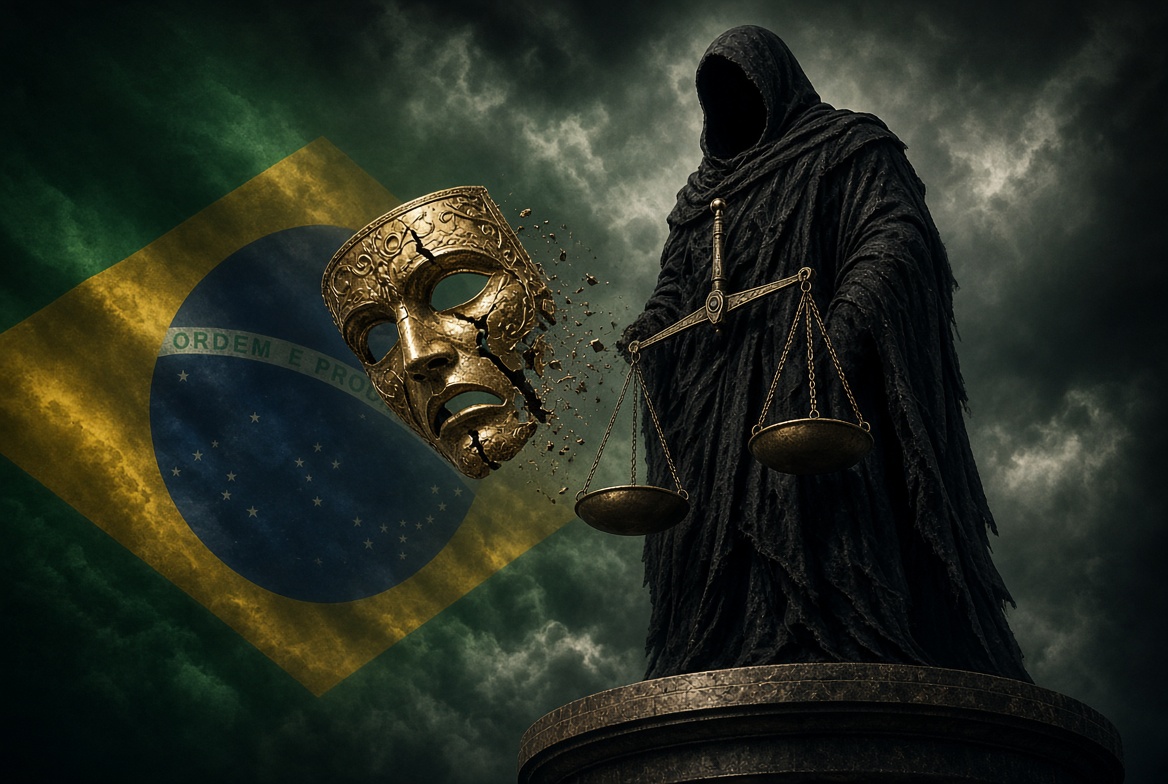
The disguise, as the post says, has been dropped. What remains is the plain test every republic eventually faces: whether its highest institutions will enforce the limits written into the constitution, or whether those limits will be rewritten by the people who find them inconvenient. The answer will not be settled by any single clip. It will be settled by whether the next years of Brazilian politics still contain a real possibility that power changes hands through elections rather than through the courts.
#Brazil #Democracy #STF #InstitutionalIntegrity #PoliticalPower
Source: Analysis of a widely shared video and accompanying commentary from Brazilian social media, October 2026.


