





Brazil’s 2026 Runoff: Judicial Overreach, Conflicted Justices, and Why the Numbers Don’t Add Up
Elon Musk has an Opinion.
By Hotspotnews
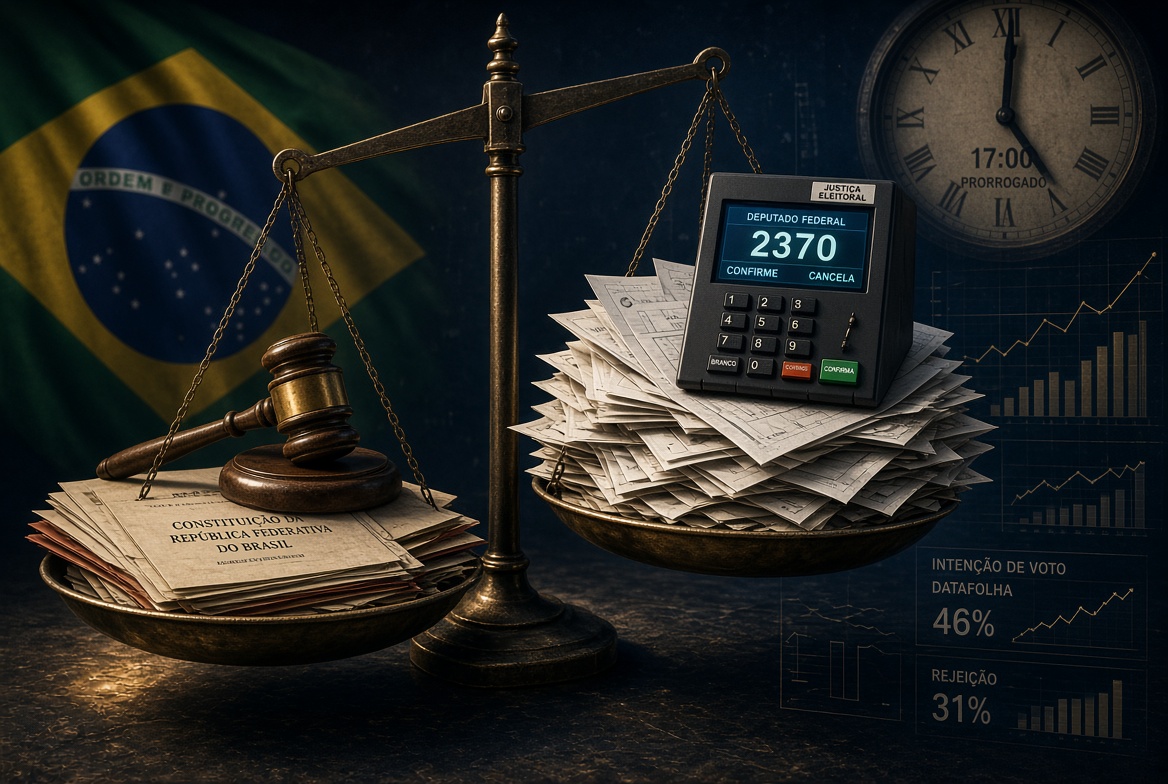
Brazil’s second-round presidential election on October 25, 2026, delivered a re-election for Luiz Inácio Lula da Silva, but the process has raised serious questions about the independence of the judiciary and the integrity of the vote. What occurred that day was not a routine administrative adjustment. It was a last-minute intervention by a Supreme Federal Court (STF) justice with deep personal ties to the incumbent, ordered in a manner that bypassed the normal electoral authority and extended voting by two full hours nationwide.
Cristiano Zanin, Lula’s former personal criminal-defense lawyer in the Lava Jato cases and a justice appointed by Lula himself, issued the order. Lula’s campaign had requested the extension, citing transportation difficulties in several locations, particularly in Bahia. Rather than waiting for a ruling from the Superior Electoral Court (TSE)—the body specifically charged with administering federal elections—Zanin acted through the STF. Polls that were set to close at 17:00 remained open until 19:00. The TSE later instructed regional tribunals to comply with the decision for any stations that had not yet closed.
Critics correctly note the structural problem. Brazil’s Constitution and electoral law assign primary responsibility for election administration to the TSE, not the STF. When a justice who previously represented the sitting president in criminal matters steps in, mid-vote, to grant his former client’s request and expands the measure nationwide, the appearance of partiality is unavoidable. This is not an abstract concern. The same court system has previously taken expansive steps against political opponents of the current government, including censorship orders and account suspensions that drew international criticism. An extension of voting hours under these conditions invites the same skepticism.
The numerical outcome has compounded the doubts. Lula’s vote total rose from approximately 53.9 million in the first round to 64.1 million in the runoff. Elon Musk, owner of the platform X, publicly flagged the discrepancy with the concise observation that “the math doesn’t add up.” He also reacted with “Wow” to detailed accounts of the extension process. Musk’s comments amplified existing concerns rather than inventing them. The increase is explained in part by lower abstention and fewer blank and null votes, yet the scale of the shift, occurring after an extraordinary last-minute rule change by a conflicted justice, has left many Brazilians and outside observers unconvinced that every vote was cast under identical, transparent conditions.
Conservative observers have long argued that election systems must be insulated from the personal and institutional interests of the candidates and the courts that those candidates help staff. Brazil’s electronic voting machines, the absence of a robust paper trail in many contexts, and the concentration of power in a small number of unelected justices already create elevated risks. Adding a mid-election procedural change ordered by the candidate’s former lawyer does not reassure the public. Comparable standards in other democracies treat last-minute alterations by conflicted officials as grounds for heightened scrutiny, not automatic acceptance.
The episode also illustrates a broader pattern. When institutions that are supposed to be neutral become instruments of one political side, public confidence erodes. Supporters of the result can point to higher turnout and the official certification. Skeptics can point to the identity of the decision-maker, the timing, and the magnitude of the vote swing. Both facts exist. Dismissing the latter as mere conspiracy does not make the former more legitimate.
Elon Musk’s willingness to highlight these issues on a platform he controls has drawn predictable pushback from those who prefer the story of a clean, uncontroversial victory. Yet the underlying events—the request by Lula’s campaign, the order by Zanin, the two-hour national extension, and the large second-round increase—are documented in Brazilian reporting from multiple outlets. Questioning whether the process met ordinary standards of impartiality is not an attack on democracy. It is an insistence that democracy requires more than the announcement of a winner.
Brazil’s voters, and those watching from abroad, are entitled to a clear accounting of how the rules were applied and why they were changed on the day of the election by a justice so closely connected to one of the candidates. Until that accounting is provided in a form that addresses the conflict of interest and the procedural irregularities, the claim that “the numbers don’t add up” will continue to resonate.
Sources
Folha de S.Paulo reporting on Zanin’s October 25 order extending voting to 19:00 nationwide at the request of Lula’s campaign.
VEJA and O Globo accounts confirming the request originated with Lula’s coalition and that Zanin applied the measure country-wide.
UOL and Revista Oeste coverage of Elon Musk’s posts stating “Math doesn’t add up” and reacting to the extension process.
Contemporary reporting on the first- and second-round vote totals and the reduction in abstention.
#BrazilElection #ElectionIntegrity #ElonMusk #Lula #Zanin #RuleOfLaw #Democracy #VoteTransparency


