

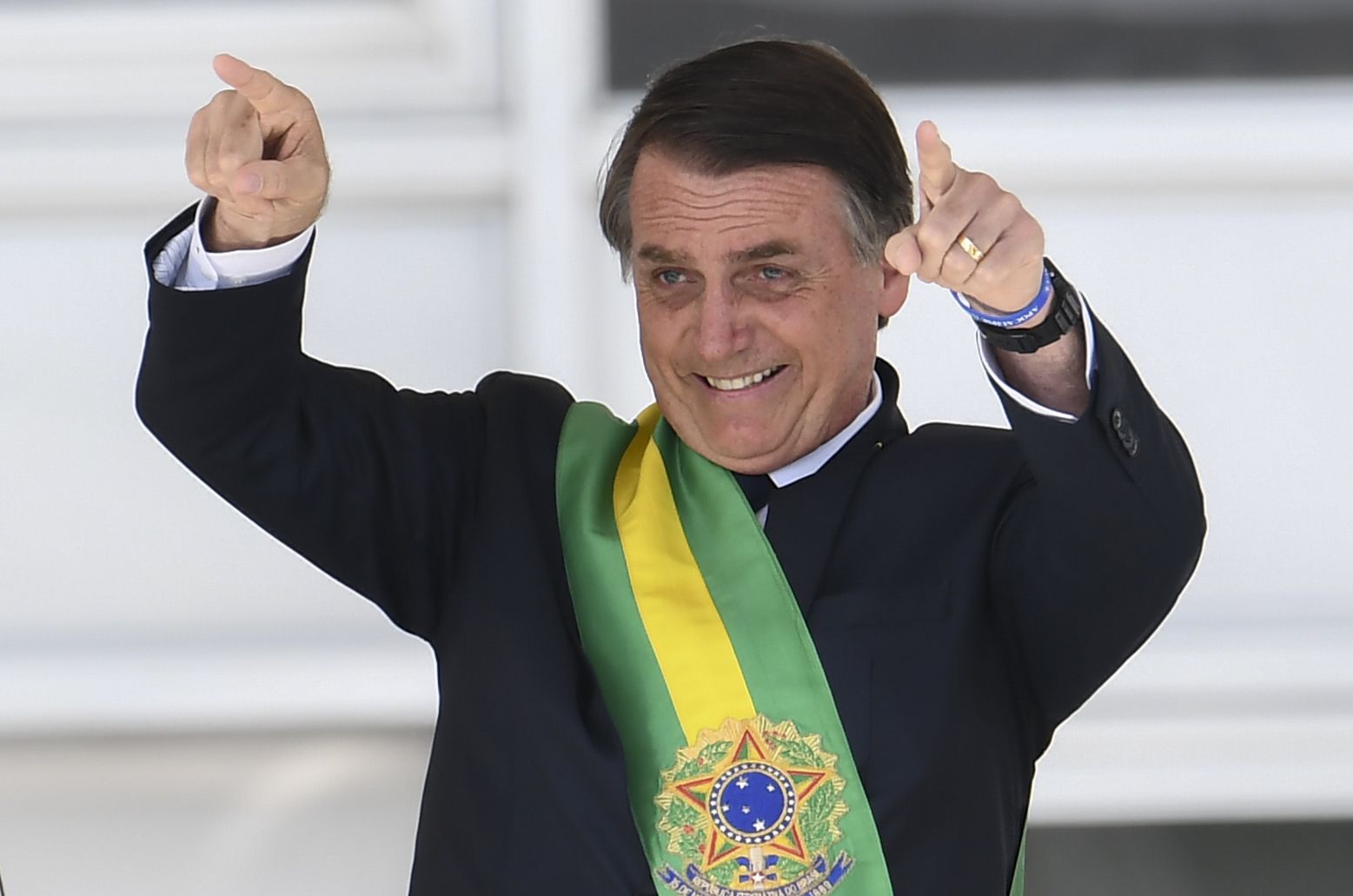

Bolsonaro’s Unbreakable Legacy
By Hotspotnews
In the turbulent landscape of Brazilian politics, few figures have endured as much raw adversity as Jair Bolsonaro. A former army captain turned populist leader, Bolsonaro’s journey from the fringes of power to the presidency—and now to the brink of martyrdom—reads like a script from a revolutionary saga. But this is no fiction. On September 6, 2018, during a campaign rally in Juiz de Fora, Bolsonaro was viciously stabbed in the abdomen by Adélio Bispo de Oliveira, a lone attacker whose blade pierced his intestines and nearly ended his life. He lost over 40% of his blood, teetering on the edge of death as surgeons fought to save him. What was meant to silence a rising voice against Brazil’s entrenched elite only amplified it, catapulting him to victory in the October election. Fast-forward to September 2025, and the “system”—that shadowy alliance of judicial overreach, political rivals, and institutional machinery—has struck again, sentencing him to 27 years in prison for alleged coup plotting after his 2022 electoral defeat. Yet, in a twist of irony, these blows have not broken him. Instead, they’ve ignited a firestorm of support, transforming Bolsonaro into an even greater martyr and fueling a movement poised for resurgence, bolstered by unlikely allies across the Atlantic in the United States.
The First Strike: A Blade in the Gut That Cut Through the Establishment
The stabbing was no mere act of random violence; it was a desperate gambit by forces threatened by Bolsonaro’s unyielding critique of corruption, socialism, and the status quo. As he was hoisted on supporters’ shoulders, the knife plunged deep, severing veins and intestines in a moment captured on video that shocked the nation. Hospital officials reported he arrived in shock, having hemorrhaged liters of blood, and required multiple surgeries to survive. Critics, including some on the left, whispered of a “fakeada”—a staged event for sympathy—but the evidence was irrefutable: Bolsonaro’s life hung by a thread, and his recovery was nothing short of miraculous.
Far from derailing his campaign, the attack supercharged it. Polls surged as Brazilians rallied around the wounded underdog, seeing in his survival a symbol of resilience against a decaying system. Rivals like Fernando Haddad of the Workers’ Party condemned the violence, but it was Bolsonaro’s narrative that resonated: Brazil was in chaos, plagued by crime and institutional rot, and he was the firm hand needed to restore order. He won the presidency handily, defeating Haddad in the runoff. The incident didn’t just secure his election; it forged a bond with millions who viewed him as a fighter, a man who bled for his beliefs. As one supporter later reflected on social media, “The knife that nearly stole his final breath ended up giving him a new breath—one of renewed love for the country he vowed to serve with his very life.”
During his term from 2019 to 2022, Bolsonaro governed as a disruptor, slashing bureaucracy, promoting economic liberalization, and standing firm against leftist ideologies. But the system—embodied by a Supreme Court increasingly aligned with his opponents—began circling. His 2022 re-election bid against Luiz Inácio Lula da Silva was fierce, marked by allegations of fraud from Bolsonaro’s camp and a razor-thin loss. The real backlash came post-election, with the January 8, 2023, riots in Brasília, where supporters stormed government buildings in protest. Prosecutors pinned this on Bolsonaro, accusing him of orchestrating a coup to overturn the results.
The Second Stab: Judicial Shackles and the Making of a Martyr
If the physical stabbing was brutal, the systemic one was insidious—a slow poison administered through the courts. By 2025, Bolsonaro faced trial for five charges: attempting a coup, leading an armed criminal organization, abolishing the democratic rule of law, and causing damage to public and protected property. The Supreme Court, led by Justice Alexandre de Moraes, convicted him on September 11, sentencing him to 27 years and three months. Evidence included meetings where he allegedly sought military backing to reverse the election and knowledge of assassination plots against Lula and Moraes. Bolsonaro, under house arrest since August, denied it all, calling it “political persecution” designed to bar him from the 2026 race—where he was already ineligible until 2030 due to prior rulings on election misinformation.
Supporters see this not as justice, but as a witch hunt by a judiciary weaponized against conservatives. The trial divided Brazil anew, with protests erupting in São Paulo and Brasília demanding his release. One X post captured the sentiment: “First, they sent an assassin to stab Bolsonaro. He survived… Now, their kangaroo court sentences him to over 27 years in a terrible prison.” The conviction came amid ongoing health issues from the 2018 attack—Bolsonaro underwent surgery in April-May 2025 for an intestinal obstruction linked to the stabbing—painting him as a victim of relentless assault. His son Flávio decried it as “persecution,” vowing congressional action for amnesty. Even as the sentence looms, Bolsonaro’s resolve shines: “He will not stop. He will not back down.”
This “second stabbing” by the system—through legal chains rather than a blade—has only amplified his martyr status. In a polarized nation still scarred by its 1964-1985 military dictatorship, the left frames the trial as safeguarding democracy. But for Bolsonaro’s base, it’s proof of elite desperation. The failed coup plot, they argue, never materialized because the military refused to play along, yet the establishment punished him anyway. Social media buzzes with defiance: “Bolsonaro—thank GOD—is neither perfect nor a saint, but he has a kind of resolve that even his enemies admit.” The verdict hasn’t quelled his movement; it’s galvanized it, drawing parallels to historical figures who rose from persecution.
Fuel for the Fire: The Path to Reelection and Unyielding Strength
What the system intended as a death blow has become rocket fuel for Bolsonaro’s political revival. Despite the ban and imprisonment threat, his influence endures. Polls show his approval hovering around 40%, with allies like his sons positioning for 2026. The martyrdom narrative—stabbed twice, once physically and once institutionally—has unified conservatives, portraying him as a Christ-like figure sacrificed for the people’s sins against socialism. As one analyst noted, the non-unanimous Supreme Court vote (four guilty, one acquittal) only prolongs the agony, vindicating supporters who see bias in the process.
The system’s overreach has inadvertently strengthened him. Where once he was a controversial president, now he’s an icon of resistance. Supporters flood streets with signs reading “Save Brazil from this dictatorship,” linking his plight to broader fights against censorship and judicial tyranny. Even international observers note how the stabbing in 2018 “hamstrung” his image temporarily but ultimately saved his legacy by humanizing him. Today, the prison sentence does the same: it exposes the system’s fragility, rallying the disaffected and turning potential defeat into a clarion call for reelection—not his personal return, perhaps, but the triumph of his ideology through proxies.
## The American Lifeline: United States Support Elevates the Martyr
No element has supercharged this resurgence more than the backing from the United States, particularly under President Donald Trump, Bolsonaro’s ideological soulmate. Trump, who has called Bolsonaro “a good man” and the trial a “witch hunt,” has weaponized U.S. leverage to defend him. In July 2025, the White House imposed 50% tariffs on Brazilian imports, citing attacks on “free elections and fundamental free speech rights.” The U.S. Treasury sanctioned Justice Moraes and other court figures, revoking visas and freezing assets, framing the prosecution as an assault on democracy akin to Trump’s own legal battles.
Trump’s rhetoric echoes Bolsonaro’s: both decry “deep state” machinations. In a CNN interview post-verdict, Trump reiterated support, hinting at further “economic and military might” if needed. U.S. Senator Marco Rubio blasted the ruling as persecution by a “sanctioned human rights abuser,” promising a response. This transatlantic alliance isn’t just symbolic; it’s strategic. Bolsonaro’s son Eduardo lobbied in Washington, and the U.S. actions have strained Brazil-U.S. ties, boosting Lula’s domestic standing while elevating Bolsonaro globally as a populist hero.
Critics in Brazil decry this as foreign meddling, with protests against Trump alongside anti-Bolsonaro rallies. But for his followers, it’s validation: the world’s superpower recognizes the injustice, providing the “fuel” to not just survive but dominate. As one X user put it, the system “didn’t count on the strength of the people and the work of Eduardo Bolsonaro.” With U.S. backing, Bolsonaro’s martyrdom transcends borders, inspiring a conservative wave that could reshape Latin America.
## A Martyr Stronger Than Ever: The System’s Fatal Miscalculation
The system’s dual stabbings—literal and metaphorical—were meant to erase Jair Bolsonaro from the political arena. Instead, they’ve etched him into history as an indomitable force. The 2018 attack propelled him to power; the 2025 conviction has made him unbreakable, a martyr whose scars symbolize the fight against oppression. With grassroots fervor at a peak and U.S. support turning the tide, the path to “reelection” lies not in ballots alone but in a movement reborn from adversity. Brazil’s elite may have drawn blood, but they’ve awakened a giant. Bolsonaro’s story proves it: persecution doesn’t destroy; it forges legends. As the nation hurtles toward 2026, the fuel is lit, and the fire burns brighter than ever.