


Lula’s Supreme Court Pick: Just another branch of the ruling coalition
By Hotspotnews
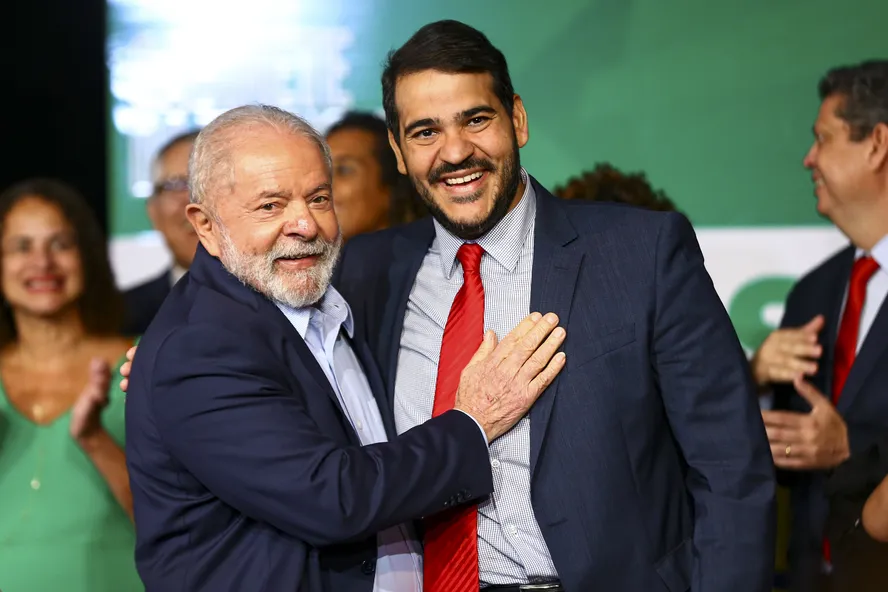
President Luiz Inácio Lula da Silva has just delivered one of the clearest messages of his third term: the institutions of the Republic belong to him, not to the 203 million Brazilians who pay for them.
By nominating Jorge Messias, his own Attorney General and a man with zero relevant judicial experience, to the Supreme Federal Court, Lula has done something that even his most cynical critics did not expect him to attempt so soon: a second consecutive appointment of a personal political operative to the highest court in the land.
The first was Cristiano Zanin, Lula’s private defense lawyer during the Lava Jato cases. The second is Messias, the official who turned the Attorney General’s Office into a legal attack dog against journalists, opposition lawmakers, and ordinary citizens who dare criticize the government on social media. Two personal appointees in less than two years. At this rate, the Supreme Court is becoming less a constitutional tribunal and more the presidential law firm on lifetime retainer.
This is not merely a questionable choice; it is an act of institutional arrogance. Jorge Messias is 45 years old. If confirmed, he will sit on the Court until 2059—long after Lula, his allies, and most of today’s political class are gone. That is thirty-four years in which one more reliably pro-government vote can tip every major decision on freedom of speech, federalism, private property, and the limits of judicial power itself.
The Brazilian people have watched in recent years as the Supreme Court stretched its own authority far beyond anything the 1988 Constitution envisioned. Censorship orders, nationwide suspensions of social media platforms, solitary rulings that override Congress—these are no longer hypothetical abuses; they are daily reality. Adding another justice whose primary credential is loyalty to the Planalto Palace does not restore balance. It entrenches a majority that can, for decades, place the presidential sash above the Constitution.
The support
Justice André Mendonça, who was appointed by former President Jair Bolsonaro in 2021, congratulated Messias’ nomination.
“He is a qualified candidate from the Solicitor General’s Office and meets the constitutional requirements. I also commend the president for his choice. Messias will have my full support in a republican dialogue with the senators,” Mendonça said.
Mendonça’s statement, issued shortly after the announcement, signals an intent to de-escalate tensions in a court that has become a flashpoint for Brazil’s left-right divide.
Broader Political Implications
Brazil’s STF has been at the epicenter of national turmoil since 2023, when Bolsonaro supporters stormed its headquarters in Brasília on January 8 in a failed coup attempt. The court has since spearheaded investigations into Bolsonaro, culminating in his September 2025 conviction by a panel (chaired by Barroso) to 27 years and three months in prison for plotting the insurrection. This context amplifies the stakes of new appointments: Lula seeks to bolster a court sympathetic to his agenda on issues like environmental protections, indigenous rights, and anti-corruption probes targeting the right. Messias, as a government defender, is likely to align with progressive rulings, potentially tipping balances in ongoing cases.
Mendonça’s endorsement could foster bipartisanship amid Senate dynamics, where right-wing forces (e.g., the Liberal Party, PL) hold sway but face pressure for stability. However, it draws backlash from hardline Bolsonaro allies, who portrays it as capitulation. Overall, the nomination and Mendonça’s response highlight a fragile push toward judicial normalcy in a nation still reeling from democratic backsliding, with confirmation hearings expected in early 2026 serving as a litmus test for institutional resilience.
Conservatives, libertarians, and millions of ordinary citizens who simply want impartial justice are not asking for ideological clones on the Court. They are asking for a bare minimum: that the highest bench in the country not be treated as a reward for political service or a tool to shield the government from accountability.
Lula’s choice of Messias sends the opposite message: the Supreme Court is just another branch of the ruling coalition, and the Brazilian people can either applaud or be silent.
That is why this nomination is more than a personnel decision. It is a deliberate insult to every citizen who still believes that the judiciary should defend the Constitution and the people, not the temporary occupant of the presidency.
The Senate now has a historic opportunity—and obligation—to reject this nomination with the decisive vote it deserves. If it fails to do so, the message will be equally clear: in today’s Brazil, loyalty to power trumps loyalty to the Republic.
The Brazilian people deserve better than a Supreme Court that looks and acts like an annex of the Palácio do Planalto.