


Justice Mendonça’s Intervention in INSS Fraud Probe Raises Serious Questions About Accountability
In a disturbing display of judicial overreach, Supreme Court Justice André Mendonça has ordered the sealing of a secure data room used by the Joint Parliamentary Inquiry Commission (CPMI) investigating massive fraud at Brazil’s National Social Security Institute (INSS). The move directly impacts the commission’s ability to examine critical evidence tied to José Ricardo Vorcaro (also referred to as Daniel Vorcaro in related reports), a prominent banker and key figure in the sprawling scandal that has defrauded countless hardworking retirees out of their hard-earned benefits.
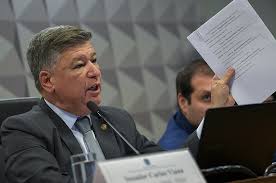
Senator Carlos Viana, the principled chairman of the CPMI and a steadfast voice for transparency, promptly announced his compliance with the justice’s ruling while vowing that the investigation will continue undeterred. Speaking firmly in a recent press conference, Viana emphasized that what is emerging from this probe is “very grave” and insisted there will be no protection or shielding for those involved. He also revealed that attempts to leak sensitive information from the sealed room had occurred, prompting calls for the Legislative Police to investigate these breaches.
The INSS fraud scheme, uncovered through Federal Police operations like Sem Desconto, represents one of the most egregious assaults on vulnerable Brazilians in recent memory. Criminal networks exploited retirees—many living on meager pensions—through fake beneficiaries, unauthorized loans, and other deceptive practices that siphoned billions of reais from the public coffers. These are not victimless crimes; they strike at the heart of trust in government institutions and prey on the elderly who have spent decades contributing to the system only to see their retirement security stolen.
Yet instead of allowing Congress—elected by the people—to fulfill its constitutional duty of oversight and accountability, Justice Mendonça intervened to restrict access to Vorcaro’s seized data, directing the Federal Police to remove equipment from the commission’s secure facility. While privacy concerns for personal information must always be weighed carefully, this abrupt shutdown at such a pivotal moment fuels legitimate suspicion that powerful interests may be seeking to slow or derail a probe that threatens to expose uncomfortable truths across political and economic lines.
Conservatives have long warned that an activist judiciary can undermine democratic processes when it substitutes its judgment for that of the legislative branch. The CPMI, led by Senator Viana, has already demonstrated courage in pursuing facts without favoritism—publicly clarifying, for instance, that certain figures close to the current administration are not implicated, even as it digs deeper into connections that cross ideological boundaries. Viana’s commitment to following the law while refusing to back down sends a powerful message: accountability must prevail over any attempt at cover-up.
The Brazilian people deserve full transparency on how their retirement funds were plundered and who enabled it. Retirees who trusted the system should not have their pain compounded by judicial roadblocks that appear to prioritize procedural niceties over justice. Senator Viana and his colleagues must now redouble their efforts to ensure this scandal is fully exposed, no matter who it implicates.
In the end, true reform begins with unflinching truth. Brazilians are watching, and they expect their representatives—and the courts—to deliver exactly that. No impunity, no blindfolds, and no retreat in the fight against corruption that robs the most vulnerable among us.