


Brazilian Investors Cheer the Coming End of Lula’s Failed Experiment
By Hotspotnews
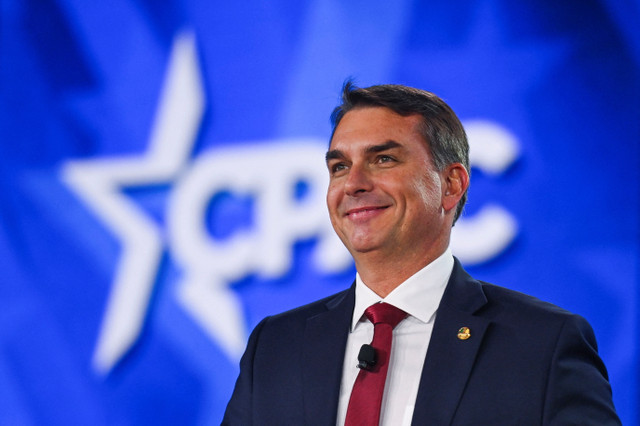
As Brazil approaches the decisive October 2026 presidential election, a wave of optimism is sweeping through the country’s financial circles. Seasoned investors, long weary of expanding government control, unchecked spending, and eroding economic freedoms under President Luiz Inácio Lula da Silva, are openly anticipating a return to sanity. Recent reports from financial circles highlight a clear sentiment: the Lula era, marked by fiscal recklessness and ideological overreach, appears to be winding down, with conservative challenger Senator Flávio Bolsonaro emerging as a formidable contender who could restore pro-growth policies and national pride.
Polls conducted in recent weeks paint an encouraging picture for conservatives. Multiple surveys, including those from respected firms like BTG Pactual and AtlasIntel, show Flávio Bolsonaro locked in a tight race with the aging leftist incumbent. In simulated run-off scenarios, the two are essentially tied, with some data even giving the Bolsonaro family standard-bearer a slight edge. This momentum comes despite the left’s relentless attacks and attempts to tie the senator to past controversies. It reflects a growing public desire for change after years of disappointing results under Lula’s Workers’ Party.
What excites investors most is the prospect of a shift away from Lula’s big-government approach. His administration has been plagued by rising deficits, persistent inflation pressures, and a heavy-handed regulatory environment that has stifled private enterprise. Brazilian markets have suffered from uncertainty, with capital often fleeing to more stable opportunities abroad. In contrast, Flávio Bolsonaro’s platform, rooted in the successful elements of his father Jair Bolsonaro’s earlier tenure, emphasizes fiscal responsibility, reduced bureaucracy, support for free markets, and stronger law-and-order measures. Even as his economic team continues to develop, the mere signal of a potential conservative victory is breathing life into investor confidence.
This positive turn represents a rejection of the socialist policies that have repeatedly burdened Latin America’s largest economy. Lula’s third stint in power has revived old habits: expansive social programs funded by borrowing, alliances with questionable international actors, and a tolerance for institutional overreach that has alienated everyday Brazilians and foreign partners alike. Crime rates in major cities, economic stagnation for the working class, and scandals involving state institutions have only fueled the backlash. Conservatives see Flávio as the leader who can deliver the reforms needed—lower taxes, energy independence, agricultural strength, and a defense of traditional values that made Brazil a beacon of hope in the region during the previous right-leaning administration.
The Brazilian people have shown remarkable resilience. Millions who once trusted Lula’s promises now recognize the gap between rhetoric and reality. Support for the conservative movement, carried forward by the Bolsonaro name, has surged as voters prioritize jobs, security, and genuine prosperity over empty ideological gestures. Flávio’s rise demonstrates that the spirit of 2018 and 2022 lives on, undimmed by political persecution or media bias.
This moment is cause for celebration among those who value liberty, limited government, and national sovereignty. A Bolsonaro victory in October would not only end the current drift toward statism but also position Brazil to thrive once more— attracting investment, creating opportunities for families, and reclaiming its place as a dynamic force in the Americas. As election day draws nearer, the momentum is clear: Brazilians are ready for a fresh start, one grounded in common sense and economic freedom rather than failed leftist experiments.
The winds of change are blowing in Brasília, and for conservatives across the nation, this is a time of renewed hope.