

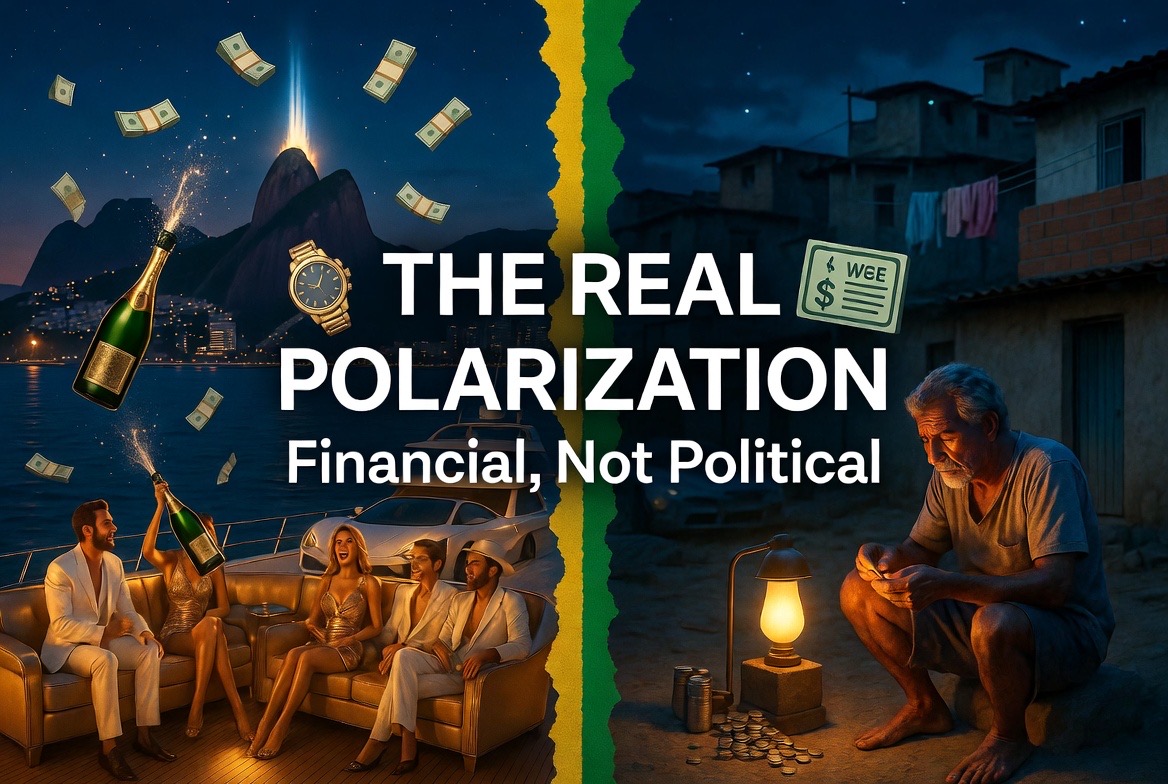

The Real Polarization in Brazil: It’s Financial, Not Political
By Hotspotnews
In recent years, Brazilian politics has been dominated by talk of “polarization.” The left loves to weaponize the word, painting conservatives as extremists who threaten democracy simply for wanting lower taxes, secure borders, secure property rights, and personal responsibility. But the true divide ripping Brazil apart isn’t red versus blue or left versus right. It’s the staggering gap between the working poor and the insulated elite who party like there’s no tomorrow while preaching equality.
Consider one glaring example: a single night of elite “diversion” that could equal 2,000 minimum wages. With Brazil’s 2026 minimum wage at roughly R$1,621 per month, that’s over R$3.24 million blown in one evening on champagne, private venues, imported luxuries, or whatever passes for fun among the hyper-wealthy. A minimum-wage Brazilian worker would need more than 166 years of unbroken labor — no vacations, no illness, no family emergencies — just to match that one night’s tab. This isn’t exaggeration; it’s arithmetic that exposes the hollow core of class-war rhetoric from Brasília.
The Financial Polarization Trap
Conservatives have long argued that Brazil’s biggest problem isn’t ideological disagreement but a rigged system that concentrates opportunity at the top while trapping millions in dependency. Decades of leftist governance — heavy regulation, bloated public spending, endless new taxes, and “social” programs that often function as vote-buying machines — have delivered one of Latin America’s worst wealth gaps. The top 1% captures a disproportionate share of income and wealth, while the bottom half struggles with inflation-eroded wages, crumbling infrastructure, and crime that hits the poor hardest.
Yet the same elites who benefit from this system — corporate insiders with government contracts, celebrities, NGO-funded activists, and political dynasties — lecture the working class about “solidarity.” They fly private, dine at tables costing a year’s salary for a laborer, and vacation in exclusive resorts, all while demanding higher taxes on “the rich” (which somehow never seems to include their own loopholes and offshore shelters). This is not genuine compassion. It is virtue-signaling that distracts from policies that actually work: free markets, merit-based advancement, school choice, and fiscal discipline.
The left’s obsession with political polarization serves a purpose. By framing every debate as a culture war between “progressives” and “fascists,” they avoid discussing the policy failures that matter most to ordinary Brazilians: why a hard-working family can’t afford basic security, quality education, or a stable job in an economy strangled by bureaucracy. Real polarization in Brazil is between producers and takers, between those who build wealth through effort and those who redistribute it through political power.
Why This Matters for Conservatives
True conservatism isn’t about defending the wealthy for their own sake. It’s about defending the principles that allow anyone willing to work, save, and innovate to climb the ladder. Brazil’s financial polarization thrives because too many policies punish success and reward connection over competence. High interest rates protect some savers but crush small businesses and families seeking credit. Tax complexity and spending sprees fuel public debt without delivering results for the streets. Meanwhile, the cultural elite mocks traditional values — family, faith, patriotism — that have historically been the greatest engines of social mobility for the poor.
Escaping this trap requires rejecting the false choice the left offers. Brazilians don’t need more divisive identity politics or redistribution theater. They need:
- Economic freedom: Cut red tape, lower taxes, and unleash private enterprise so more people can create jobs and build wealth.
- Rule of law: Protect property and personal safety so the vulnerable aren’t preyed upon while the connected live behind walls and bodyguards.
- Opportunity culture: Education that teaches skills and character, not grievance. Welfare that encourages work, not permanent dependence.
- Honest debate: Call out elite hypocrisy without apology. A night of excess costing centuries of minimum-wage toil should shame the powerful, not become background noise in another “polarization” sermon.
The commenter who highlighted this financial contrast was right. The word “polarization” has been loaded to scare voters into softening conservative principles. But when you look at the numbers — the yachts and penthouses versus the favelas and factory floors — the real scandal isn’t disagreement over ideas. It’s the distance between the lives of Brazil’s working majority and the insulated few who shape the narrative.
Conservatives must keep the focus where it belongs: on policies that expand dignity through work and responsibility, not slogans that divide while the gap widens. Brazil’s potential is enormous — abundant resources, energetic people, cultural depth. Unleashing it starts with rejecting the polarization trap and confronting the financial reality head-on. The night of R$3 million fun is just one symptom. The cure is principled reform that rewards effort for all.