

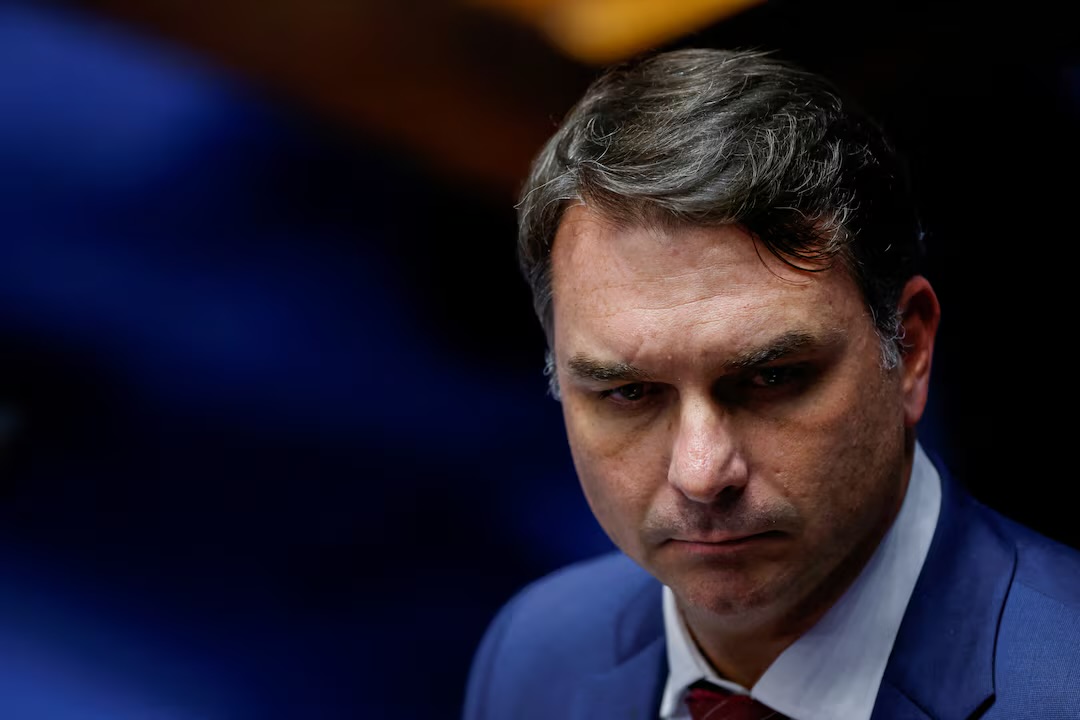

Lawfare in Full Swing: The Politicized Push to Sideline Flávio Bolsonaro
By Hotspotnews
Brazil’s conservative opposition faces yet another coordinated assault from a weaponized judiciary. In the latest episode, the Federal Police (PF) delivered a report to Supreme Court Justice Alexandre de Moraes concluding that Senator Flávio Bolsonaro committed the crime of calumny against President Luiz Inácio Lula da Silva. The case stems from a January 3, 2026, social media post in which Flávio highlighted allegations tied to Nicolás Maduro and the Foro de São Paulo network—claiming Lula would be delated for involvement in international drug and arms trafficking, money laundering, support for terrorists and dictatorships, and fraudulent elections.5
The PF determined that Flávio’s statements constituted a false imputation of serious crimes to the sitting president. Moraes, who has long been accused by conservatives of acting as a political enforcer for the left, promptly set a 15-day deadline for the Attorney General’s Office (PGR) to weigh in. This moves the case closer to potential formal charges. Flávio, a leading pre-candidate for the 2026 presidential race and son of former President Jair Bolsonaro, now risks criminal conviction.6
The Stakes: Ineligibility and the 2026 Election
Under Brazil’s Constitution and the Lei da Ficha Limpa (Clean Record Law), a criminal conviction—especially one handed down by a collegiate body—can suspend political rights and bar a candidate from running for office for up to eight years. Even crimes against honor like calumny have been cited by legal experts as potentially triggering ineligibility when they result in a final or collegiate conviction.24
Conservatives see this not as accountability but as surgical lawfare designed to eliminate the strongest right-wing challenger to Lula. Flávio has positioned himself as a more measured continuation of his father’s movement—tough on crime, pro-family, and skeptical of globalist institutions—while polling competitively in a tight race. Removing him from the ballot would clear the path for Lula’s allies or a more pliable opposition figure.
Critics rightly note the glaring double standard. Lula and his allies have repeatedly labeled Jair Bolsonaro a “genocida” (genocidal) over COVID policies and made inflammatory claims without facing equivalent scrutiny or swift STF action. Parliamentary immunity and free speech protections appear selectively enforced, applied vigorously against conservatives while ignored for those aligned with the ruling PT.
A Pattern of Persecution
This investigation fits a broader pattern. Jair Bolsonaro himself remains imprisoned following convictions tied to the 2022 election aftermath, with allies facing raids, censorship, and asset freezes under Moraes’ oversight. Family members, including Eduardo Bolsonaro, have been targeted in related probes. International observers and U.S. conservatives have described these actions as an assault on democratic norms and free expression, with some calling for sanctions on the judicial actors involved.42
The original post by Flávio was not a baseless smear but an attempt to connect public allegations and Maduro’s own legal troubles to Lula’s long-standing political alliances. In a healthy democracy, robust political debate—including sharp criticism of leaders—should not trigger criminal investigations by the highest court. Instead, Brazil’s system appears to treat opposition speech as a threat requiring judicial neutralization.
What Conservatives Should Take Away
Brazilian voters deserve the right to choose their leaders without the judiciary pre-selecting the field through selective prosecutions. If Flávio is convicted and rendered ineligible, it will further erode trust in institutions already viewed by millions as captured by one ideological side. True rule of law requires consistent standards: prosecute actual corruption and violence wherever it exists, not weaponize vague honor crimes to settle political scores.
The developments around this calumny case are a warning shot. Conservatives must continue exposing these tactics, supporting legal defenses, and mobilizing voters to reject any outcome that substitutes courtroom maneuvering for the ballot box. Brazil’s future depends on restoring genuine democratic competition—not one engineered by unelected judges.
The fight for a free and fair 2026 election is far from over.