

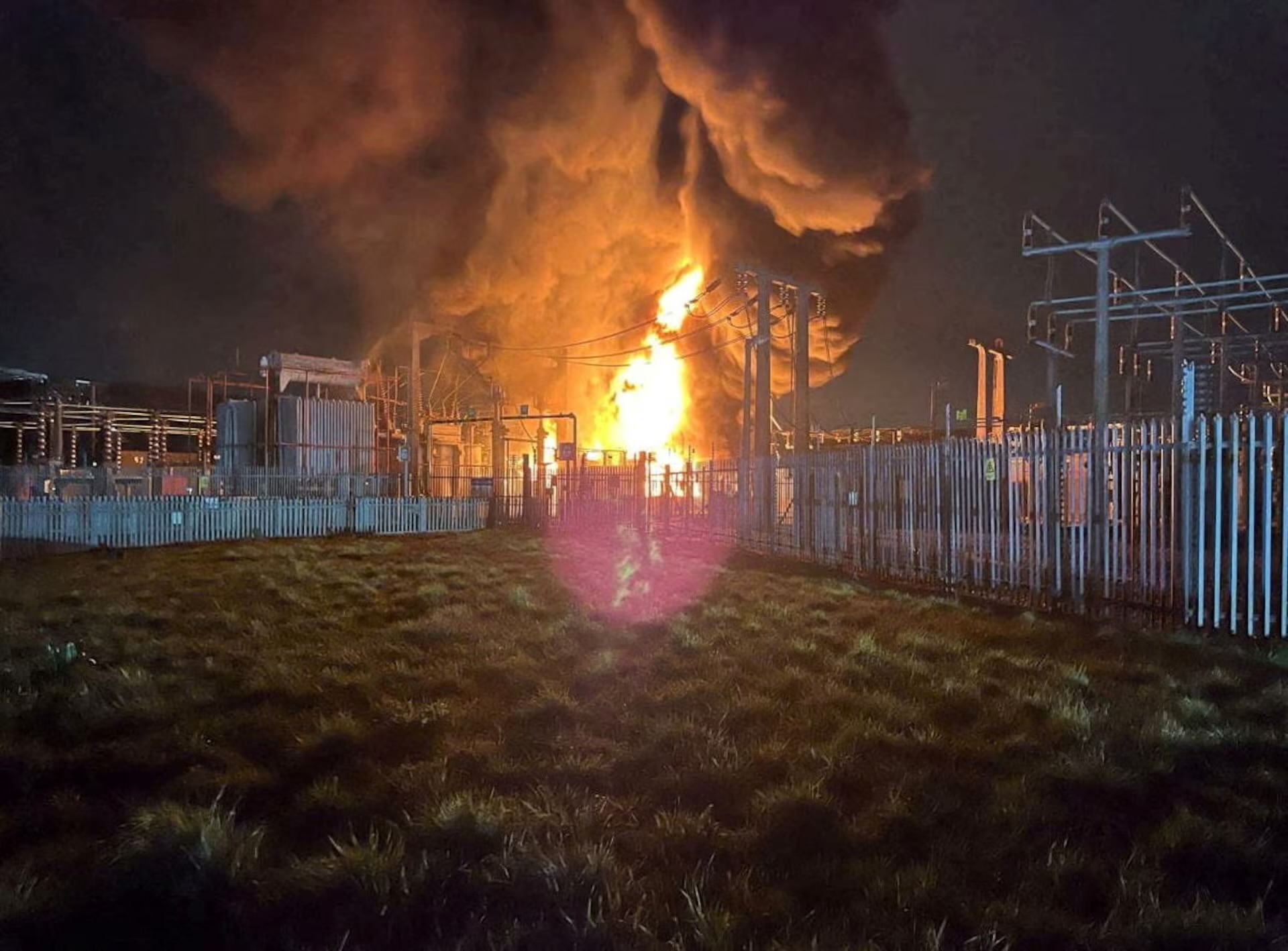

Global Aviation Disrupted as Heathrow Airport Closes Following Substation Fire
By the Hotspotorlando News
On March 21, 2025, a significant fire at an electrical substation near London’s Heathrow Airport forced the complete shutdown of one of the world’s busiest aviation hubs, sending ripples of disruption across global flight networks. The blaze, which erupted late Thursday night, knocked out power to the airport and its backup systems, halting operations for at least 24 hours and affecting thousands of passengers, airlines, and businesses worldwide. As authorities work to restore stability, the incident raises pressing questions about the resilience of critical infrastructure.
The Incident and Immediate Impact
The fire broke out at the North Hyde electrical substation in Hayes, west London, just before 11:23 p.m. GMT on March 20. Fueled by 25,000 liters of cooling oil within a transformer, the blaze produced towering flames and thick smoke, requiring the efforts of approximately 70 firefighters and ten fire engines to bring it under control. By early Friday morning, the London Fire Brigade reported the fire was largely subdued, though 10% remained active as of midday. The substation’s failure severed power not only to Heathrow but also to over 67,000 homes and businesses in the area, with 5,000 still without electricity by Friday afternoon.
Heathrow, Europe’s busiest airport and the world’s fifth-busiest, was slated to handle 1,351 flights and up to 291,000 passengers on Friday. With terminals plunged into darkness and operations crippled, the airport announced a closure until at least 11:59 p.m. local time, advising passengers to avoid traveling to the facility and to contact airlines for updates. The scale of the disruption is unprecedented in recent memory, drawing comparisons to the 2010 Icelandic ash cloud crisis, though confined to a single hub.
Global Aviation Fallout
The closure’s effects were immediate and far-reaching. FlightRadar24 reported that at least 120 inbound flights were diverted to alternative airports across Britain and Europe, including Manchester, Gatwick, and Frankfurt, while many long-haul flights—such as United Airlines services from New York and San Francisco, and a Qantas flight from Perth—returned to their origins mid-journey. British Airways, Heathrow’s largest operator with 341 scheduled landings, faced significant operational strain, as did dozens of other carriers reliant on the hub’s intricate scheduling.
Aviation experts warn that the turmoil will persist for days. Aircraft and crews, now scattered across unintended locations, have thrown meticulously planned networks into disarray. “Heathrow is a cornerstone of global aviation,” noted Ian Petchenik of FlightRadar24. “This disruption will cascade, affecting schedules worldwide.” Analysts estimate losses to the airline industry could reach tens of millions of pounds, with passengers facing delays, cancellations, and a scramble for accommodations—hotel prices near Heathrow reportedly surged to five times their norm.
Investigation and Infrastructure Concerns
The cause of the fire remains under investigation, with counter-terrorism police leading inquiries due to the incident’s impact on critical national infrastructure. The Metropolitan Police emphasized that there is “no current indication of foul play,” describing the involvement of specialized units as a precautionary measure given their forensic expertise. Energy Secretary Ed Miliband echoed this, stating on Sky News that while the blaze was “catastrophic,” early assessments suggest an accidental origin. The fire’s intensity, however, disabled both the primary power supply and a backup generator, a failure Miliband called “unusual” and warranting further scrutiny.
This vulnerability has sparked concern among industry leaders and observers. “You would expect significant backup power for such a vital hub,” a senior European airline executive remarked to Reuters. The International Air Transport Association labeled Heathrow’s preparedness “shocking,” calling it a “laughing stock” among global airports. The incident exposes potential weaknesses in Britain’s infrastructure, prompting Miliband to pledge a review to identify lessons and prevent future occurrences.
Local and Economic Ramifications
On the ground, the fire’s fallout extended beyond aviation. A 200-meter cordon evacuated approximately 150 residents, with 29 others led to safety from nearby properties. National Grid restored power to 62,000 customers by Friday morning, but the remaining outages underscore the broader disruption. London Mayor Sadiq Khan praised emergency responders while warning of “significant disruption over the coming days.”
Economically, the closure threatens trade and tourism, key pillars of the UK economy. Heathrow handled 83.9 million passengers in 2024, and a prolonged shutdown could ripple through supply chains and business travel, as noted by Simon Geale of Proxima consultancy. Transport Secretary Heidi Alexander assured the public that the government is working with Heathrow and air traffic authorities to expedite recovery, though no firm timeline for reopening has been confirmed.
A Call for Resilience
The Heathrow closure is a stark reminder of the fragility of interconnected systems. While emergency services and engineers labor to restore normalcy, the incident underscores the need for robust contingency plans at critical hubs. For now, travelers face uncertainty, airlines grapple with logistical chaos, and authorities confront the task of ensuring such a failure does not recur. As Britain’s gateway to the world reopens, the focus will shift to strengthening the infrastructure that underpins it—a priority that cannot be delayed.