


By Hotspotorlando
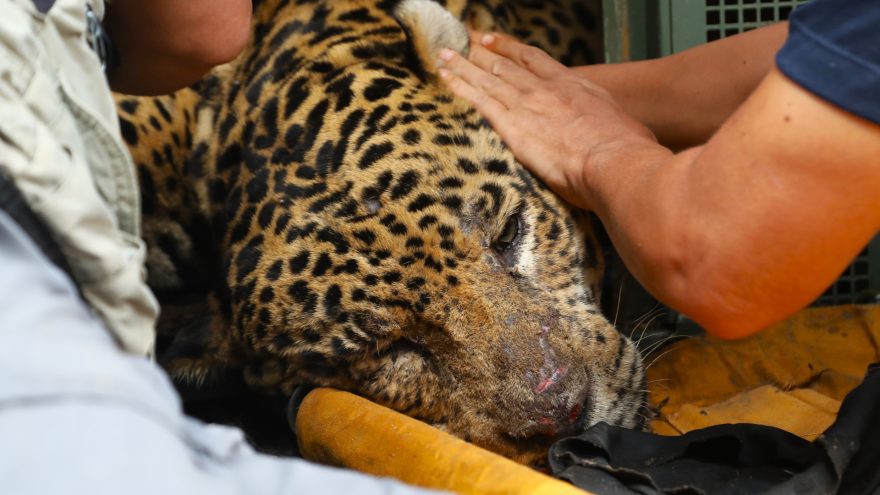
Campo Grande, Mato Grosso do Sul, May 18, 2025 – A nine-year-old male jaguar, implicated in the tragic death of a housekeeper in Brazil’s Pantanal region, was captured and relocated to a wildlife institute in Amparo, São Paulo, after a coordinated effort by environmental authorities. The animal, which weighed 94 kg at the time of its capture, gained 13 kg in just three weeks under veterinary care and now resides at the Ampara Animal Institute, home to eight other felines. The incident has reignited discussions about human-wildlife conflict in one of the world’s most biodiverse ecosystems.
The Incident and Discovery in the Pantanal
The jaguar’s capture followed a fatal attack on a housekeeper in a rural area of the Pantanal, the world’s largest tropical wetland, located in Mato Grosso do Sul. While specific details about the exact location and circumstances of the attack remain limited, posts on X and reports from outlets like CNN Brasil indicate that the incident occurred near a human settlement, possibly a ranch, where jaguars frequently come into contact with livestock and people. The housekeeper’s death prompted immediate action from local authorities, who recognized the need to locate and secure the animal to prevent further incidents.
The jaguar was found in the vicinity of the attack, likely through a combination of local reports and tracking efforts by wildlife experts. The Brazilian Institute of Environment and Renewable Natural Resources (IBAMA) and the Chico Mendes Institute for Biodiversity Conservation (ICMBio) led the operation, employing techniques common in the region for capturing large predators. “Onça que matou caseiro em MS é transferida para instituto em SP,” reported @HerreraNews1 on X, noting the animal’s initial condition: a 94 kg male showing signs of stress or malnutrition.
The capture was a delicate process, given the jaguar’s size and strength. Jaguars (Panthera onca), the largest felines in the Americas, are known for their powerful bite and elusive nature, making their safe apprehension a task for experienced professionals. Once secured, the animal was transported to the Wildlife Rehabilitation Center (CRAS) in Campo Grande, Mato Grosso do Sul, for immediate care.
Veterinary Care and Remarkable Recovery
At CRAS, the jaguar underwent a 21-day period of veterinary evaluation and rehabilitation. Veterinarians conducted medical exams, provided nutritional support, and monitored the animal’s behavior to assess its health and suitability for relocation. During this time, the jaguar gained an impressive 13 kg, reaching 107 kg, a testament to the quality of care provided. “Capturada com 94 kg, ganhou 13 kg com cuidados veterinários e exames,” stated @PopularNewsBR on X, reflecting the animal’s rapid recovery.
The weight gain suggests that the jaguar may have been under stress or facing food scarcity prior to its capture, possibly contributing to its aggressive behavior. The Pantanal’s ecosystem, while rich in biodiversity, has been strained by habitat loss, wildfires, and human encroachment, which can push jaguars into closer proximity with human settlements in search of prey.
Relocation to Ampara Animal Institute
On May 16, 2025, the jaguar was transferred to the Ampara Animal Institute in Amparo, São Paulo, a facility specializing in the care of large felines and other wildlife. The institute, which already houses eight other felines, offers a permanent home where the jaguar can live safely without posing a threat to humans. The decision to relocate rather than euthanize the animal aligns with Brazil’s conservation policies, which prioritize non-lethal solutions for human-wildlife conflicts, as outlined in a 2022 study published in Frontiers.
The transfer was a logistical feat, involving coordination between IBAMA, ICMBio, and the Ampara Animal Institute. The jaguar was transported under strict safety protocols to ensure its well-being during the journey from Campo Grande to Amparo, a distance of over 1,000 kilometers. Metrópoles reported that the institute’s facilities are well-equipped to meet the jaguar’s needs, providing ample space, a tailored diet, and ongoing veterinary oversight.
Human-Wildlife Conflict in the Pantanal
The incident highlights the growing challenge of human-wildlife conflict in the Pantanal, where jaguars face shrinking habitats due to deforestation, agriculture, and infrastructure development. A 2021 study by Panthera and the Federal University of Mato Grosso do Sul estimated that nearly 1,500 jaguars were killed or displaced in the Brazilian Amazon between 2016 and 2019, with similar pressures affecting the Pantanal. Jaguars often prey on cattle, leading to retaliatory killings by ranchers, while rare attacks on humans, like this one, fuel fear and tension in rural communities.
Posts on X reflect a range of public sentiments. Some users, like @diarioonline, praised the relocation as a humane solution: “Onça-pintada que atacou caseiro é transferida para instituto em SP.” Others expressed concern for the safety of Pantanal residents, with one user noting the economic toll of livestock losses on local ranchers. The housekeeper’s death, though an outlier, underscores the risks of coexisting with apex predators in a region where human activity increasingly encroaches on wildlife habitats.
Conservation Efforts and the Road Ahead
The jaguar’s relocation to the Ampara Animal Institute, supported by organizations like Onçafari and Panthera, is part of broader efforts to protect Brazil’s jaguar population, classified as “near threatened” by the International Union for Conservation of Nature. Initiatives like the Jaguar National Action Plan aim to mitigate conflicts through habitat preservation, ecotourism, and community education. For example, electric fencing and compensation programs for ranchers have shown promise in reducing retaliatory killings, as reported by Mongabay.
The Ampara Animal Institute’s role in this case highlights the importance of sanctuaries in balancing conservation with public safety. Supported by partners like PremieRpet, a Brazilian pet food company, the institute contributes to public awareness about the plight of jaguars, whose populations have declined by 73% globally since the 1970s, according to a 2024 WWF report.
For the Pantanal’s communities, the incident serves as a call to action. Strengthening coexistence strategies, such as those promoted by Onçafari’s ecotourism model, could help reduce conflicts while supporting the region’s economy. As one rancher told Mongabay, “People need to trust in this project—it’s the only viable way forward.”
The jaguar, now settling into its new home in Amparo, represents both the challenges and hopes of conservation in Brazil. While its story began with tragedy, its relocation offers a chance to learn and adapt, ensuring that humans and jaguars can share the Pantanal’s vast wilderness for generations to come.
Sources:
– Posts on X: @HerreraNews1, @PopularNewsBR, @Metropoles, @CNNBrasil, @diarioonline
– Web: CNN Brasil, Metrópoles, Mongabay, The Rio Times, Frontiers, WWF, PetfoodIndustry