





A Promise in a Vial: Lula, Alcolumbre, and Brazil’s Reckless Bet on the Equatorial Margin
By Hotspotnews
Assisted by Grok / xAI.
Facts drawn from published news and official statements listed below.
Brazil is being asked to accept a frontier oil province on the strength of a slogan, a campaign photograph, and a bottle of crude. That is not energy policy. It is a wager. The well is called Morpho, on block FZA-M-59, in ultra-deep water off Amapá. Hydrocarbons were confirmed in August 2026. Volume is unknown. Flow rate is unknown. Commerciality is unknown. First oil, if it ever comes, is six or seven years away—after the election that this announcement is meant to serve.
President Luiz Inácio Lula da Silva held up that vial and called it a “passport to the future.” He used the same phrase for the pre-salt. Conservatives should remember what that passport actually delivered: a real production boom, yes, and also a political machine, a social fund that became an accounting fiction, and a governing class that learned to spend tomorrow’s barrels before they were booked. Repeating the ritual over an unappraised well is not prudence. It is superstition with a Petrobras jumpsuit.
The damage is not theoretical
The Equatorial Margin is not Campos and it is not the Gulf of Mexico. The Morpho location sits about 175 kilometers off Amapá, in nearly 2,900 meters of water, and roughly 500 kilometers from the Amazon river mouth. Distance from the river is the government’s favorite talking point. It is also a distraction. Oil does not need to come out of the Amazon to ruin the Amazon coast.
A spill in this current system can reach Amapá and Marajó in about a day. Buoy tests and trajectory studies have shown material crossing into French Guiana waters in a matter of hours, with paths onward toward Suriname. This is not a domestic incident waiting to happen. It is a diplomatic incident waiting to happen.
The shoreline is not a sandy playground that skimmers can tidy. Much of it is mangrove—among the most oil-sensitive coasts on the planet. Tide pushes crude into roots and mud. Cleanup is often a fantasy. Nursery grounds for fish collapse. Artisanal fleets are idled by contamination and by rumor. Manatees, coastal and river dolphins, turtles, and seabirds take the first visible blow. Deeper and mid-water reefs and rhodolith beds take a quieter one, because almost nobody can see them die.
A moderate spill—not a Deepwater Horizon rerun, just a riser, a tanker, a well-control failure measured in thousands of barrels—would close fisheries, poison tidal creeks, and stain Brazil’s name in Cayenne and Paramaribo. A major blowout would turn a campaign asset into a decade-long ecological and legal siege. Even “successful” full development brings the quiet damages governments prefer not to film: year-round helicopter corridors, port sprawl around Oiapoque, produced water, and the political precedent that one field opens the rest of the offered blocks.
This risk is already on the record. Early in the Morpho campaign, drilling fluid leaked. Petrobras called it biodegradable and contained. IBAMA fined the company and treated the episode as serious. That was the first well. The industry’s answer is always the same: trust the next procedure.
The safety story has not been proven here
Lula stood on the rig and talked about the blowout preventer as if a six-story machine on the seafloor were a theological guarantee. A BOP is a last-resort tool. It is not a coastal protection system. It did not make the Macondo well a non-event. It does not cancel equatorial currents. It does not extract oil from mangrove peat.
What Brazil has not demonstrated is the thing that actually matters in this basin:
- a spill-response fleet that can arrive before a slick hits a foreign beach;
- a containment plan tested against the North Brazil Current, not against a press release;
- baseline maps of the reefs and fisheries that would be claimed as “restored”;
- a liability regime written before the boom narrative, not after the photographs.
Exploration is sold as harmless research. In practice it is an ultra-deep drillship at about a million dollars a day, aircraft, chemicals, and a political commitment to drill more wells on the same block. Petrobras wants licenses for three contingent wells to see whether Morpho is a field or a show. That is how frontiers are opened: first the “just science” well, then the cluster, then the FPSO, then the argument that it is too late to stop.
Reserve figures waved in speeches—tens of billions of barrels in place, perhaps ten billion recoverable in Foz do Amazonas, a notional fortune in reais—are unrisked estimates, not booked reserves. Brazil’s proved reserves are in a different category. Treating ANP prospectivity as cash in the Treasury is how countries make stupid bets.
Hypocrisy is the operating system
Lula’s government sells two products at once. Abroad: climate host, Amazon guardian, deforestation charts, biofuel sermon. At home: “lenga-lenga” when IBAMA takes time, a rig tour with a vial, and the claim that oil money will fund the transition.
That last sentence is the oldest trick in the petrostate handbook. If oil revenue automatically built a post-oil economy, the pre-salt era would have closed the subject. It did not. A roadmap announced after the discovery is not a constraint on the discovery. It is a press strategy.
The hypocrisy is sharper because the barrels are not even proven. A statesman who believed his own climate rhetoric would wait for appraisal, publish the resource report, and test response in these waters before nationalizing the dream. A politician who needs a Northern photograph does the opposite.
The Alcolumbre gamble
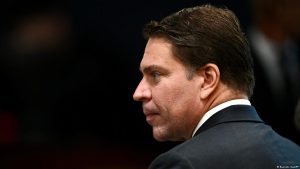
This project is also coalition maintenance. Senate President Davi Alcolumbre is from Amapá. The rig visit put Lula and Alcolumbre on the same deck after a period of distance. Oil in the senator’s state is not a footnote. It is the glue.
There is nothing conservative about dressing up a congressional bargain as destiny. Amapá is entitled to development. It is not entitled to make the French and the Surinamese, or Pará’s fishermen, into unconsulted insurers of that development. Jobs that arrive in the mid-2030s do not justify a 2026 licensing stampede. Royalties that may never book do not justify treating IBAMA as an enemy of the people.
A serious country separates three questions that Brasília has fused:
- Does a petroleum system exist? Morpho suggests yes.
- Is there a commercial field? Unknown.
- Should Brazil accept Amazon-adjacent, transboundary spill risk to find out on a campaign clock? That is the only question that required a statesman. It received a slogan.
Neighbors are not extras in a Brazilian election
French Guiana is not a polling precinct. Suriname is not a backdrop. Currents do not honor the story that “the well is far from the mouth.” If oil hits those shores, Brazil will not be arguing about passports to the future. It will be arguing about compensation, closed fisheries, and why a left that lectures the world on the Amazon treated a shared sea as a party asset.
Sovereignty is the right to decide. It is not the right to export the downside. Conservatives who believe in borders should be the first to say that a sovereign does not get to socialize catastrophe onto the next flag.
The conservative case against this wager
This is not an argument that Brazil must become poor to be virtuous. Brazil is already a major producer. Pre-salt still flows. The question is whether a new, uniquely sensitive frontier should be forced open before the geology is proven and before the safety case is proven in this ocean, for the convenience of a president and a Senate deal.
A conservative answer is no—not because the earth is a sacrament, but because adults do not bet the commons on an undrilled appraisal program. They do not call an indication of hydrocarbons a national destiny. They do not tell fishermen and neighbors that a BOP and a distance figure have settled the physics. They do not recycle “passport to the future” as if language were a reserve replacement strategy.
What Brazilians are being offered is a promise. What they are being asked to sign is the risk. That trade is a bad trade. It should be refused until commerciality is public, response is demonstrated, and the political convenience is stripped out of the well. If you ask yourself why was so important for lula to have Alcolumbre’s support again, here is one of the major reasons.
Sources
Reporting and official statements from Petrobras, Agência Brasil, Associated Press, BBC, Reuters, Estadão/Broadcast, O Globo, Folha de S.Paulo, Valor, CNN Brasil, BNamericas, Journal of Petroleum Technology, Offshore Energy, S&P Global, The Guardian, Mongabay, Conservation Letters, and analyses citing ANP prospectivity and IBAMA licensing history. Spill-trajectory and mangrove-sensitivity findings as reported in those scientific and investigative accounts. Political context from contemporaneous coverage of the Lula–Alcolumbre Amapá visit and Petrobras’s 2026–2030 exploration plan.
#EquatorialMargin #FozDoAmazonas #MorphoWell #Petrobras #Lula #Alcolumbre #Amapa #AmazonCoast #OilSpillRisk #EnergySecurity #NotAProvenField #SovereigntyIsNotRecklessness #Brazil2026


