



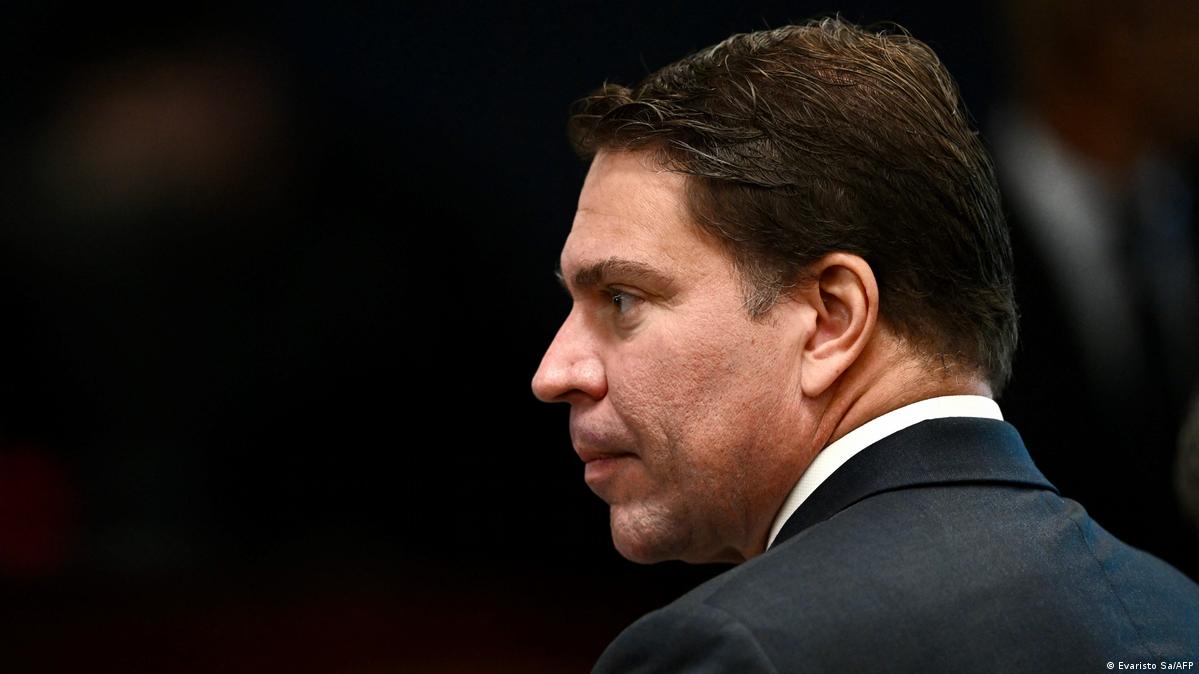
The Trump Administration Blocks Brazilian Political Persecution of Former Intelligence Chief
The swift release of Alexandre Ramagem from U.S. immigration custody and the subsequent removal of a Brazilian Federal Police liaison from American soil mark a clear rejection of foreign attempts to export political vendettas into the United States.
Ramagem, a respected career Federal Police officer who later directed Brazil’s intelligence agency under President Jair Bolsonaro, entered the country legally in September 2025. After Brazilian authorities convicted him in connection with the 2022 election dispute and sought his return, U.S. Immigration and Customs Enforcement briefly detained him in April 2026 following a routine traffic stop. He was released within two days pending removal proceedings. Days later, the State Department publicly demanded the departure of the Brazilian liaison officer who had assisted in locating him, stating that no foreign official may manipulate America’s immigration system to circumvent formal extradition requests or extend political pursuits onto U.S. territory.
This sequence is not an accident of bureaucracy. Brazil’s Supreme Court, under Justice Alexandre de Moraes, has pursued Bolsonaro and his inner circle with a determination that many observers describe as selective and punitive. Ramagem’s case sits inside that broader pattern. Formal extradition was requested in late December 2025, yet the process has remained at the State Department under Secretary of State Marco Rubio, without a decision. Under the bilateral treaty, political-offense exceptions and executive discretion exist precisely to prevent the automatic surrender of individuals when the underlying prosecution carries the appearance of political targeting. Secretary of State Marco Rubio’s department has chosen not to accelerate that request.
The removal of the Brazilian liaison underscores the same principle. That officer, posted in Miami to work with ICE, had monitored Ramagem’s movements and family and fed information into the immigration process. American authorities concluded he was attempting to use ordinary immigration enforcement as a shortcut around the slower, more deliberate extradition channel. The public statement from the Bureau of Western Hemisphere Affairs framed the action as a defense of U.S. processes against foreign political litigation. Brazil responded with reciprocal measures, confirming that both sides understood the episode as more than routine police cooperation.
Ramagem’s background is relevant to any evaluation of his case. As a Federal Police delegate he worked organized crime and drug investigations. As ABIN director from 2019 to 2022 he sat at the center of Brazil’s intelligence apparatus during the Bolsonaro years. That position necessarily entailed access to sensitive reporting, sources, and foreign liaison material. Brazilian intelligence officers themselves have privately expressed concern about such knowledge remaining outside Brazilian control. None of this establishes a formal intelligence relationship with the United States; intelligence services do not confirm assets. It does establish that he is not an ordinary fugitive and that his knowledge and political associations make him a figure of consequence.
The Trump administration’s handling of the matter is consistent with its broader posture toward the Brazilian judiciary’s treatment of Bolsonaro and his allies. U.S. officials have criticized what they view as lawfare against the former president and his circle. By refusing to let a Brazilian police officer convert an immigration overstay into a de facto extradition, and by leaving the formal request unresolved, Washington has drawn a practical line. Political cases will be evaluated on their merits under American legal standards, not rubber-stamped to satisfy foreign courts.
Whether Ramagem ultimately remains in the United States will be decided through ordinary immigration and, if it proceeds, extradition processes. The record so far shows that the United States is unwilling to serve as an enforcement arm for Brazil’s most aggressive judicial actors. That posture protects American sovereignty over its own procedures and signals that political prosecutions abroad will not automatically produce results on U.S. soil.
Hashtags: #Ramagem #Brazil #Extradition #StateDepartment #ICE #PoliticalPersecution #Trump #Bolsonaro #Sovereignty
Sources: Public statements by the U.S. Department of State Bureau of Western Hemisphere Affairs; Department of Homeland Security responses to media inquiries regarding Ramagem’s entry, detention, and release; Brazilian Federal Police and Ministry of Justice statements on the extradition request and the liaison officer’s role; contemporary reporting by major Brazilian and international outlets on the timeline of Ramagem’s departure, conviction, and U.S. proceedings; official U.S.–Brazil extradition treaty provisions on political offenses and executive discretion.


