

A Victory for Strength: Trump Brings Petro to Heel in the Oval Office
By Hotspotnews
In a striking display of American resolve and diplomatic dominance, President Donald J. Trump welcomed Colombian President Gustavo Petro to the Oval Office on February 3, 2026. What could have been another chapter in endless leftist obstructionism instead became a clear demonstration that tough, no-nonsense leadership gets results—even from the most reluctant socialist counterparts.
For months, the relationship between the two leaders had been openly hostile. Petro, a self-described leftist with a history of sympathy for Marxist causes, repeatedly criticized U.S. efforts to combat the scourge of drug trafficking that poisons American communities. Trump, true to form, called out the reality: Colombia remains a primary source of cocaine flooding into the United States, and Petro’s policies have done little to stem the tide. Tensions escalated further with bold U.S. actions against Venezuelan dictator Nicolás Maduro, including operations that removed a key narco-ally from power. Petro initially condemned these moves as aggression, clinging to his predictable anti-American rhetoric.
Yet something shifted. After the decisive action against Maduro, Petro’s tone changed dramatically. President Trump himself noted the transformation, observing that Petro “became very nice” and “changed his attitude very much” in recent weeks. The fiery barbs gave way to a more cooperative posture, culminating in this face-to-face meeting at the White House.
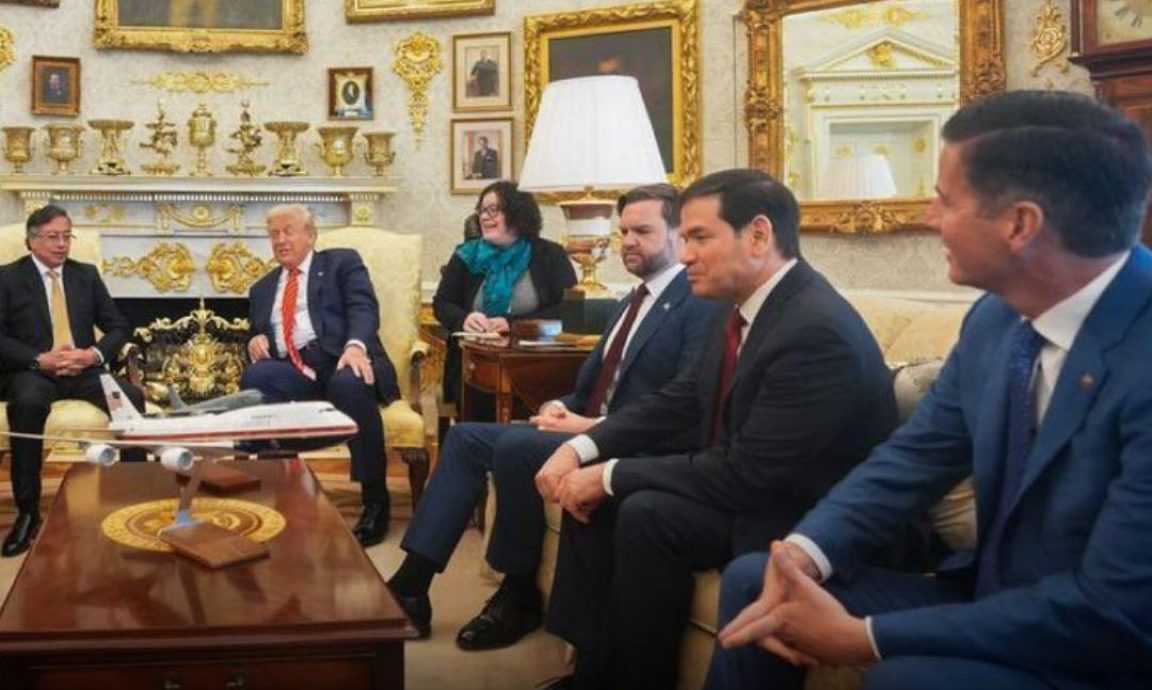
Photos from the Oval Office tell the story plainly: Petro seated respectfully beside Trump, surrounded by key American figures including Vice President JD Vance and Secretary Marco Rubio. Some observers even described Petro making a deferential gesture toward the American president—a far cry from his earlier defiance. This was no equal partnership of ideologues; it was a sovereign leader recognizing the superior strength and moral clarity of the United States under Trump.
The agenda focused on what matters most to everyday Americans: curbing the flow of deadly drugs and strengthening trade ties that benefit U.S. workers. Trump has long insisted that border security and counternarcotics efforts cannot be compromised by weak or accommodating policies south of the border. By securing this meeting—and Petro’s apparent willingness to engage constructively—the administration advanced those priorities without apology or concession.
Critics on the left will no doubt spin this as some kind of “détente” or mutual compromise. But conservatives understand what really happened: unrelenting pressure, combined with decisive action against shared threats like Maduro’s regime, forced a recalcitrant foreign leader to the table on America’s terms. Petro arrived not as an equal antagonist but as someone who had to acknowledge the new reality of a resurgent, America-first foreign policy.
This encounter underscores a broader truth: when the United States speaks with strength rather than appeasement, adversaries adjust. Petro’s softened demeanor—once filled with criticism of U.S. “imperialism”—now reflects a pragmatic, if reluctant, recognition that cooperation with Trump yields better outcomes than confrontation.
For Americans weary of open borders, fentanyl deaths, and endless foreign entanglements, today’s Oval Office meeting is a win. It shows that bold leadership works, that drug cartels and their enablers cannot hide behind diplomatic niceties forever, and that President Trump continues to put America first—delivering results where others only offered excuses.
The road ahead on counternarcotics and hemispheric security won’t be easy, but with Trump driving the agenda, there’s reason for optimism. Petro’s change in attitude proves it: respect is earned through strength, not surrendered through weakness.