





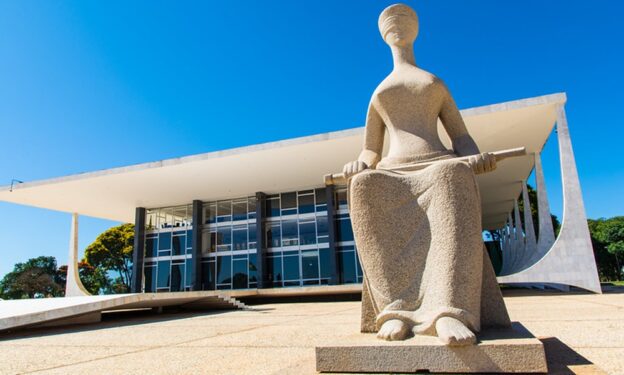
Analysis: OAB-SP’s Push for Fixed 12-Year Terms on Brazil’s Supreme Court
By Hotspotnews
The São Paulo section of the Order of Brazilian Lawyers (OAB-SP) has formally proposed a major overhaul of the Supreme Federal Court (STF). At its core is a constitutional amendment establishing a non-renewable 12-year mandate for ministers, replacing the current system of life tenure until compulsory retirement at age 75. The package also raises the minimum age for appointment from 35 to 50, requires a public hearing with input from the legal profession, universities and civil society before the Senate confirmation process, and forms part of a broader set of reforms aimed at addressing what the OAB-SP describes as a crisis of credibility and functionality in the justice system.
What Would Change
If enacted, the most immediate structural shift would be the end of indefinite tenure. Ministers would serve a fixed period designed to outlast a single presidential term while still guaranteeing regular turnover. Combined with the higher minimum age, the court would be composed of more experienced jurists entering later in their careers and leaving after a defined window. Nomination would become more transparent and participatory through the proposed public hearings, reducing the purely discretionary character of presidential appointments.
According to some readings of the draft proposals, the new rules could apply to sitting justices, potentially accelerating the departure of the longest-serving members. Parallel suggestions in the same report seek to narrow the STF’s original criminal jurisdiction, limit the normative powers of the National Council of Justice, and promote greater gender and racial diversity on the courts. All of these changes require constitutional amendment and therefore need strong majorities in both houses of Congress.
Potential Consequences
A fixed term would inject regular renewal into the highest court. Long tenures have allowed individual justices to shape jurisprudence for decades; a 12-year limit would reduce the risk of any single ideological bloc dominating for generations and force the institution to adapt more frequently to social and political evolution. Supporters argue this “oxigenation” improves legitimacy at a time when public trust in the judiciary is under strain. International models in several European constitutional courts already use fixed, non-renewable terms of similar length, suggesting the idea is not radical by comparative standards.
Yet the change carries trade-offs. Frequent turnover could erode institutional memory and the continuity of case law. Justices might feel greater pressure to deliver results within a limited window, potentially increasing short-term activism or alignment with the political climate of the appointing president. More frequent vacancies would also expand the political stakes of each nomination cycle, raising the risk of sharper partisan battles in the Senate. The higher age threshold, while ensuring greater experience, would shrink the pool of eligible candidates and could delay the entry of promising younger jurists.
If applied retroactively, the proposal would reshape the current composition of the court relatively quickly, altering the balance of experience and influence among the eleven seats. Even if applied only prospectively, the mere existence of a sunset clause would change how justices approach long-term doctrinal projects and how presidents calculate the lasting impact of their nominations.
Ultimately, the success or failure of the reform would depend less on the 12-year figure itself than on the political will in Congress and the accompanying safeguards—codes of conduct, cooling-off periods after leaving the court, and clearer rules on conflicts of interest—that the OAB-SP has also advanced. Without those complementary measures, fixed terms alone may simply redistribute rather than resolve the tensions surrounding the STF’s role in Brazilian democracy.
The debate is now open. Whether the proposal advances will test how far Brazil’s political class is prepared to recalibrate the balance between judicial independence and democratic accountability.
Source: OAB-SP Comissão de Estudos para a Reforma do Judiciário report (August 2026)
#STF #OABSP #ReformaDoJudiciario #MandatoSTF #PoderJudiciario #SupremoTribunalFederal #Brasil


