



André Mendonça Defending Judicial Independence and the Return of Healthy Divergence in the STF
By Hotspotnews
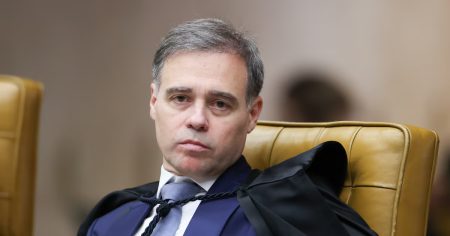
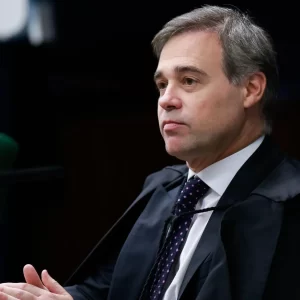
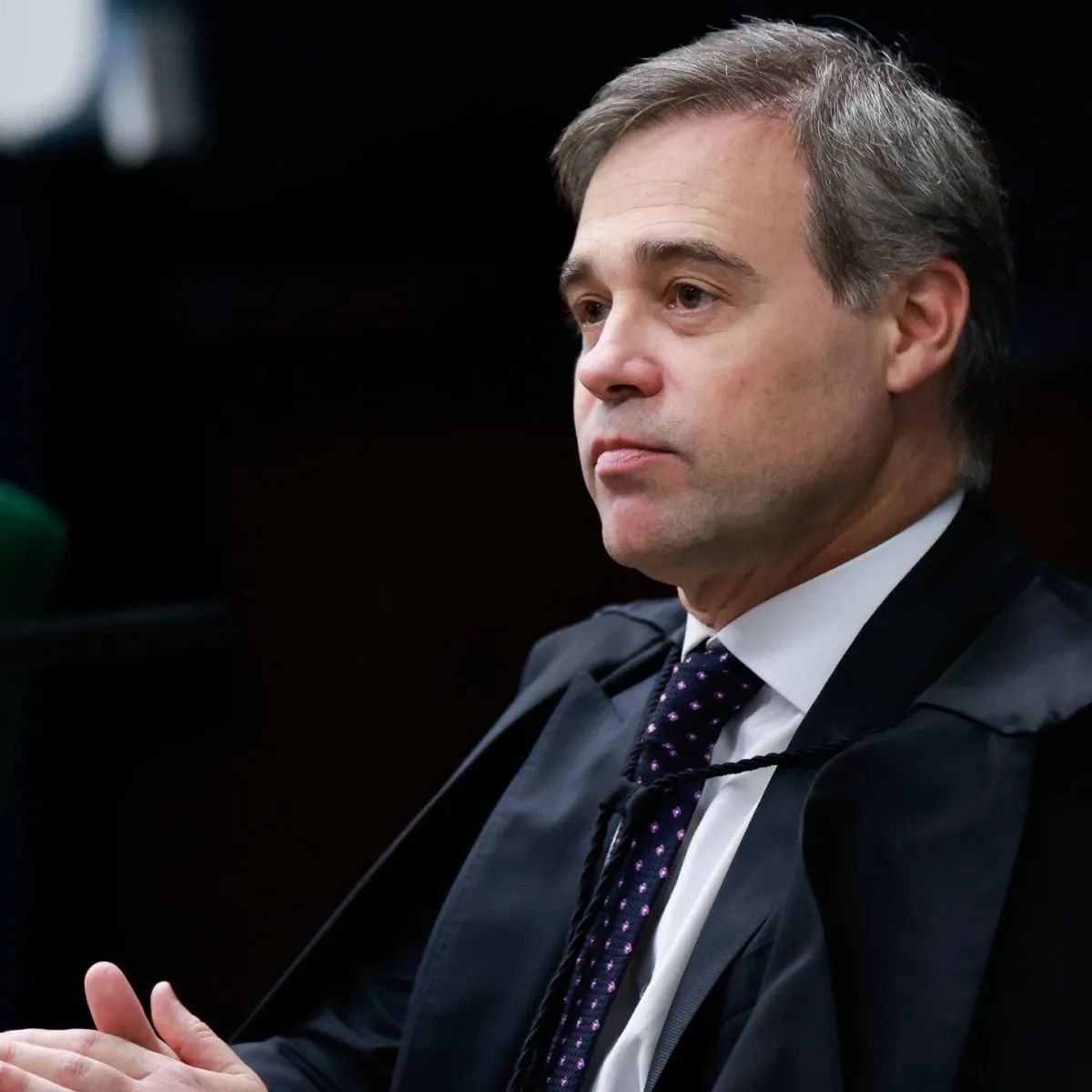
In a moment when Brazil’s highest court risks becoming a monolith rather than a true collegiate body, Minister André Mendonça has broken a long silence with a clear and principled message. Nearly five years after taking his seat on the Supreme Federal Court as the nominee of former President Jair Bolsonaro, Mendonça used his first extended interview—on the IterCast podcast of his own Instituto Iter—to reaffirm the core duties of a constitutional judge: impartiality, technical rigor, self-restraint, and the courage to diverge when the facts and the Constitution demand it.
Mendonça’s position is not theatrical opposition for its own sake. It is a defense of the very architecture of the Brazilian Republic. He has assumed the sensitive relatoria of two of the country’s most explosive corruption investigations—the Banco Master scandal and the massive fraud scheme against INSS retirees and pensioners. These cases touch powerful interests across the political spectrum, including possible connections involving other members of the Court itself and figures close to the current government. Rather than retreat into silence or partisan loyalty, Mendonça has insisted that corruption has neither ideology nor party color. The money that is stolen does not ask for a voter registration card. His duty, as he stated plainly, is simply to be impartial: to apply the law with seriousness, respect for due process, and without politicizing the pursuit of justice.
This stance comes after a period of remarkable convergence inside the STF around the events of 8 January 2023. That alignment, while understandable in the heat of institutional defense, carried the danger of transforming healthy disagreement into enforced uniformity. Mendonça’s emergence as a more independent voice—warning about potential interferences in investigations and stressing the need for caution amid the maneuvering of various power centers in Brasília—marks the beginning of a healthier phase. In a court of eleven members, divergence is not disloyalty. It is the natural and necessary expression of a pluralistic judiciary. History shows that when courts suppress internal dissent, they lose both legitimacy and effectiveness. Mendonça’s insistence on this point is a service to the institution, not an attack on it.
Equally important is his broader institutional critique. He has argued that the judiciary should not invent law or assume a “creative” role beyond the Constitution and statutes. He has supported an ethics code for the Court and questioned whether a constitutional tribunal should serve as the original investigative and prosecutorial body for high-level criminal cases—a role virtually unique among major democracies. These are not radical ideas. They are conservative in the best sense: they seek to restore limits, protect the separation of powers, and prevent the accumulation of unchecked authority that invites abuse and erodes public trust.
The consequences of embracing or rejecting Mendonça’s approach are profound.
If his call for genuine collegiality, technical seriousness, and impartial enforcement is heeded, Brazil stands to gain a more credible Supreme Court. Corruption investigations that follow evidence rather than political convenience will strengthen the rule of law. Public confidence—badly damaged by perceptions of selective justice and overreach—can begin to recover. The fight against systemic graft becomes more sustainable because it is no longer seen as a weapon of one side against another. Future generations of judges will inherit an institution that values debate over conformity and legal fidelity over political alignment. In short, the Court becomes a stronger guardian of the Constitution rather than a participant in the daily political struggle.
If, however, Mendonça’s position is marginalized or treated as inconvenient dissent, the costs will be severe. Continued internal uniformity risks cementing the image of a politicized tribunal that protects its own and its allies while applying different standards to others. Trust in institutions will continue to decline, feeding cynicism and polarization. Sensitive corruption cases may be slowed, redirected, or undermined by bureaucratic resistance and inter-branch tensions, as already seen in frictions with elements of the Federal Police. The precedent of suppressing legitimate divergence will make it harder for any future justice—regardless of appointment origin—to act independently. Ultimately, a judiciary that cannot tolerate internal disagreement loses the moral authority to demand that other branches of government respect constitutional limits.
Mendonça has chosen the harder path: to treat every case on its evidentiary merits, to defend the space for honest disagreement, and to remind his colleagues that the Court’s strength lies in its fidelity to law rather than in its temporary majorities. In doing so, he is not merely defending a personal style of judging. He is defending the possibility of an independent judiciary worthy of a free republic.
Source: Reports and analysis of André Mendonça’s first extended interview as STF minister on the IterCast podcast (Instituto Iter), together with contemporary coverage of his handling of the Banco Master and INSS investigations and the emerging internal dynamics of the Court in August 2026.
#AndréMendonça #STF #JustiçaIndependente #EstadoDeDireito #CorrupçãoSemIdeologia #DivergênciaSaudável #AutocontençãoJudicial #Brasil