




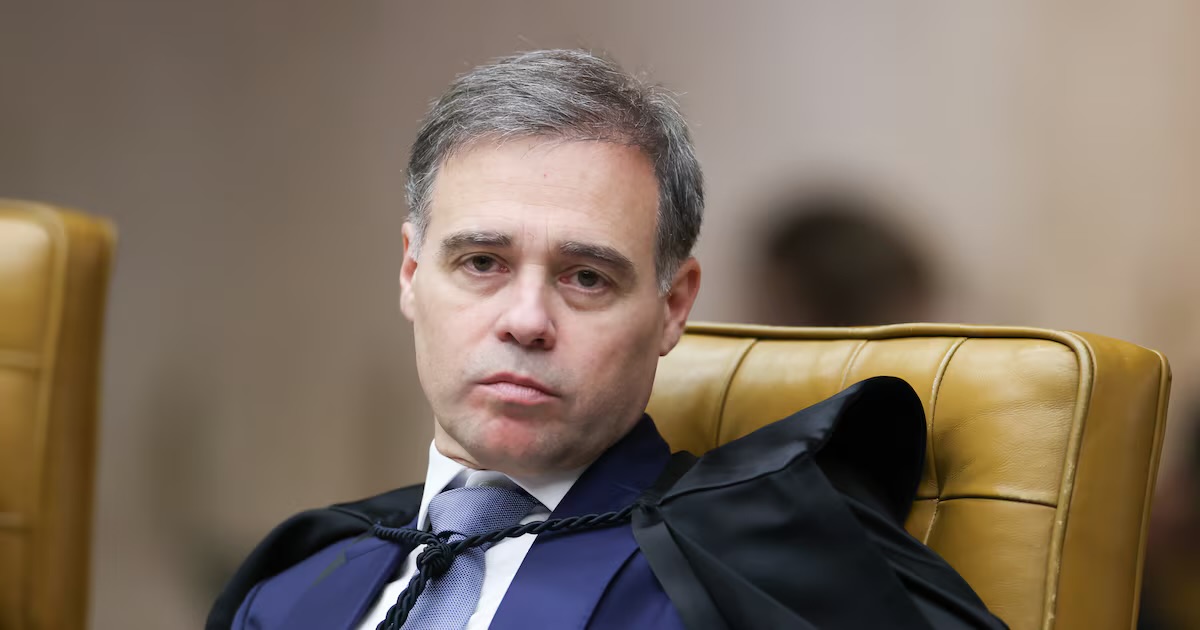
Why Weakening André Mendonça Is Far Harder Than the Political Class Imagines
By Hotspotnews
In the murky world of Brasília power games, whispers of coordinated efforts to “fragilize” Supreme Court Justice André Mendonça have circulated with predictable intensity. The minister, rapporteur of the high-stakes Banco Master and INSS investigations — and of related probes involving Fábio Luís Lula da Silva, known as Lulinha — has become an inconvenient figure for those who prefer the judiciary to bend rather than apply the law with equal rigor. Yet any serious attempt to neuter him runs headlong into the hard realities of Brazil’s institutional architecture, the character of the man himself, and even the calendar of an election year.
Mendonça’s position rests on foundations that cannot be casually dismantled. Supreme Court justices enjoy lifetime tenure until compulsory retirement at age 75. Removal requires impeachment for a crime of responsibility, a process that demands a two-thirds vote in the Senate and has never successfully toppled a sitting STF minister in the history of the Republic. Political inconvenience, aggressive investigation of powerful interests, or simply refusing to play the expected role does not meet that constitutional threshold.
Equally resilient is the system governing the assignment of cases. Relatoria is not a political gift that can be withdrawn at will. Redistribution occurs under narrow, objective rules. Arbitrary reassignment to please the Executive, the PGR, or influential colleagues would violate the principle of the natural judge. Even when the Procuradoria-Geral da República formally requests that sensitive inquiries be sent to first-instance courts — as it recently did in the Lulinha matters — the final decision remains with the rapporteur. He is under no obligation to obey.
Public scrutiny further raises the price of any maneuver. Attempts to isolate Mendonça, slow his requests, or orchestrate narrative campaigns will not remain confined to closed-door dinners or official petitions. They will be examined in the press and judged by citizens weary of selective justice.
There is another layer of difficulty that the political class may be underestimating: timing. With the 2026 elections only weeks away, every high-profile decision carries amplified electoral weight. Some observers believe Mendonça is deliberately taking his time on the PGR’s request to transfer the Lulinha investigations precisely because of this calendar. Keeping the cases under his control maintains institutional pressure without delivering an immediate gift — or an immediate provocation — to either side of the campaign. A rushed ruling now could be weaponized as “judicial interference” or, conversely, as evidence of weakness. Waiting until after the first round, or even after a possible runoff, reduces the short-term political temperature while preserving the long-term integrity of the probes. Whether this calculation is deliberate or simply prudent judicial caution, the effect is the same: the window for easy political neutralization narrows further as election day approaches.
Mendonça has shown little inclination to fold under pressure. He has demanded raw data, restricted unilateral personnel moves by investigators, and insisted on procedural rigor — actions that have irritated some but reinforced the image of a judge unwilling to serve as a political instrument.
None of this means pressure is impossible. Coordinated requests from the PGR, public criticism, friction with the Federal Police leadership, and attempts to rally other justices can create friction. Yet friction is not neutralization. Lifetime tenure, strict rules on case assignment, the high bar for impeachment, the glare of public attention, and the constraints of an election calendar form a formidable barrier.
Those who believe a dinner conversation, a formal petition, or a campaign of institutional pressure can simply “fragilize” a Supreme Court justice are underestimating both the Constitution and the man currently holding the pen on some of the country’s most consequential inquiries. In a healthy republic, the judiciary is designed to withstand precisely this kind of informal pressure. André Mendonça’s position continues to test that design. So far, the design is holding.


