



Lula’s Soft-on-Crime Stance Is Running Out of Time
By Hotspotnews
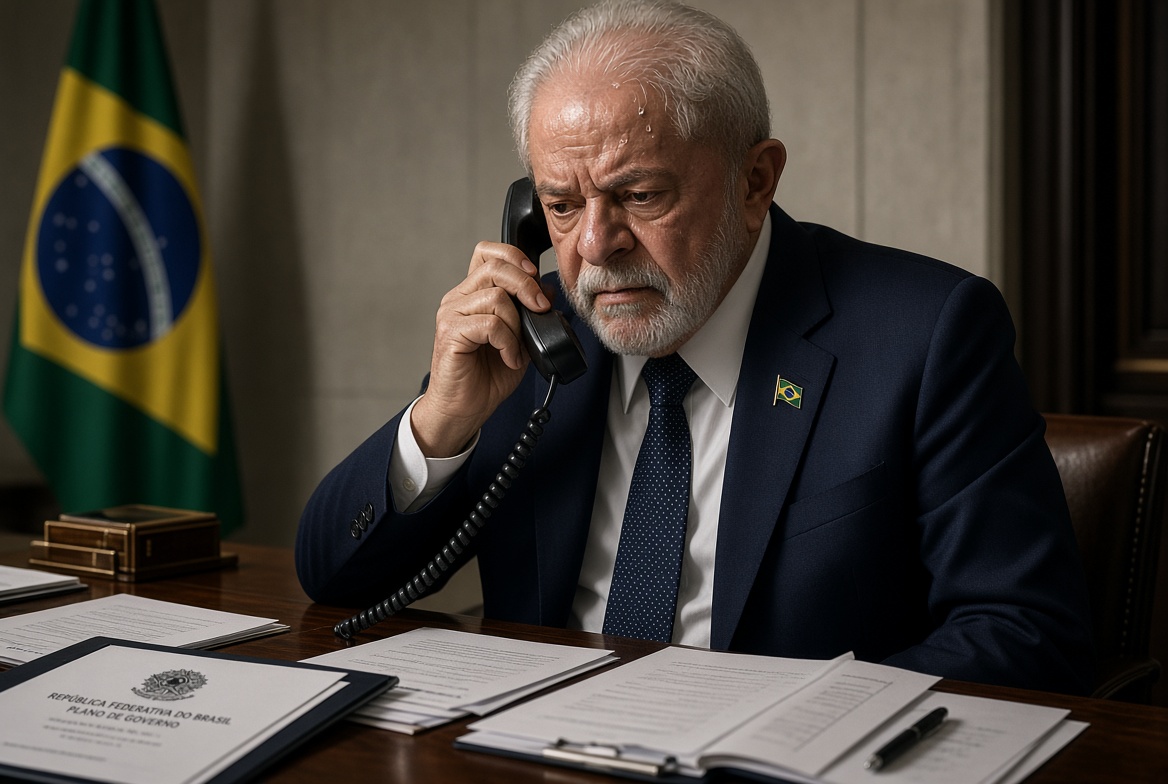
With fewer than three months remaining before Brazilians head to the polls, President Lula continues to insist in a familiar and costly error. In his recent telephone conversation with U.S. President Donald Trump, Lula once again insisted that Brazil’s most powerful criminal factions—the Primeiro Comando da Capital (PCC) and Comando Vermelho (CV)—should not be treated as terrorist organizations. He argued that while these groups “exercise everyday terror” over the poorest communities, they somehow do not qualify as terrorists, and that Brazil possesses all the tools it needs without any special international designation.
This is not leadership. It is evasion.
For Brazilians living in neighborhoods dominated by these gangs, the distinction is meaningless. PCC and CV control territory, impose parallel systems of “justice,” recruit children, execute rivals in public, and flood cities with drugs and weapons. Their daily operations generate precisely the climate of fear that terrorism seeks to create. Pretending otherwise does not protect national sovereignty; it shields the status quo and leaves vulnerable populations without the full arsenal of legal and cooperative instruments available against designated terrorist groups. They are not just Terrorists in the international scenario, but also domestic terrorists.
Lula’s position is especially striking given his own past rhetoric. Years ago he described certain faction violence in Rio as terrorism that demanded a strong state response. Today that clarity has evaporated, replaced by careful linguistic gymnastics timed for an election year. The practical result is predictable: delayed or diluted international cooperation, hesitation on tougher financial sanctions, and a continued domestic approach that has failed to dismantle these organizations’ power.
Conservative voices have long argued that organized crime of this scale requires treating it with the seriousness reserved for threats to the state itself. Designating these groups as terrorists opens additional avenues for intelligence sharing, asset freezes, and pressure on the networks that finance and arm them—without surrendering Brazilian sovereignty. Lula’s refusal to accept this tool while simultaneously asking for American cooperation reveals a deeper problem: a preference for narrative control over results.
Time is now the enemy of Lula’s strategy. He is running out of time and Trump knows.Voters will soon decide whether they accept more of the same explanations or demand a harder line against the criminal empires that terrorize their streets. Public security remains one of the electorate’s highest priorities. Soft definitions and repeated claims that “Brazil has its own instruments” will not erase the body counts or the daily fear felt in favelas and urban peripheries.
Lula is running out of runway. Continuing to insist on the same semantic distinction while Brazilians suffer the consequences is not statesmanship—it is a political calculation that history, and the ballot box, may soon judge harshly.
#LawAndOrder #BrazilElections2026 #PublicSecurity #PCC #ComandoVermelho #CrimeCrisis
Source: Official Brazilian government readout of the Lula-Trump telephone conversation released by the Secretariat of Social Communication of the Presidency (Secom).


