




Banco Master’s Failed American Ambition: A Cautionary Tale of Crony Finance and Regulatory Failure
By Hotspotnews
In the annals of financial scandals, few stories illustrate the perils of unchecked government-enabled lending and crony capitalism quite like that of Brazil’s Banco Master. Under the control of Daniel Vorcaro, the institution built an empire on payroll-deducted loans—credit consignado—that promised low risk through automatic deductions from public salaries and benefits. What began as aggressive expansion in Brazil’s public sector ultimately collapsed into one of the country’s largest banking failures, complete with allegations of widespread fraud, forged signatures, and billions in losses covered by taxpayer-backed guarantees. Yet even as the house of cards crumbled at home, Master attempted to export this same model to the United States, setting up shop in Miami with dreams of replicating its high-margin scheme on American workers.
This is not merely a story of bad banking. It is a warning about what happens when financial institutions cozy up to government payroll systems, erode personal responsibility, and chase easy profits through regulatory arbitrage. In Brazil, Master’s model thrived on captive public servants and retirees. Loans were pushed aggressively, often without proper consent, with interest rates that could exceed 100% annually in some cases. Convênios—formal agreements with government entities—created a pipeline of “guaranteed” repayments. When irregularities surfaced, including hundreds of thousands of questionable contracts tied to INSS social security beneficiaries, the fallout was catastrophic. The bank faced liquidation, arrests, and a massive hit to Brazil’s Fundo Garantidor de Créditos, the deposit insurance fund ultimately backed by the public.
Conservatives have long argued that such arrangements distort free markets. When government payrolls become collateral for private lending, moral hazard reigns. Borrowers face little skin in the game, institutions chase volume over prudence, and taxpayers inevitably foot the bill when schemes unravel. Brazil’s experience proves the point: what looks like “financial inclusion” often masks predatory practices shielded by bureaucratic partnerships.
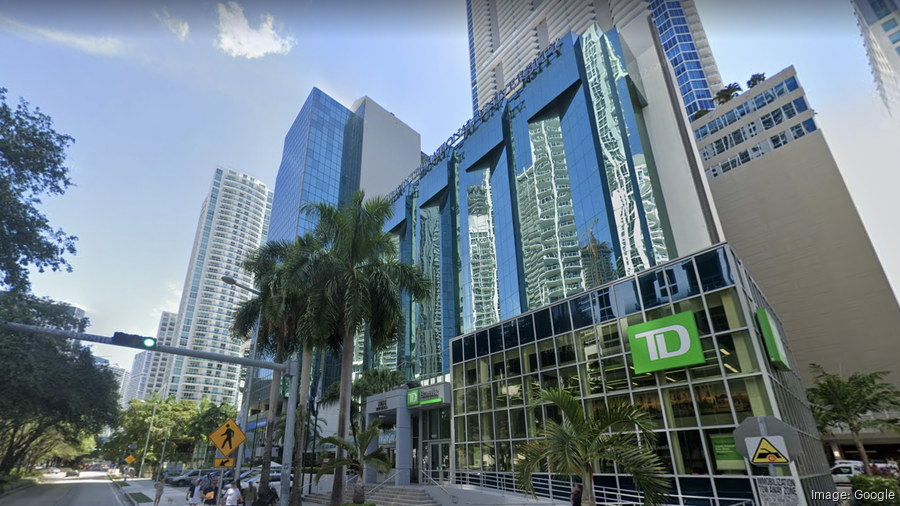
Undeterred by mounting troubles at home, Master’s executives turned their eyes northward. In Miami’s Brickell financial district, they established entities like Master Holdings USA (later rebranded), Altura Private Capital, and salary-focused lending vehicles targeting American healthcare workers and others with steady paychecks. The goal was straightforward: import the consignado playbook—automatic deductions, high spreads, and aggressive origination—into a new market. Plans called for millions in expansion capital, sales teams, and lobbying efforts, all while attempting to distance the U.S. operations from the troubled Brazilian parent on paper.
This move carried deep irony. At a time when many Americans already struggle with personal debt, credit card balances, and government entitlement strains, the last thing needed is the importation of high-pressure, payroll-trapped lending from Latin America’s more dysfunctional corners. U.S. regulators, already overburdened with post-2008 rules designed to prevent systemic risk, must scrutinize such cross-border experiments more rigorously. The American financial system, for all its flaws, still rests on stronger traditions of contract enforcement, consumer protections, and market discipline—safeguards that Brazil’s public-heavy model conspicuously lacked.
The Master saga underscores broader conservative principles. Free enterprise succeeds when grounded in honest dealing, personal accountability, and limited government entanglement. When banks treat public payrolls as infinite collateral and regulators fail to enforce basic due diligence, disaster follows. Cronyism—whether in Brasília or potential beachheads in Florida—privatizes gains while socializing losses.
As investigations continue on both sides of the border, with Brazilian liquidators pursuing assets in U.S. courts, one lesson stands clear: America should remain a fortress of sound finance, not a refuge for failed experiments from abroad. Exporting Brazilian-style payroll lending risks importing its worst outcomes—eroded trust, hidden debts, and taxpayer exposure. Policymakers would do well to reinforce barriers against such models rather than welcoming them under the guise of innovation. In finance, as in life, shortcuts and government crutches rarely lead to sustainable prosperity.


