



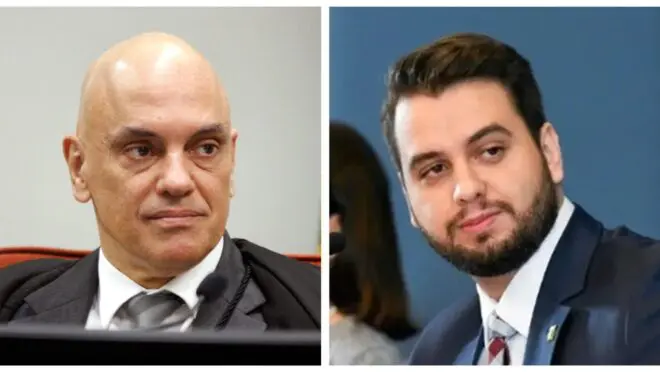
Brazil: ANALYZING THE FILIPE MARTINS CASE NOW
By Hotspotnews
Revised by @Grok for facts verification
ANALYSIS: THE FILIPE MARTINS CASE
What is established
Filipe Garcia Martins Pereira entered public life as a discreet figure: special adviser for international affairs in Jair Bolsonaro’s presidency, more strategist than spectacle. After the 2022 election and the January 8, 2023 invasion of the buildings of the Three Powers in Brasília, that discretion vanished. He was pulled into the Supreme Court’s inquiry into an alleged plot to keep Bolsonaro in power and, in December 2025, convicted by the Court’s First Chamber to 21 years and 6 months in prison.
The official story is that he helped draft and deliver a decree — the so-called minuta do golpe — that would have authorized exceptional measures against the election result and against Justice Alexandre de Moraes himself. In that story Martins is not the man who would have kept the sash. He is the man accused of putting the plan on paper and carrying it into the president’s hands.
The unofficial story, told by his defense, is that he was selected as a pressure point: close enough to Bolsonaro to be useful if he broke, isolated enough to be broken if he did not. That is an interpretation. It should be read as the defense theory of the case, not as a fact already stamped by a court in Brasília or Orlando.
The conviction rests largely on Mauro Cid, the former presidential aide-de-camp who struck a cooperation deal and told investigators that Martins brought the draft to Bolsonaro. Martins has never confirmed that account. His lawyers say there is no contemporaneous paper trail showing he authored or handed over such a decree, that meetings he is said to have attended did not occur as described, and that Cid’s words were treated as architecture rather than as one man’s bargain. Betrayal sits in the middle of the file either way. A former insider traded testimony for relief. Another former insider refused. The Court treated the first as proof. The second paid for the refusal. Whether that payment was justice or politics is the fight that still divides the country.
Then came the record that turned a political prosecution into a documentary scandal.
In February 2024 Brazilian authorities relied on a United States immigration entry that appeared to show Martins arriving on December 30, 2022, around the time Bolsonaro’s official party flew to Florida. Moraes used that entry as evidence of flight risk and ordered preventive detention. The implication was simple and devastating: Martins had slipped out of Brazil and could vanish again.
The entry was later shown not to be a real entry. Martins’ lawyers produced Brazilian travel and payment records placing him in Brasília and Curitiba at the relevant time, including a domestic flight incompatible with an Orlando arrival. U.S. Customs and Border Protection concluded he did not enter the United States on that date. A federal judge in Florida, Gregory Presnell, described the record as false and said it had affected a person in a considerable way, including by imprisonment. The document itself was sloppy in ways a genuine port-of-entry file rarely is: the first name misspelled, a passport already cancelled, a visa category that did not match, and an appearance in the system long after the supposed trip.
That is the lie with institutional weight. Not a rumor on social media, but an official foreign record used by Brazil’s highest court to take a man’s liberty. Even after American authorities walked the entry back, the Brazilian detention logic did not collapse with it. The suffering that followed was not abstract. Martins went from uncertainty, to preventive prison, to restrictions, to house arrest after conviction, to prison again in Paraná, with disputes over transfers, cell conditions, and who might visit him and on which dates. Moraes retained unusual personal control over those details. The defense calls this persecution. The Court calls it precaution. The difference is not semantic for the person living inside it.
Ricardo Scheiffer, Martins’ lawyer, now says the American case will embarrass the Supreme Court because the defense already knows more than the public does. He claims they have identified people involved in inserting the false entry and have internal messages from inside the U.S. system. Those names remain sealed. He has also said some of the people involved are again in Brazil. Until a U.S. court allows disclosure, that accusation stays one step short of a named finding. Scheiffer has gone further still: he has said the prolonged detention was used not only to keep Martins locked up but to try to force a delação — a cooperation deal that would have turned him against Bolsonaro. That is the betrayal the defense says the system wanted and never received. Martins did not become a second Cid. It is essential to keep the attribution clear. This is what the lawyer argues. It is not yet what an American or Brazilian judgment has proved about motive.
Was Moraes the mind of the operation? He was, without question, the central judicial actor. He accepted the flight-risk theory, converted restrictions into prison, restricted communications, and micromanaged confinement. The defense also points to a Federal Police mission to the United States, associated with other inquiries from the Bolsonaro years, that it says overlapped with the period when the disputed entry appeared. That overlap is politically radioactive. It is not, by itself, proof that a justice ordered an American border database altered. What does not require a cinematic conspiracy is the institutional fact: Moraes used a record that later dissolved, and the Court did not treat that dissolution as a reason to unwind the harm already done to the 2024 detention.
There is a second imprisonment that must not be melted into the first. After the December 2025 conviction Martins was placed under house arrest. On January 2, 2026 he was jailed again after Moraes treated a LinkedIn notification as proof he had broken a ban on social media. The defense says lawyers controlled the account and used it to gather evidence. That episode repeats a pattern — restriction, alleged indirect violation, harder custody — but it is a different factual fight from the false U.S. entry. Combining them into one fraud makes the text shorter and less accurate. Keeping them apart makes the method visible without inventing a single master document that explains every lock on the cell.
Two layers of the saga must remain distinct. The 21-year sentence is formally grounded in the alleged draft decree and in Cid’s testimony, not in the Orlando entry. The false record is the weapon that justified holding Martins while that larger case hardened. The defense’s most serious claim is that the method reveals the purpose: isolate the man, cut ordinary safeguards, manufacture a risk of flight, and wait for him to trade names for air. If that reading is right, the suffering was not a side effect. It was the instrument. If that reading is wrong, the Court can still be condemned for using a ghost passport without being convicted, in the same breath, of inventing the entire plot out of nothing.
The honest line between fact and suspicion still matters, and it is the line this rewrite exists to restore.
It is a fact that the U.S. entry used in Brazil was not a real entry. It is a fact that American authorities said so. It is a fact that a U.S. judge treated the episode as grave enough to demand identification of who created the record. It is a fact that Martins did not accuse Bolsonaro. It is a fact that Moraes built the 2024 detention on the vanished record and later used other alleged breaches to tighten custody again.
It is an allegation — serious, unresolved, and now the subject of sealed American discovery — that the entry was planted to manufacture leverage. It is an allegation that named officials, some of them back in Brazil, authored the insertion. It is an allegation that the whole condemnation is only that lie wearing a robe. Those last sentences may yet become the history of the case. They are not the history already written in open court.
That is why the American unsealing still matters more than another speech about coup or persecution. If the sealed names show only a systems failure later waved through in Brasília, the scandal is already grave: a Supreme Court deprived a man of liberty on a document that would not survive foreign scrutiny. If they show coordinated insertion timed to squeeze Martins into accusing Bolsonaro, then the title of this saga stops being rhetoric. It becomes the record of what was done to him: a false official fact used as a key, a hoped-for betrayal that never came, and years of confinement imposed in the meantime.
Until those names are public, the accurate version of the first analysis is this. The border record was false. The detention that used it was built on sand. The conviction that followed is still a contested political-criminal judgment, not a footnote to a cancelled passport. Hold both truths and the text gets longer again — not because the style returned, but because the case was never as simple as one word, lie, doing all the work.
Main sources
• Gazeta do Povo interviews with Ricardo Scheiffer, including “Já sabemos quem fez” on the false U.S. record, named people still under seal, and the claim that detention was used to try to force a delação.
• U.S. Customs and Border Protection public statement that Filipe Martins did not enter the United States on December 30, 2022, and that an erroneous record was cited to justify imprisonment.
• Coverage of U.S. Judge Gregory A. Presnell stating the immigration entry was false and that Martins was imprisoned as a result of it.
• Folha de S. Paulo reporting on the Florida hearing transcript.
• CNN Brasil, G1, Poder360, Correio Braziliense, Band, and Revista Oeste on the February 2024 preventive arrest, the August 2024 release, the December 2025 conviction to 21 years, and the January 2026 re-arrest over LinkedIn.
• Estadão and G1 on Mauro Cid’s account that Martins delivered the so-called minuta do golpe.
• Wall Street Journal opinion piece “Who Framed Filipe Martins?” on the disputed CBP record.
• CBP and later Brazilian reports noting defects in the entry: misspelled name, cancelled passport, wrong visa class, late insertion into the system.
• Defense filings and interviews describing Brazilian evidence that Martins was in Brasília and Curitiba, including a Latam domestic flight.
• Reporting on a Federal Police mission to the United States, associated with delegate Fábio Shor, which the defense links in time to the appearance of the disputed record.
#FilipeMartins #RicardoScheiffer #STF #AlexandreDeMoraes #RegistroFalso #CBP #DueProcess #PresoPolitico #MinutaDoGolpe #MauroCid #8deJaneiro #TramaGolpista #JusticaAmericana #FOIA #I94 #PontaGrossa #Bolsonaro #DireitosHumanos #ConstrangimentoSTF #Delacao


