



Brazil’s Fiscal Reckoning: How Socialist Policies Pushed the Nation Deeper into Debt and Toward Beijing’s Orbit
By Hotspotnews
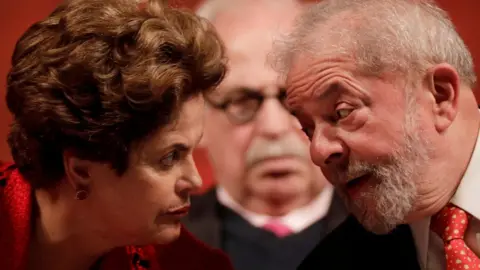
In a stark reminder that old habits die hard, Brazil under President Luiz Inácio Lula da Silva has once again turned to the New Development Bank (NDB)—the so-called BRICS Bank headquartered in Shanghai—for billions in fresh financing. Recent reports confirm that since Lula’s return to power in 2023, Brazil has secured roughly $4 billion or more in loans from this China-dominated institution, with additional requests now pending approval. Former President Dilma Rousseff, whose own tenure ended in economic chaos and impeachment, now leads the NDB and has been instrumental in steering these funds back home. Some things, it seems, never change.
This latest borrowing spree is not an isolated event but the predictable outcome of years of leftist governance marked by expansive spending, weak fiscal discipline, and an ideological aversion to market-oriented reforms. Brazil, once hailed as an emerging powerhouse, now finds itself with public debt climbing toward 80-85% of GDP and beyond, forcing reliance on alternative lenders less inclined to demand tough structural changes.
The Roots of the Crisis: From Boom to Bust and Back Again
Brazil’s economic troubles trace back decades but accelerated under the Workers’ Party (PT) administrations of Lula (2003-2010) and Rousseff (2011-2016). During the commodity supercycle, high prices for soy, iron ore, and oil fueled a spending binge on social programs, subsidies, and state-directed investments. While poverty declined temporarily, the model sowed seeds of distortion: massive corruption scandals like Petrobras, bloated public payrolls, and interference in key industries eroded competitiveness.
Rousseff’s term proved especially damaging. Her interventionist policies—price controls, forced lending by state banks, and denial of fiscal realities—triggered recession, soaring inflation, and currency collapse. By 2015-2016, Brazil faced its worst economic crisis in decades, with GDP contracting sharply and unemployment surging. Impeached in 2016 amid allegations of budgetary maneuvers, Rousseff left a legacy of fiscal irresponsibility that conservatives warned would haunt the nation.
A brief respite came under more centrist and right-leaning governments. The Temer and Bolsonaro administrations pursued partial reforms, including pension overhauls and spending caps, which helped stabilize debt and attract investment. Bolsonaro’s pro-market tilt, emphasis on agribusiness, and skepticism of globalist institutions delivered stronger growth pre-COVID and positioned Brazil as a reliable Western partner. Public debt as a share of GDP stood around 72% when Lula returned.
Lula’s Return: Spending Without Limits
Lula’s 2022 victory revived the old playbook. Promising expanded welfare, higher minimum wages, and “sustainable” infrastructure, his government quickly loosened fiscal restraints. Expansionary policies— including unrestrained public outlays and resistance to deep spending cuts—drove short-term growth but at the cost of ballooning deficits. By 2025-2026, projections show gross public debt rising steadily, potentially exceeding 83% of GDP, with general government fiscal deficits among the largest in Latin America.
Critics argue this approach prioritizes political patronage over prudence. Court-ordered payments, rigid social spending, and new taxes that often fail to offset rising expenditures have kept primary balances elusive. High interest rates, needed to combat persistent inflation, only compound the debt burden. Meanwhile, structural issues like low productivity, regulatory red tape, and crime persist, limiting genuine private-sector-led expansion.
Enter the NDB. Created by BRICS nations (Brazil, Russia, India, China, South Africa) as an alternative to the World Bank and IMF, the Shanghai-based bank advertises “no political conditionalities”—code for fewer demands on governance, transparency, or market reforms. Loans flow for “green” projects, infrastructure, and disaster recovery, such as Rio Grande do Sul flooding aid. Under Rousseff’s leadership since 2023, approvals for Brazil have surged: $1 billion for economic recovery in 2023, $1.7 billion in climate loans, hundreds of millions more for reconstruction, pushing cumulative figures well over $4 billion in recent years alone.
For conservatives, this represents a dangerous pivot. Rather than tackling root causes—excessive government size, entitlement culture, and cronyism—Lula’s team opts for easy money from a Beijing-led institution. China, the NDB’s dominant player, gains influence in Latin America’s largest economy, advancing its Belt and Road ambitions while Brazil drifts from traditional Western financial norms. Lula’s broader rhetoric, criticizing the dollar’s “hegemony” and pushing local-currency trade, aligns with de-dollarization dreams that ultimately weaken national sovereignty in favor of authoritarian partners.
The Broader Implications: Dependency and Lost Opportunities
Brazil’s trajectory illustrates the perils of socialist economics: short-term populism yields long-term pain. Debt servicing crowds out productive investment. Reliance on BRICS financing risks exposure to geopolitical volatility, especially amid U.S.-China tensions. Without credible fiscal consolidation—real spending restraint, tax simplification, and labor reforms—growth will remain anemic, projected to slow further in 2026 amid high rates and election-year pressures.
Conservatives have long advocated a different path: smaller government, rule of law, open trade with reliable allies, and incentives for entrepreneurship. Bolsonaro-era policies showed glimpses of success in unleashing agribusiness and energy potential. Reversing course requires rejecting the allure of “easy” loans from Shanghai and confronting domestic fiscal imbalances head-on.
As Brazil requests yet more from the NDB, the question looms: Will leaders learn from history, or will ideological continuity deepen the nation’s vulnerabilities? True prosperity demands discipline, not dependency. Until then, some things in Brazilian politics—reckless spending and flirtations with illiberal finance—indeed never change.


