



Brazil:A Rotten Orange in the Court
By Hotspotnews
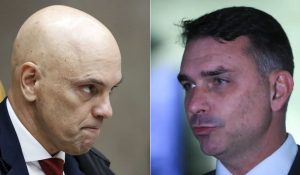
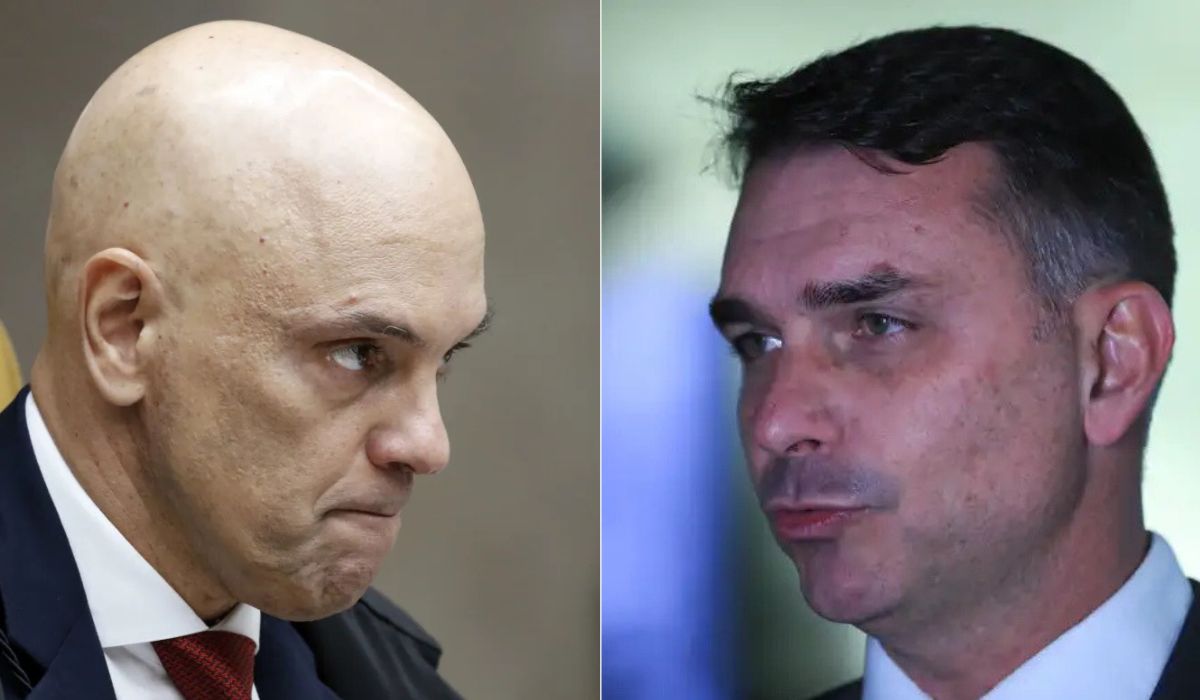
On Saturday, September 5, 2026, Senator Flávio Bolsonaro walked into the Hildebrando de Souza Public Jail in Ponta Grossa, Paraná. He spent about an hour and a half with Filipe Martins, the former special adviser for international affairs to Jair Bolsonaro. When he came out, he did not speak in the careful language that Brazilian public life now treats as mandatory. He said Alexandre de Moraes had, in practice, revoked a law passed by Congress. He said that if that law were applied, Martins would already be home. He called Moraes a rotten orange inside the Supreme Court.
That sentence was not campaign color. It was a description of a system in which one justice investigates, convicts, executes the sentence, and then freezes the statute that would change the sentence.
Who is Filipe Martins?
Martins is not a street rioter from January 8, 2023. He is a former presidential adviser convicted on December 16, 2025, by the First Panel of the Supreme Federal Court. The panel—Alexandre de Moraes, Cristiano Zanin, Cármen Lúcia, and Flávio Dino—gave him 21 years and six months: 18 years and six months of imprisonment in a closed regime, plus two years and six months of detention, and a heavy fine. The charges were armed criminal organization, attempted violent abolition of the democratic state of law, coup d’état, qualified damage, and deterioration of listed public property.
The core accusation is that he drafted and presented the so-called “minuta do golpe,” a draft decree of exceptional measures meant to keep Bolsonaro in power after the 2022 election, including the arrest of Moraes himself. The rapporteur said there was “no doubt.” He cited the plea deal of Mauro Cid, statements by military commanders, and entry logs at the Alvorada Palace.
The defense has said the opposite in plain language. Lawyer Jeffrey Chiquini argued that the supposed draft attributed to Martins does not exist in the case file. Former Army commander Freire Gomes and former Air Force commander Baptista Júnior said Martins did not take part in the meetings described by Cid and did not present any draft to them. After the verdict, the defense called the trial political and spoke of a state of exception. That is not a slogan invented on the prison steps. It is the formal position of counsel in a case that produced a sentence longer than many homicide convictions.
The document that was not real
Before the 2025 conviction there was already a scar on the file. In February 2024, Moraes ordered Martins’ preventive detention using an American immigration record that supposedly showed he had entered the United States in late 2022 and meant to flee. Martins produced domestic boarding passes, photos, and phone geolocation placing him in Brazil. The record misspelled his name and used an old passport number.
In March 2026, U.S. District Judge Gregory A. Presnell, sitting in the Middle District of Florida, said the Customs and Border Protection record was false. He said the American government itself recognizes the falsity and its seriousness. He said Martins was imprisoned as a result of that record and has the right to know how it was created and who caused it. He called the government’s excuses for withholding internal documents “nonsensical” and “absurd.” CBP had already stated publicly that Martins did not enter the United States on the date in the file.
A foreign court of ordinary jurisdiction found that a piece of evidence used to lock a Brazilian citizen away was fabricated. The Brazilian process treated that finding as a side issue. The later conviction rested on other material. The earlier months of preventive prison, however, cannot be unwound. They happened. They were justified by a record a U.S. judge later called false.
From ankle monitor to a cell
After the December 2025 conviction, Moraes first sent Martins and other defendants to house arrest with electronic monitoring, following the attempted flight of former highway-police director Silvinei Vasques. On January 2, 2026, federal police arrested Martins at home in Ponta Grossa. The stated reason was a violation of the ban on social media: a LinkedIn profile visit that generated a notification. That is how a man already under electronic surveillance was moved into a crowded public jail.
The unit later tried to transfer him after other inmates reacted to his isolation in a single cell. Moraes ordered him back. The justice who wrote the conviction also decides where the convicted man sleeps.
The law Congress passed and one man paused!
In 2025 Congress approved what became Law 15.402 of 2026, known as the Dosimetry Law. President Luiz Inácio Lula da Silva vetoed it in January 2026. Congress overrode the veto on April 30. The president of the Senate promulgated the law on May 8.
The statute changes how penalties for crimes against the democratic state are measured. It treats attempted abolition of the democratic order and coup d’état, when committed in the same context, as a formal concurrence of crimes rather than a simple stack of maximum terms. It also allows reductions when acts occur in a crowd, with limits for financiers and leaders. The practical effect would be shorter terms and faster regime progression for many of the January 8 and “coup plot” convicts—including, the law’s supporters say, Martins and Bolsonaro himself.
On May 9, Moraes suspended application of that law in the cases he reports. He did not obtain a plenary vote declaring the statute unconstitutional. He said pending direct actions of unconstitutionality were a “new and relevant procedural fact” and that legal certainty required a freeze until the full Court spoke. He is the rapporteur of those constitutional challenges as well.
That is the maneuver Flávio named. Congress legislated. The president vetoed. Congress overrode. The law was published. The same justice who sentenced the intended beneficiaries then stopped the law from touching them. Attorney General Paulo Gonet later defended the statute’s validity. As of early September 2026 the full Court had still not judged it. Time itself became the ruling.
What Flávio said, and what it means
Flávio did not claim Martins had already completed a reduced sentence by calendar miracle. He claimed the institutional arrangement is illegitimate. He said Martins is accused of a draft that no one has produced in the file. He said Moraes used the fake-news inquiry as a political weapon and now uses the same method against Justice André Mendonça. He said Moraes was caught editing a contract involving his wife and Banco Master owner Daniel Vorcaro and that nothing follows. Those last two points are accusations in a campaign season; they have not been tried to a final judgment here. The first points—the missing draft, the false American record, the monocratic freeze of a promulgated law—are already in public records.
He also said something conservatives should not skip. He said the Supreme Court as an institution must be protected, and that the job of a president is to restore credibility rather than shield one man. That is the correct conservative distinction. Courts are necessary. Unaccountable courts are not.
The pattern, not the nickname
Call it overreach, call it a concentration of functions, call it what the United States Treasury called it in July 2025 when it sanctioned Moraes under the Global Magnitsky framework for arbitrary pretrial detention and suppression of speech. Washington later removed those sanctions in December 2025. The underlying record did not vanish with the listing. Visa revocation, platform orders, asset freezes, and secret takedown demands against critics, including Americans, were the stated reasons for the original designation.
In Brazil the check that should exist does not. The same rapporteur controls the criminal case, the execution, and the timing of the constitutional review of the law that would alter the execution. No plenary deadline forces a vote. No independent inquiry has established who inserted the false CBP record. No political majority has been willing to treat a justice as subject to the same law he applies to others.
That is why a presidential candidate stood in the rain outside a Paraná jail and said a name out loud. Opinions are not a crime. Documents that do not exist should not support decades in a closed regime. A statute enacted by the elected branches should not die in a single chambers. And a country that cannot say those things without fear has already accepted a court that answers only to itself.
Sources: CNN Brasil; G1; Folha de S.Paulo; O Globo; Valor Econômico; Gazeta do Povo; Correio Braziliense; VEJA; Metrópoles; Estadão; U.S. Department of the Treasury; U.S. Department of State; BBC News Brasil.


