

The Court That Forgot Its Place
By Hotspotnews
Estadão’s editorial on Alexandre de Moraes is not just another column. It is a crack in the institutional consensus that has protected Brazil’s Supreme Court for years.
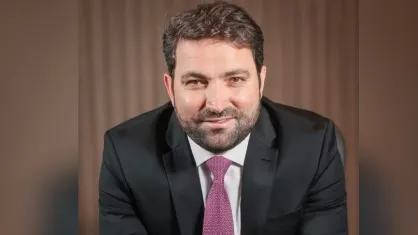
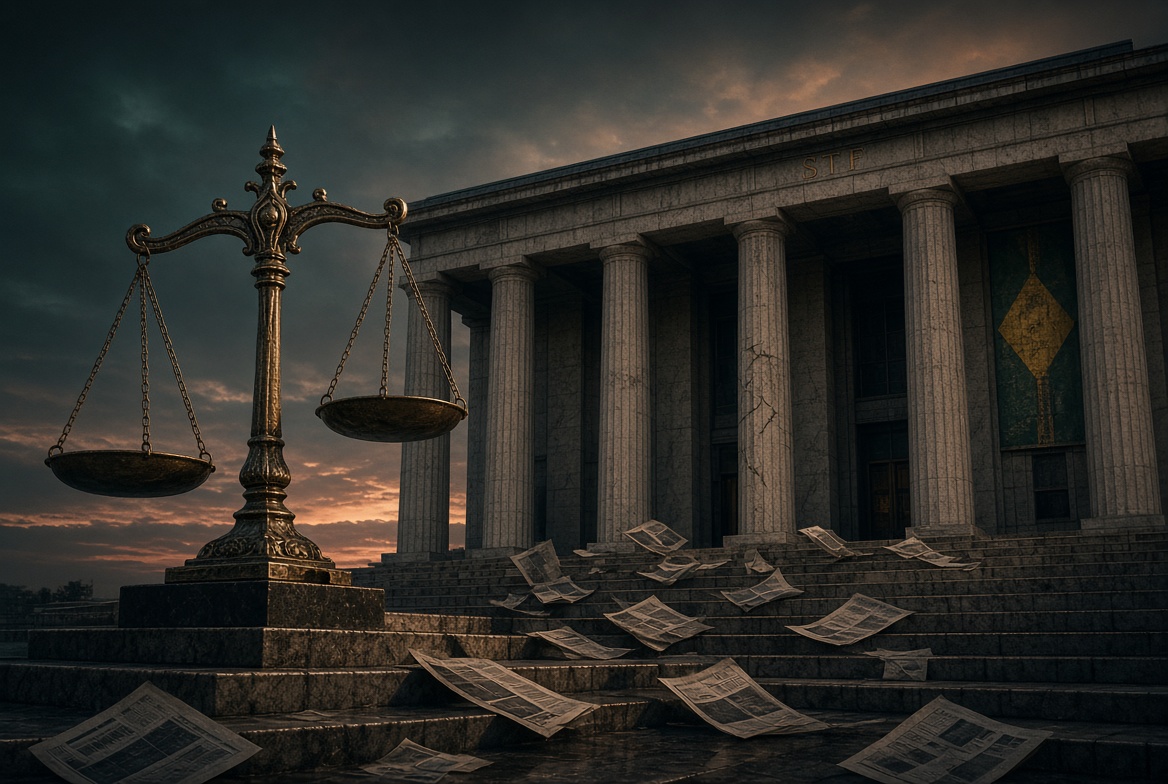
On September 4, 2026, O Estado de S. Paulo published an editorial titled “Alexandre de Moraes vandaliza o Supremo.” The language was not the usual measured prose of a traditional newspaper. It was blunt. Moraes, the paper wrote, inflicted greater damage on the STF than the rioters who invaded the Court on January 8, 2023. He did it without breaking a single pane of glass. He did it to save himself.
The trigger was Estadão’s own reporting. Messages recovered from banker Daniel Vorcaro’s phones and metadata from a R$131 million contract showed Moraes had edited the agreement between Banco Master and the law firm of his wife, Viviane Barci de Moraes. The paper called the relationship promiscuous and potentially criminal. It described Moraes as a kind of consigliere to a banker whose institution collapsed amid one of the largest financial scandals in recent Brazilian history.
A republican response would have been simple: recuse. Step aside while the facts are examined. Moraes chose the opposite path. He reached for the Fake News inquiry — an investigation opened in 2019 that has now lasted more than seven years — and tried to turn it against fellow Justice André Mendonça. Mendonça had lifted secrecy on the Federal Police report that exposed the closeness between Moraes and Vorcaro. Moraes asked STF President Edson Fachin to include Mendonça in the same inquiry. Fachin refused.
The “intelligence report” Moraes used was unsigned, lacked an official header, and carried its own disclaimer: no decision-making character, no evidentiary value, low to moderate reliability. That is the document a Supreme Court justice presented against a colleague.
What lies between the lines
The most important sentence in the editorial is not the attack on Moraes. It is the naming of Gilmar Mendes. Estadão did not treat Mendes as a bystander. It placed him at the head of those who protect Moraes. In Brazilian institutional language, that is a declaration of war on the Court’s political operator.
Moraes has been the visible enforcer — the minister who signs the orders, expands inquiries, and treats criticism as a threat to democracy. Mendes has long been understood, including by many who once defended the Court, as the strategist who built the legal and political shield around that power. He has worked to make impeachment of justices practically impossible. He has treated the Court as a corporation whose first duty is self-preservation. The editorial’s phrase “ala daninha” — the harmful wing — is not casual. It describes a faction that converted a constitutional court into a self-protecting guild.
The comparison to January 8 is deliberate. Physical vandalism is ugly and visible. Institutional vandalism is quieter and more lasting. A court that uses an emergency inquiry as a personal weapon against one of its own members has stopped functioning as a court. It is functioning as a power center that answers first to itself.
Estadão’s timing matters. The paper spent years accepting, and at times justifying, exceptional measures in the name of defending democracy after 2022. Censorship orders, prolonged secrecy, monocratic decisions, and the transformation of a temporary inquiry into a permanent instrument were often framed as unfortunate but necessary. That consensus is breaking. When a newspaper of Estadão’s stature says the greatest source of democratic instability is no longer outside the Court but inside it, the old justification has collapsed.
The editorial also reveals a practical fear. Moraes attempted to create a false equivalence: doubts about Mendonça’s handling of the Master case versus the evidence of Moraes’ own entanglement with Vorcaro. The goal, the paper suggests, is confusion. If everything is tainted, then nothing can be judged. Investigations into Master could be nullified. Allies of Vorcaro in Brasília would be relieved. The Court would have protected its own at the expense of the facts.
There is another line that should not be missed. The Federal Police appears in the editorial as an institution being pulled in three directions — producing reports tailored to Moraes, receiving signals from Mendes to ignore decisions considered “illegal,” and facing threats from Mendonça. A police force that becomes a prize in a fight among justices is no longer a republican institution. It is an instrument.
The larger meaning
Brazil’s problem is not that one justice has poor judgment. It is that a faction of the STF decided the Court stands above the ordinary rules it applies to everyone else. The Fake News inquiry was never closed because closure would mean the exceptional powers disappear. Those powers proved useful. They allowed the Court to define its own enemies, control the pace of investigations, and treat political speech as a security matter.
Estadão now says this arrangement has become the threat. That admission does not erase the paper’s earlier positions. It does show that even parts of the establishment no longer believe the story that every excess was required to save democracy. A court that cannot tolerate scrutiny of one of its members has already lost the authority it claims to defend.
Fachin is being asked, in public, to choose. The editorial offers him support if he acts to restore limits. That is both a gesture and a warning. If the president of the Court does nothing, the damage will no longer be attributed only to Moraes. It will be attributed to the institution that protected him.
The republican principle is not complicated. Judges are not a caste. They do not get to investigate their critics indefinitely, edit contracts for bankers, and then use the same investigative machinery against colleagues who expose the facts. When they do, the instability does not come from the streets. It comes from the bench.
Source: Editorial “Alexandre de Moraes vandaliza o Supremo,” Notas & Informações, O Estado de S. Paulo, September 4, 2026.
#STF #AlexandreDeMoraes #GilmarMendes #Estadao #InstabilidadeDemocratica #InqueritoFakeNews #BancoMaster #SeparacaoDePoderes #Supremocracia #Brasil2026