



Legacy Media’s Last-Minute “Secret Room” Attack on Flávio Bolsonaro Collapses Under Scrutiny
By Hotspotnews
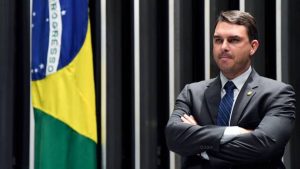
With the second round of Brazil’s presidential election only days away, Jornal Nacional and other major outlets rushed to air a report suggesting that a “secret room” discovered by the Federal Police in a Brasília airport hangar was linked to Flávio Bolsonaro through his associate Willer Tomaz. The coverage framed the discovery as evidence of possible cash storage and placed Bolsonaro’s name prominently in the story, even though the underlying facts paint a far more ordinary picture of a regulated business operation.
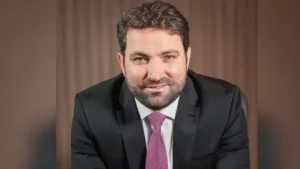
Willer Tomaz, a partner in an air-taxi company that contracts with licensed cash-transport firms, responded with documents and the police findings themselves. The room is a standard secure vault (sala-cofre) required for the temporary custody of currency and valuables before and after air transport. It features armored doors, internal grilles, and a bill-counting machine—precisely the setup expected for companies authorized under Brazilian law to handle high-value cargo. Tomaz displayed the relevant service contracts and noted that the activity is regulated by both the Federal Police and the National Civil Aviation Agency (ANAC). The police report, as cited in the original coverage, explicitly stated that the structure was “compatible with the custody of values.” Most importantly, officers found no cash, empty bags, or any indication of illicit activity.
The timing and framing are difficult to ignore. The search occurred in August; the headline treatment and association with Flávio Bolsonaro appeared in late October, four days before the runoff. Tomaz has stated that Bolsonaro has no ownership stake, contractual relationship, or operational role in the air-taxi firm or the cash-transport clients. The only connection offered by the broadcasters was personal acquaintance. In a campaign environment, that single association was enough for outlets long critical of the Bolsonaro family to convert a routine compliance facility into an implication of hidden money.
This episode fits a familiar pattern. Large television networks have repeatedly elevated unverified or context-free allegations against Bolsonaro-aligned figures in the final stretch of elections, only for the underlying records to show ordinary commercial activity, empty vaults, and regulatory compliance. When the same outlets later face demands for corrections or fuller context, the original framing has already circulated widely. Voters are left with the impression of scandal while the primary evidence—an empty secure room built for a legal business—receives less attention.
The documents presented by Tomaz, the police description of the room’s purpose, and the absence of any recovered cash constitute the concrete record available to the public. Those materials clarify that the facility operates as a licensed intermediate storage point for armored carriers, not as a private stash. Media organizations retain the right to report police activity; they also retain the responsibility to distinguish between a standard commercial vault and evidence of wrongdoing. In this case, the distinction was available before the broadcast and was largely set aside until the election calendar made the association useful.
#GloboMentira #FlavioInocente #SalaCofre #Eleicoes2026 #MídiaPartidária #PFSemDinheiro #TransporteDeValores
Sources
Willer Tomaz video response and supporting contracts, October 2026
Jornal Nacional report on the hangar search, October 2026
Federal Police inspection findings as quoted in contemporaneous coverage (no cash recovered; structure described as consistent with value custody)
Brazilian private-security and aviation regulations governing cash transport and air-taxi operations


